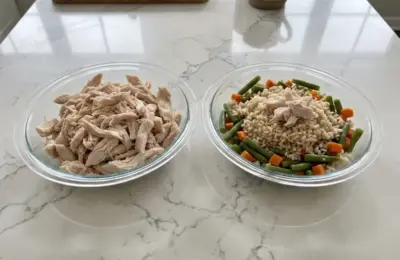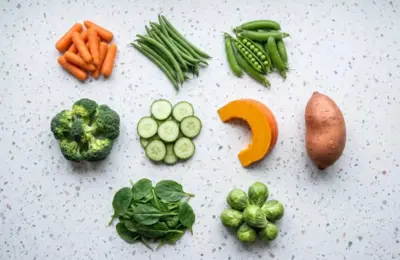


Dog food delivery services all promise the same core convenience—nutritious food arriving directly at your doorstep—but the operational models behind those promises differ significantly. Some companies cook customized fresh meals and ship them on rigid subscription schedules, while others gently cook and flash-freeze meals to be delivered on ice. Meanwhile, major online pet retailers manage automated shipments of shelf-stable kibble and canned goods, and local delivery services rely on gig-economy drivers to pick up bags from nearby retail shelves.
Navigating these choices requires pet owners to look beyond brand marketing and assess how each delivery format aligns with their dog’s health needs, their household budget, their kitchen storage capacity, and their personal routine.
While subscription models take the guesswork out of dietary management, they also impose demands on freezer and refrigerator space. Understanding the four primary delivery mechanics—fresh-cooked subscription, frozen fresh delivery, shelf-stable autoship, and same-day local service—allows owners to choose the best delivery system before picking a specific pet food brand.
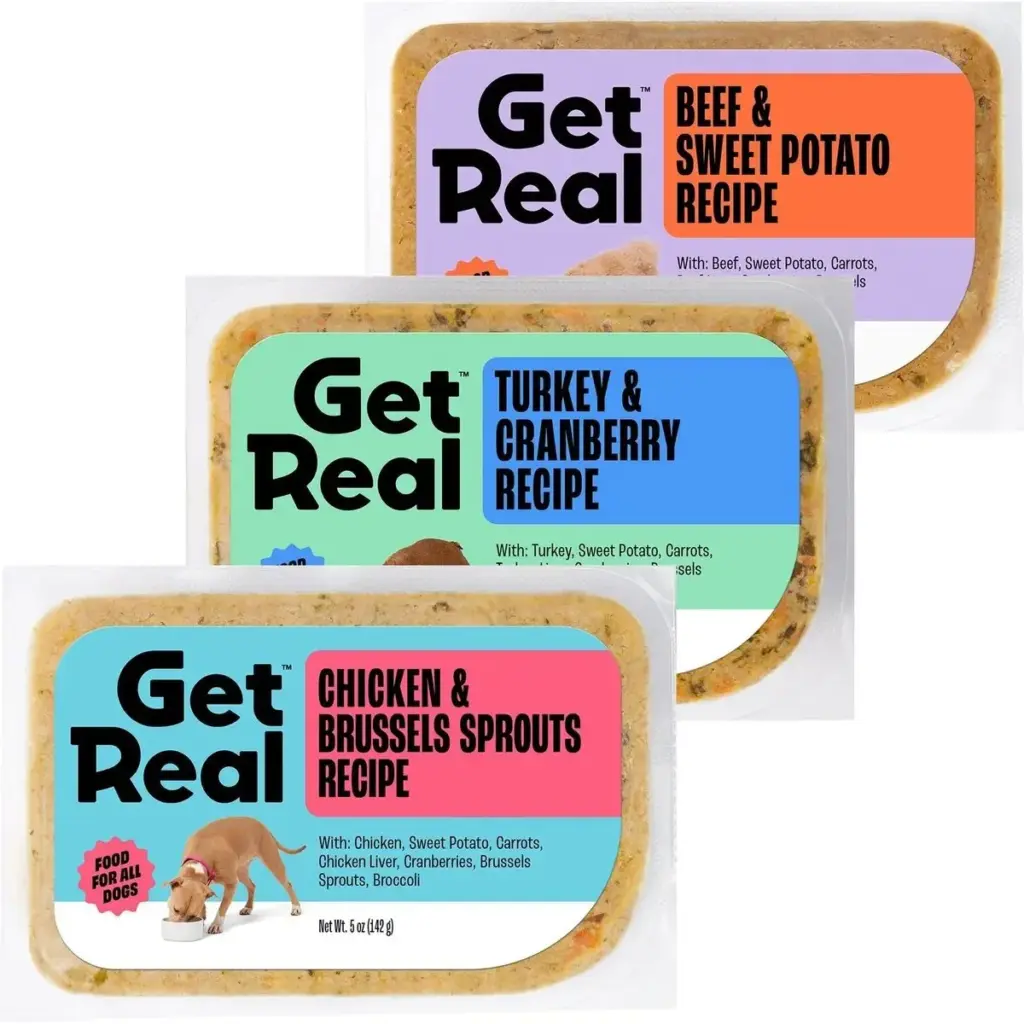
Among the current options in the frozen fresh category is Get Real, a line of gently cooked, frozen fresh dog food launched by Chewy in September 2025. Serving as a prime example of the frozen fresh model, Get Real illustrates how high-grade, gently cooked nutrition can be integrated into everyday retail ordering.
How Dog Food Delivery Models Differ
The dog food delivery market is broadly divided into four distinct operational models. Each differs in the type of food provided, the storage conditions required upon arrival, the level of advance planning expected from the pet owner, and the speed of delivery.
Fresh-cooked subscription companies and frozen fresh delivery brands both send cooked, perishable meals in insulated shipping boxes. Shelf-stable autoship services deliver traditional dry kibble and canned foods that can sit unopened in a pantry for months. Same-day local services deliver whatever products are currently stocked on the shelves of local brick-and-mortar pet stores.
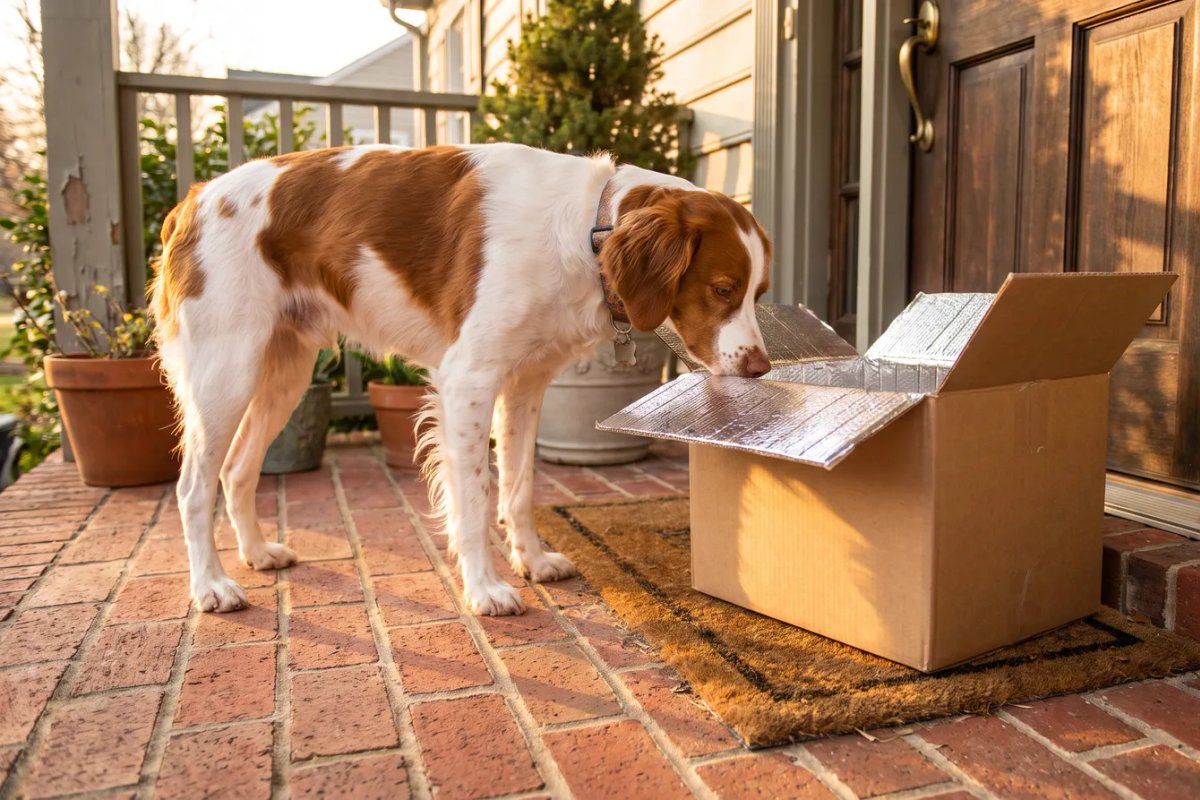
Evaluating these options based on household infrastructure is critical. A delivery service that works seamlessly for a suburban home with a dedicated garage freezer may create storage challenges for an apartment household with a small refrigerator and an unpredictable schedule.
In a fresh-cooked subscription model, meals arrive fully prepared and customized to a dog’s profile. Portions arrive chilled or frozen and must be stored immediately in the refrigerator or freezer. Deliveries are tied to a recurring, automated schedule.
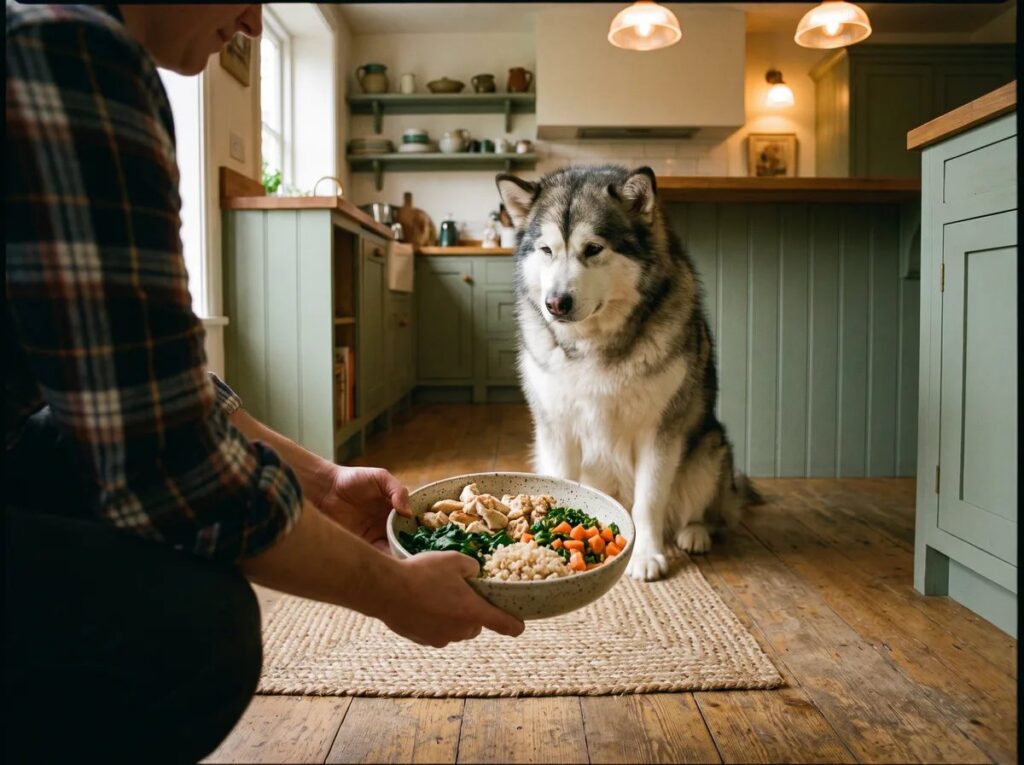
Frozen fresh delivery, such as Chewy’s Get Real line, follows a similar nutritional path but prioritizes storage longevity and ordering flexibility. Food is gently cooked, portioned, and immediately frozen, shipping in insulated packaging with dry ice. Owners place packs directly into their freezer, thawing individual portions in the refrigerator as needed. Orders can be placed as standard one-off purchases or set up on recurring autoship schedules.
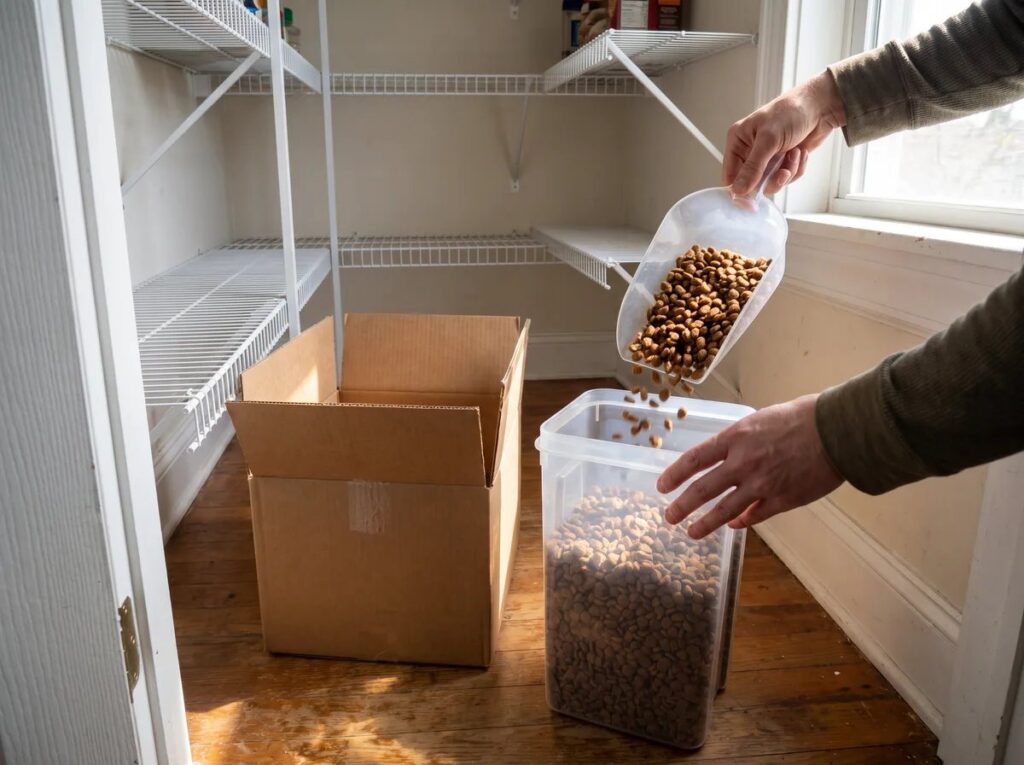
Shelf-stable autoship remains the most common form of pet food delivery. Owners select traditional dry kibble or canned diets, set a recurring delivery frequency through a major online retailer, and receive bulk packages at their door. Storage requires only ambient pantry space, though the owner remains responsible for measuring out correct meal portions using a scoop or scale.
Same-day local delivery relies on platforms like DoorDash or Instacart to bring pet food from a neighborhood store to the home within hours. Selection is limited to current store inventory, and delivery fees can be higher, making this model best suited as a emergency backup rather than a primary feeding plan.
Storage and portion control represent the largest operational differences across these models. Cooked fresh diets eliminate measuring work by providing pre-portioned packs, but they demand cold storage space. Kibble requires no refrigeration but places the responsibility of portion measurement entirely on the owner.
Fresh-Cooked Subscription Companies
Fresh-cooked subscription companies represent the model most consumers associate with the fresh pet food movement. Brands in this category—such as The Farmer’s Dog, Ollie, and Nom Nom—typically sell directly to pet owners online rather than through traditional retail stores.
The onboarding process generally begins with a digital intake survey. Owners enter details regarding their dog’s breed, weight, age, activity level, and existing health conditions. The company’s algorithm then calculates a recommended daily caloric intake, creates a customized diet plan, and schedules recurring shipments of pre-portioned, cooked meals.
These meals are gently prepared, packaged into single- or double-serving pouches, and shipped chilled or frozen in insulated containers.
The primary advantage of the direct-to-consumer fresh subscription model is convenience. Portions are explicitly calculated for the individual dog, removing the need for measuring cups or manual calculations. Because the food is cooked gently at lower temperatures, it retains high moisture levels and palatability, which can benefit picky eaters or senior dogs requiring softer textures.
However, this model demands significant home storage management. Because fresh food lacks artificial preservatives, it must remain frozen or refrigerated from the moment of delivery. Owners must keep several days’ worth of food thawing in the refrigerator while storing the remainder of the bulk shipment in the freezer.
Fresh food also has a limited shelf life once thawed—typically requiring consumption within three to five days—meaning delivery schedules must precisely match the rate at which the dog consumes the food to prevent waste.
Commercial brands like Freshpet also operate in the fresh space, offering refrigerated products in grocery stores as well as direct home delivery through Freshpet Delivery. Freshpet utilizes steam-cooking methods to preserve nutrients, maintaining freshness strictly through cold-chain logisitics rather than chemical preservatives.
Regardless of which fresh subscription company an owner evaluates, verifying that each recipe carries an official adequacy statement indicating it is nutritionally complete and balanced remains a necessary step.
Frozen Fresh Delivery: The Get Real Model
Frozen fresh delivery offers a direct alternative to subscription-only fresh models by combining gently cooked ingredients with extended freezer shelf life and flexible retail purchasing.
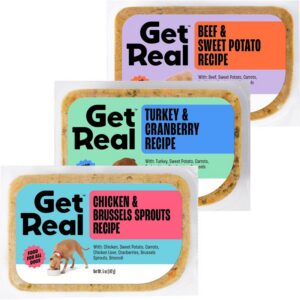
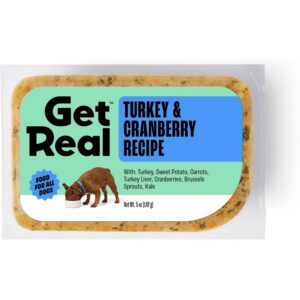
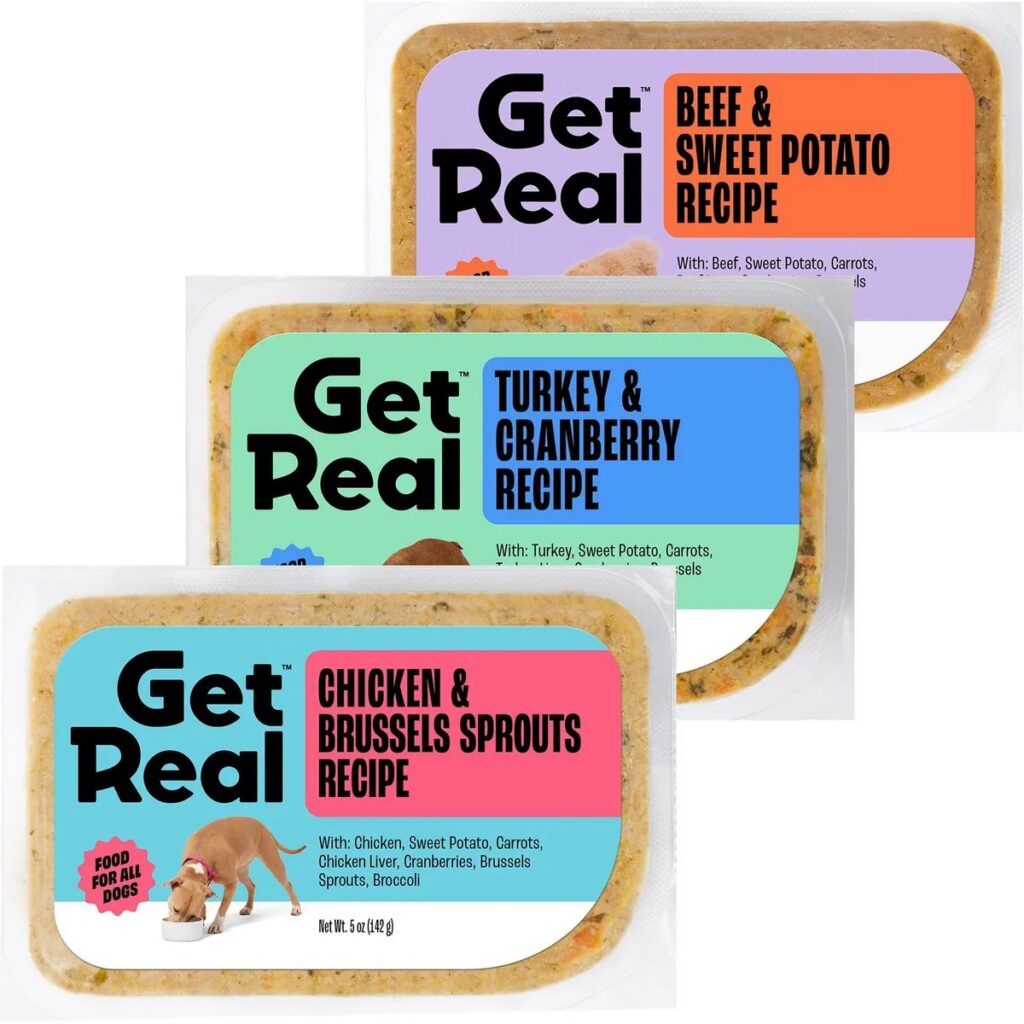
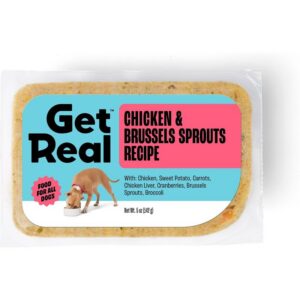
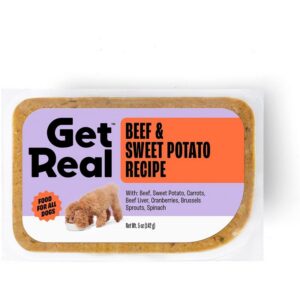
Chewy introduced its proprietary frozen fresh line, Get Real, in September 2025 to streamline fresh food access. Get Real recipes are gently cooked to preserve nutrient integrity, flash-frozen, and crafted with 10 or fewer primary ingredients plus essential vitamins and minerals. The line features three core formulations: Chicken & Brussels Sprouts, Beef & Sweet Potato, and Turkey & Cranberry.
Every Get Real formulation meets the Association of American Feed Control Officials (AAFCO) nutrient profiles for all life stages, including the growth of large-size dogs expected to weigh 70 pounds or more as adults. This nutritional profile allows the food to serve as a complete daily meal, a nutrient-dense meal topper, or a kibble mixer.
Get Real arrives frozen in pre-portioned packs designed for different household feeding strategies. Options include a 5-ounce mixer pack intended to supplement existing dry diets, as well as larger 12-ounce and 24-ounce full-meal packs.
Shipments move in insulated boxes packed with dry ice. Chewy rates these containers to remain frozen for up to 8 hours post-delivery, depending on ambient weather conditions. Upon arrival, packs must be placed directly into a home freezer.
Thawing requires advance planning: 5-ounce and 12-ounce packs require 12 to 24 hours in the refrigerator to fully thaw, while 24-ounce packs require 35 to 48 hours. Once thawed, unopened packs remain fresh in the refrigerator for 3 to 5 days.
The key operational distinction of Get Real lies in its integration with Chewy’s existing retail ecosystem. Rather than requiring pet owners to establish and manage a standalone subscription account with a niche direct-to-consumer manufacturer, Get Real can be added directly to an existing Chewy account alongside treats, litter, prescription medications, and household pet supplies.
For owners seeking to test food acceptance before establishing a routine, sample offerings like the Get Real Sampler Pack contain two pouches of each recipe, allowing pets to try all three proteins before an owner commits to a recurring order size.
Shelf-Stable Delivery: Kibble and Canned Food by Autoship
For the majority of pet-owning households, traditional shelf-stable autoship forms the backbone of their dog food procurement. Delivered through major online retailers, regional distributors, and pet food manufacturer websites, autoship programs automatically reorder and ship dry kibble and canned diets on a user-defined cadence.
The practical benefit of shelf-stable delivery is logistical simplicity. Unopened kibble and canned dog food do not require refrigeration and can remain stored in ambient pantry conditions for extended periods. Shipping containers can sit on a porch for hours without thermal degradation, eliminating the urgency associated with unpacking perishable shipments.
Autoship platforms provide high operational flexibility. Users can easily delay a shipment, adjust order frequency, swap product sizes, or cancel service entirely through online account dashboards.
The primary requirement of shelf-stable delivery is manual portion management. Because kibble and canned foods arrive in bulk bags or multi-can cases, owners must measure individual daily meals based on manufacturer feeding guidelines and their dog’s body condition score. Veterinarians frequently recommend using a standard digital kitchen scale rather than volumetric measuring cups, as cup measurements can introduce significant calorie variance.
Many pet owners adopt a hybrid approach to delivery, combining the cost-effectiveness and storage ease of kibble autoship with the palatability of fresh food.
In these feeding setups, owners maintain a recurring order of dry kibble as the base diet while adding small quantities of frozen fresh food—such as Get Real’s 5-ounce mixer packs—as a daily topper. This approach enhances meal aroma and taste without overcommitting freezer space or significantly increasing monthly food expenses.
Same-Day and Local Delivery Options
The expansion of gig-economy delivery networks has made same-day pet food delivery accessible through platforms such as DoorDash, Instacart, and retail-specific courier programs. These services connect consumers with local brick-and-mortar pet stores, big-box retailers, and grocery chains, delivering products directly to homes within hours.
While convenient, same-day delivery serves primarily as a tactical contingency plan rather than a sustainable long-term feeding strategy. It is particularly useful when an owner runs out of food unexpectedly, when a scheduled autoship package experiences transit delays, or when specific care supplies are needed immediately.
Relying on local courier delivery for daily pet food supply presents notable drawbacks:
- Inventory Constraints: Product availability depends entirely on what local retail store shelves currently have in stock.
- Cold-Chain Limitations: Standard gig-economy vehicle deliveries are not equipped with thermal control systems, making them less suited for transport of frozen or perishable fresh diets during warm weather.
- Variable Expenses: Delivery fees, platform service charges, and driver tips make repeated same-day orders substantially more expensive per pound than standard scheduled delivery methods.
When local delivery becomes a weekly necessity, pet owners generally benefit from transitioning to a formal shelf-stable autoship program or a structured frozen fresh schedule to ensure feeding continuity and control costs.
Evaluating Dog Food Delivery Companies: Key Selection Criteria
When comparing dog food delivery companies, price per bag or box fluctuates based on promotions, shipping distances, and formula updates. Consequently, owners should judge services using structural, operational, and nutritional standards rather than headline pricing alone.
Essential Evaluation Criteria:
- AAFCO Adequacy Statement: Verify whether the recipe is formulated to meet AAFCO Dog Food Nutrient Profiles for "All Life Stages" or "Adult Maintenance," or if it is intended only for intermittent or supplemental feeding. Foods labeled as complete and balanced for a specific life stage are validated to serve as a standalone diet.
- Nutritional Integrity and Formulation: Look for transparent ingredient declarations and expert involvement, such as board-certified veterinary nutritionists, in menu development. Formulas with concise, identifiable whole-food ingredient lists—such as Get Real’s commitment to 10 primary ingredients or fewer plus essential nutrients—simplify tracking for dogs with food sensitivities.
- Storage Requirements vs. Home Capacity: Measure available freezer and refrigerator space against the bulk volume of the incoming shipments.
- Subscription Management Controls: Ensure the provider allows frictionless account modifications, including options to pause shipments, skip orders, modify delivery dates, alter portion sizes, or cancel without financial penalty.
- Cold-Chain Delivery Standards: Confirm that perishable foods ship in verified insulated packaging with sufficient coolant (such as dry ice) to maintain safe internal temperatures throughout transit delays.
Transitioning to a New Delivery Food
Regardless of which delivery model or brand an owner selects, introducing a new food requires a gradual dietary transition to prevent gastrointestinal distress.
Pet food manufacturers typically recommend mixing the new food with the current diet over a period of 7 to 10 days, gradually increasing the ratio of new food. For dogs with known gastrointestinal sensitivities, extending this transition period to 10 to 14 days allows the digestive tract adequate time to adapt to new protein and fat structures.
Managing Subscription Logistics and Cold Storage Safety
Understanding the physical handling demands of frozen pet food deliveries ensures both home safety and nutritional quality.
Perishable fresh and frozen food shipments arrive packed in insulated liners cooled by dry ice blocks or pellets. Dry ice is solid carbon dioxide ($CO_2$), which exists at a temperature of $-109.3^circ F$ ($-78.5^circ C$). Because skin contact can cause severe frostbite, owners must handle dry ice with thick gloves or towels—never bare hands. Leftover dry ice should be left inside the unsealed shipping container in a well-ventilated space away from children and pets, allowing it to safely sublime from a solid into gas. Dry ice should never be placed in airtight containers, sinks, or trash cans.
+-------------------------------------------------------------------+
|                   COLD-CHAIN SAFE HANDLING GUIDE                  |
+-------------------------------------------------------------------+
| 1. RECEIPT: Unpack insulated shipping box promptly upon arrival.   |
| 2. DRY ICE SAFETY: Handle cooling elements with protective gloves. |
|    Allow dry ice to sublime in an open, well-ventilated area.     |
| 3. FREEZER STORAGE: Transfer frozen packs immediately to freezer. |
| 4. THAWING: Move individual packs to refrigerator 12 to 48 hours   |
|    prior to feeding based on pack size.                           |
| 5. SHELF LIFE: Consume thawed fresh packs within 3 to 5 days.     |
+-------------------------------------------------------------------+
Upon package arrival, food containers must be inspected and transferred immediately into cold storage. Shipping boxes for products like Get Real are rated to maintain freezing temperatures for up to 8 hours after door drop, but prompt unpacking is essential during warm seasons.
If product arrives partially thawed but remains cold to the touch (at or below $40^circ F$), it can be safely refrozen or refrigerated for immediate use. If food has reached room temperature or exhibits off odors due to extended transit delays, it should be discarded, and customer support should be notified.
Organizing home freezer space prior to ordering prevents storage bottlenecks. A dedicated freezer bin or labeled shelf helps maintain inventory rotation, ensuring older shipments are consumed before newer deliveries are opened.
Frequently Asked Questions
Can you order dog food for delivery?
Yes. Dog food can be ordered for home delivery through several channels: dedicated fresh food subscription brands, online retail autoship programs for kibble and canned goods, and local same-day delivery platforms. The ideal format depends on your dog’s nutritional requirements, your budget, and available home refrigeration space.
Does Chewy deliver dog food?
Yes. Chewy delivers a broad selection of dry kibble, canned foods, veterinary diets, and pet supplies via home delivery and automated Chewy Autoship. Chewy also delivers its proprietary gently cooked frozen fresh dog food line, Get Real, in select geographic markets using insulated dry-ice shipping.
Can you get raw dog food delivered?
Yes. Commercial raw dog food diets can be ordered online and are delivered frozen via specialized cold-chain logistics. Because raw diets involve specific pathogen handling, food safety, and nutritional considerations, pet owners should consult their veterinarian prior to introducing raw diets and carefully follow manufacturer hygiene protocols during handling and thawing.
What is a dog food subscription service?
A dog food subscription service is an automated delivery program that regularly ships dog food directly to your home based on a schedule you define. High-quality subscription platforms allow users to adjust delivery frequency, alter portion sizes, swap recipes, pause shipments, or cancel service through an online account dashboard.
Is fresh dog food delivery worth it?
Fresh dog food delivery offers clear benefits for owners seeking pre-portioned, minimally processed, high-moisture diets without the meal-prep labor of home cooking. Determining whether it is worth the investment depends on balancing its higher monthly cost and cold-storage demands against your pet’s health requirements, palatability needs, and household routine.