
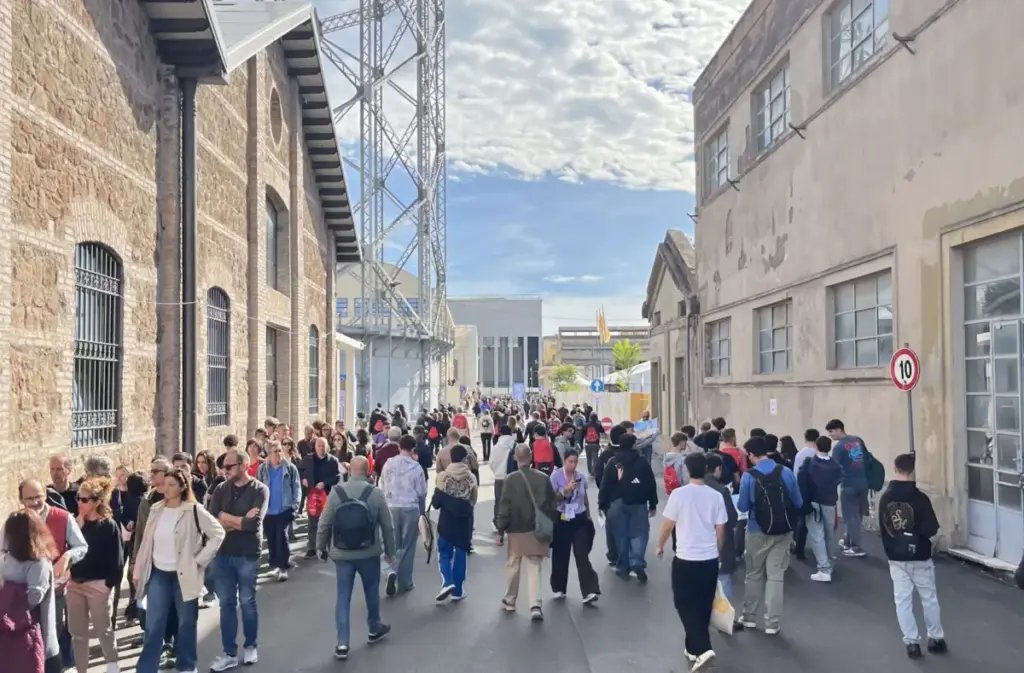
The vibrant spirit of open innovation, hands-on creativity, and technological ingenuity took over the Italian capital as Maker Faire Rome drew massive crowds to the spectacular Gazometro event site. Spanning three full days from October 23 to 25, Europe’s largest maker event outside of the Bay Area once again proved why it is considered the premier show-and-tell of the continent, bringing together hundreds of enthusiastic exhibitors, university engineering teams, international sponsors, and curious visitors from all corners of Europe.

Established as a cornerstone for technological investment and educational advancement with the steadfast support of the Italian government, this year’s edition blended traditional maker mainstays—such as advanced electronics, industrial robotics, and digital fabrication—with a distinctly European focus on sustainability and the circular economy. True to form, the exhibits were infused with Italy’s trademark flair for bold, elegant design, showcasing how cutting-edge engineering can seamlessly merge with aesthetic beauty.

Among the major powerhouses supporting the event were familiar industry mainstays like DigiKey and Microchip, standing shoulder-to-shoulder with Italian electronics giants Arduino and STMicroelectronics. These companies used the massive venue to demonstrate a wide array of innovative robotics and gaming projects, highlighting the capabilities of new hardware iterations like the Arduino Uno Q and Ventuno Q boards, which harness powerful STM microcontrollers paired with advanced Qualcomm processors.

The exhibition grounds offered a dizzying array of technological marvels, starting with contributions from Italy’s National Research Council. Researchers from the institution presented the B-Shell, a Bistable Collapsible Gridshell developed by the Visual Computing Lab. Designed to be transported flat and popped effortlessly into shape, the ingenious structure points toward potential applications in extreme environments, including outer space exploration. Nearby, agricultural and botanical engineering projects explored the optimization of light spectra for advanced plant growth lamps, pointing toward more efficient urban and controlled-environment agriculture.

Pop culture and cinema history also found a prominent home at the Gazometro, courtesy of a true centerpiece: an original DeLorean DMC-12 time machine from the filming of Back to the Future. Designed by Giorgetto Giugiaro and on loan from the Enter Technikwelt Solothurn museum in Switzerland, the vehicle drew crowds eager to catch a glimpse of movie history, while representatives from the Swiss museum looked ahead to their own regional Maker Faire scheduled for the coming spring. Visitors walking the floor could even spot an operating Flux Capacitor at the booth of Elettronici Entusiasti magazine, where attendees eagerly lined up to solder custom electronics kits.

Digital fabrication enthusiasts found plenty to admire across the venue. Young engineer Romain Pras presented his work on the Aelox 5-axis 3D printer, an open-source project intended for release once testing is finalized. Meanwhile, Daniele Ingrassia and the team at InMachines introduced the Piccola desktop CNC mill, an open-source tool featuring certified safety features and control software, alongside advancements in their OpenLab series of digital fabrication machines, which now includes a metal printer utilizing laser sintering technology. At the M5Stack booth, founder and engineer Jimmy Lai showcased new hardware prototypes alongside popular StackChan robots, drawing praise from the maker community.

Sustainability and environmental protection emerged as central tenets across numerous academic and independent exhibits. University engineering teams displayed projects aimed at ecological preservation, including an AI-powered system designed to detect destructive Varroa mites within beehives, and advanced sensor setups meant to monitor and detect microplastics in drinking water. Artisanal creativity was equally prominent, exemplified by Hart Studio’s 3D-printed lamps, Giulio Sannito’s mechanical robot lamps, and Byludo Ecotech’s striking necklaces fashioned from repurposed computer keyboards and CDs. Similarly, Guida Patricia presented Project Baur, which successfully merges traditional Indonesian weaving patterns with Italian ceramic tile production.

The agricultural and culinary sectors—staples of Italian innovation—were well represented by ingenious domestic and commercial prototypes. GrainLab introduced a micro-maltery designed for sprouting small batches of custom grains, alongside ongoing experiments in 3D-printing grain-based foods with specialized textures to assist individuals with traditional eating difficulties. Other home-focused innovations included DiNicola Fungjhi’s modular mushroom-growing setups, the OzoSteam Station designed to clean clothing using only steam, ozone oxygenation, and hot air, and the DoughSpy, a sensor-driven proofing monitor created to optimize artisanal baking.

Robotics and assistive technology claimed a massive footprint at the fair, reflecting deep research contributions from institutions like the Italian Institute of Technology and Sapienza University of Rome. Projects on display included wearable airbags designed to protect workers from workplace falls, powered exoskeletons to assist with heavy manual labor, and virtual reality simulators tailored for robotic surgery and flight training. High school students also made a strong showing with Iris, an AI-driven robot designed to help autistic children manage frustration and develop attention and social skills using a Raspberry Pi and Arduino core.

Transportation and mobility innovations offered a glimpse into eco-friendly travel, ranging from solar-powered tadpole tricycles to the P3dalo, a 3D-printed pedal-power unit designed for small watercraft. The ubiquitous Italian Fiat Panda also received the maker treatment, appearing around the grounds humorously and sleekly modified as customized racing and rally vehicles. On the industrial logistics front, three engineering undergraduate students from Qatar—Jai Aadhithya, Nihal Ashik, and Hanish Abdulla—presented M.A.S.H., a modular automated sorting system controlled by STM32 microcontrollers that aims to reduce next-day package transit delays by up to 40 percent.

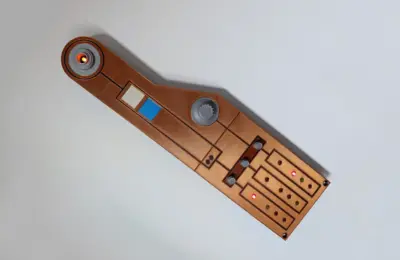
From advanced open-source PDAs like Matteo Villoni’s Orion handheld to oceanographic data collection tools like the AliSeas Box—a wave-compensating, AI-enabled fish identification and weighing system created by a marine biologist and a physicist—Maker Faire Rome 2026 once again underscored the limitless potential of the global maker movement. As the event drew to a close, attendees and exhibitors exchanged farewells, leaving behind a rich showcase of human creativity that continues to shape the technological landscape of Europe and beyond.