


The modern landscape of short-term vacation rentals has undergone a profound transformation over the past decade. What once began as a peer-to-peer movement rooted in genuine homestays—where travelers shared space, conversation, and local insights with resident homeowners—has increasingly morphed into a corporate hospitality ecosystem. Today, it is far more common for a listing to be managed by an anonymous third-party property management company rather than an individual. In these instances, a traveler’s primary point of contact is often a digital chat function issuing automated lockbox codes and strict check-out checklists, entirely devoid of human warmth or local mentorship.
Yet, pockets of the original ethos remain for travelers willing to look past the algorithmic homogeneity. A prime example can be found at Casa Astória, a soulful, meticulously crafted apartment property tucked into the historic fabric of Porto, Portugal’s vibrant and increasingly trendy second-largest city.

The property’s heartbeat is Francisco, a Porto-born architect and seasoned superhost who brings 14 years of hospitality experience to his craft. Francisco owns the historic building and lives on the top floor with his wife and newborn child. Upon arrival, guests are frequently greeted in the shared backyard by Francisco and Hydra, his exceptionally friendly Bernese mountain dog. Such encounters highlight a stark contrast to the sterile, remote-managed corporate rentals dominating the current market, instantly making arriving visitors feel as though they have hit the host jackpot. In addition to Casa Astória, Francisco also manages another property within the same building: a two-bedroom flat that features sweeping views of the adjacent river.
Francisco’s professional background as an architect is immediately apparent throughout the property, which is housed inside a historic 1830 building that he personally restored and renovated. The journey into the building begins in a sunlit foyer that functions almost like a boutique gallery, serving as a treasure trove of vintage rugs, antique furniture, and shelves lined with museum-worthy collectibles. Stepping beyond the shared spaces and into the one-bedroom "Arts Apartment," guests encounter a space that unapologetically prioritizes aesthetic charm and historic character over expansive square footage. While the floor plan is compact and closet space is minimal, the prime central location and access to the shared garden easily compensate for the tight quarters. For travelers on a short trip who plan to spend their days exploring the city rather than lounging indoors, living out of a suitcase proves to be a minor compromise.
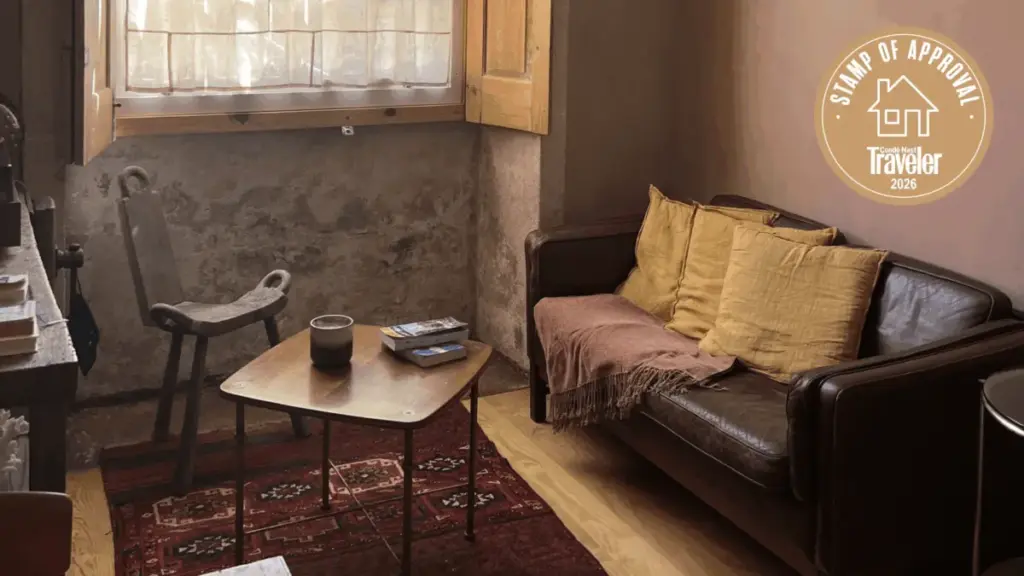
During the rare moments when guests choose to stay indoors, the apartment fosters an immediate sense of comfort through earth-toned walls, carefully curated art, and thoughtful design details that imbue the space with a warm, lived-in atmosphere. The kitchenette is rudimentary, equipped with a mini fridge, a stovetop lacking an oven, a sink, and basic cooking essentials, alongside the luxurious touch of two different coffee makers. Sharing the same open space is a compact two-person wooden dining table and a small yet comfortable leather couch. In the mornings, natural light filters generously through the large living room window. By nightfall, the vintage stereo system and Bluetooth radio provide an ideal ambiance for enjoying a glass of wine while preparing for a night out in the city.

The bedroom features a full-size bed outfitted with high-quality linens and comfortable pillows. While the shower and sink area operates without a door—though it remains entirely separate from the toilet, which benefits from a fully enclosed, private room—the water pressure and temperature consistently deliver a high-quality experience. For pairs of travelers sharing the compact flat, simple organizational strategies, such as splitting belongings between the living room and the bedroom, ensure a harmonious stay, particularly for those accustomed to efficient spatial sharing.
When weighing the totality of the experience—the central address, the striking interior design, and the exceptional hospitality provided by an on-site owner—the value proposition feels remarkably fair and accurate to its description. Because of the physical dimensions of the flat, it is best suited for solo travelers, couples, or close friends who are entirely comfortable trading personal space for character and location.
Without question, the crown jewel of the property is the shared garden, an outdoor sanctuary offering sweeping, elevated views of the city and the river below. Furnished with comfortable seating areas where additional chairs can be requested upon need, the garden serves as a tranquil morning retreat for coffee or a quiet afternoon escape for reading, offering a much-needed respite after long, active days navigating the steep streets of Porto.

For first-time visitors to Porto, the apartment’s location in the central neighborhood of Sé proves exceptionally advantageous. Situated atop the historic Escadaria dos Guindais, the building sits in close proximity to the iconic Luís I Bridge, a frequent backdrop for tourist photography. While occasional street noise can drift into the living room, the bedroom remains remarkably peaceful, ensuring that sleep is never interrupted by late-night foot traffic.
This prime address places guests within easy walking distance of the bustling river district, the village of Gaia across the water, and major cultural landmarks such as the Porto Cathedral and the historic Mercado do Bolhão. Beyond the heavily trafficked tourist paths, Sé’s steep cobblestone alleyways harbor numerous hidden gems. Visitors might unexpectedly stumble upon pop-up art exhibitions like "State of Alavanca," mounted by local youth collectives within the skeletal ruins of abandoned buildings, or wander down toward the quieter banks of the river to discover authentic neighborhood dining spots. Among these is A Bolina Bar, where visitors can sample regional wines that rival even those found during dedicated excursions to the nearby Vinho Verde and Douro Valley vineyards.
Traveling to Porto from the United States has also grown increasingly seamless, aided by United Airlines’ extended non-stop routes from Newark and Delta Air Lines’ direct flights from JFK. For travelers making the journey, returning to this historic corner of Portugal will inevitably carry the added comfort of knowing that a warm welcome—and a friendly Bernese mountain dog named Hydra curled up by the front door—awaits at the end of the day.