

For much of Avatar: The Last Airbender, waterbending can appear to be the most restrictive of the four bending arts for one primary, practical reason: its practitioners require a physical source of water to manipulate. While firebenders generate their own flames, earth is found nearly everywhere beneath the feet of citizens, and air is continuously available around every corner, water is a finite resource in many environments. Throughout her journeys alongside Aang and the rest of Team Avatar, Katara is almost never seen without her trusted water skin for this exact tactical reason. A traditional waterbender stranded in the middle of a sprawling desert is nearly as helpless as a badgermole cub dropped into a deep swimming pool.
However, midway through the final season of Nickelodeon’s beloved animated series, that fundamental limitation serves as the foundation for one of the most horrifying narrative revelations in children’s television history. Water, as it turns out, is indeed everywhere—even inside living bodies. Discovering this truth, unfortunately, requires crossing a deeply disturbing ethical line.
Originally broadcast on November 9, 2007, the landmark Season 3 episode "The Puppetmaster" introduced viewers to bloodbending. This macabre technique allows an advanced waterbender to forcibly manipulate the water flowing inside another person’s body, effectively turning human beings into living puppets. Alongside this extreme and abusive application of waterbending, the episode also demonstrated that skilled practitioners could extract moisture directly out of living flora or even the surrounding air.
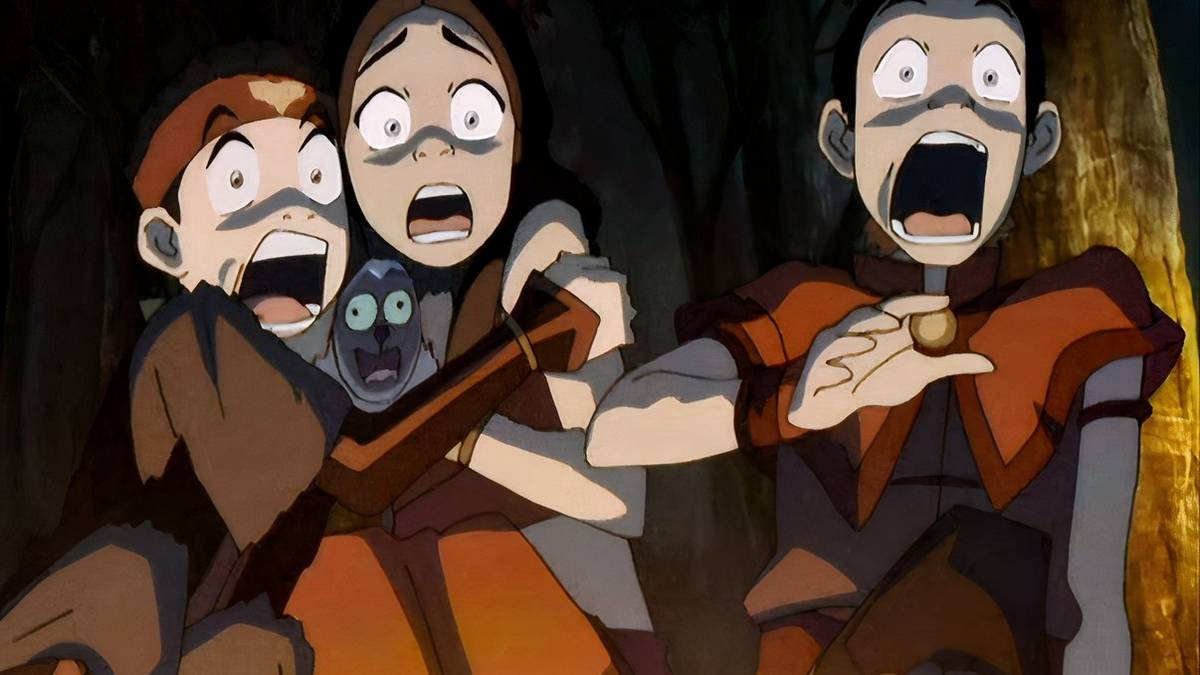
These chilling implications eventually provided some of The Legend of Korra’s most formidable and frightening villains with their signature combat abilities. Yet, the most emotionally resonant and disturbing achievement of the episode remains its profound impact on Katara herself. Widely regarded as the most compassionate and morally upright member of Team Avatar, she is forced under the cold light of a full moon to learn what is arguably the most evil and violating form of bending in existence.
"The Puppetmaster" Turns Avatar Into a Horror Story
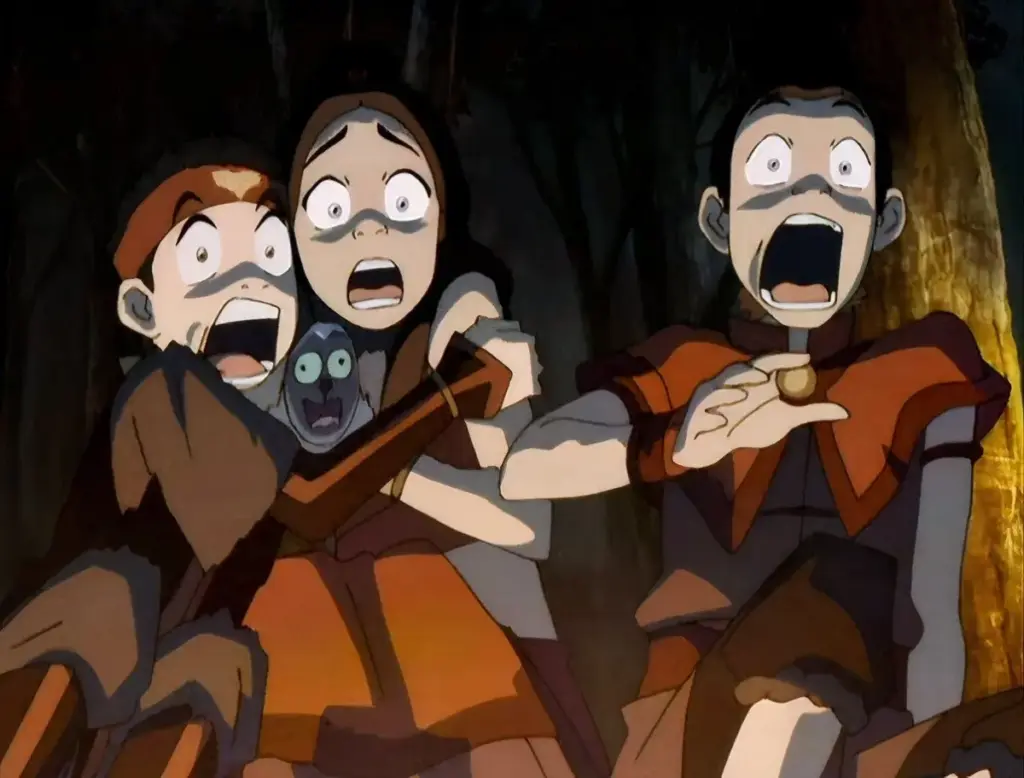
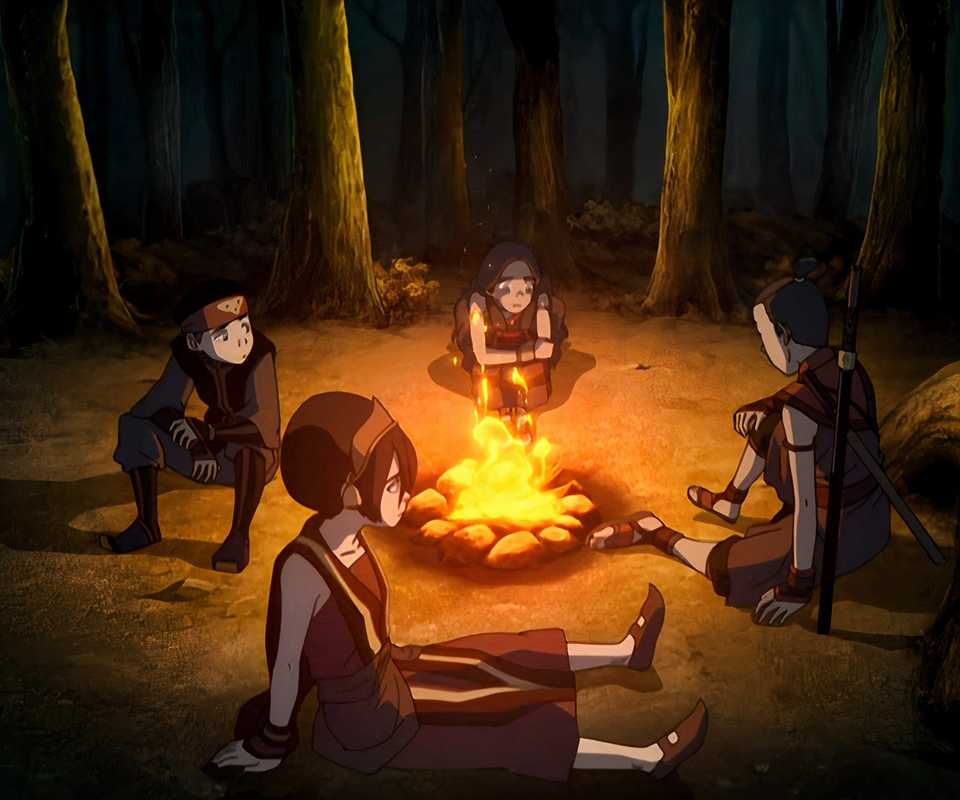
"The Puppetmaster" opens with the main characters huddled around a flickering campfire at night in an unfamiliar corner of the Fire Nation, immediately establishing a decidedly spooky and suspenseful atmosphere. Before long, an elderly, cheerful innkeeper named Hama crosses their path, warning the young travelers that local villagers have been mysteriously vanishing exclusively during the full moon. She offers them a secure place to sleep under her roof, steering the narrative into a small-town mystery where Toph acts as a sharp-witted investigator while Aang and Sokka serve as her bumbling assistants.
Despite harboring an eccentric and occasionally unnerving demeanor, Hama eventually drops a staggering revelation: she, too, is a waterbender hailing from the Southern Water Tribe. Considering that the Fire Nation systematically hunted down and imprisoned nearly every waterbender from the south decades prior—leaving Katara as the sole remaining practitioner of her people—Hama instantly transforms into the mentor Katara had desperately longed to find for most of her life.

Hama proceeds to instruct Katara on advanced techniques, showing her that a resourceful waterbender can draw ambient moisture directly from the air or pull hidden water from nearby plants. However, this lesson comes with a grim cost, as the demonstration visibly withers and kills the vibrant fire lilies Hama uses. It offers an unsettling yet undeniably practical solution to a waterbender’s most glaring vulnerability. Suddenly, a skilled practitioner with zero ethical reservations regarding the source of their water becomes potentially the most dangerous combatant among all four bending disciplines.
By this stage in the series’ run, Avatar had already established that the traditional boundaries of bending were flexible for those with exceptional talent. Lightning generation provided an advanced, highly destructive application of firebending that only elite practitioners could master. Toward the end of Book 2, Toph engineered a historic jailbreak by realizing that unrefined metal still contained trace amounts of earth, shattering the conventional wisdom that the two elements were entirely separate. These breakthroughs consistently rewarded extraordinary skill, discipline, and a willingness to question dogmatic assumptions.
Furthermore, the show’s first season established that cosmic phenomena profoundly influence bending abilities. Sozin’s Comet supercharges firebending to catastrophic levels once every century. Similarly, waterbenders draw their foundational power from the moon, mirroring the ocean’s tides—though earth and air lack a comparable celestial amplifier. This lunar connection becomes crucial because the peak energy of a full moon enables Hama to take the base concept of manipulating internal moisture to its absolute darkest extreme.
On the night of the full moon, Hama exposes her true nature, revealing that she was subjected to decades of brutal imprisonment in a dry Fire Nation cell with virtually no access to water. Over years of isolation and psychological torment, she innovated bloodbending, initially practicing by controlling the rats in her dungeon like marionettes before eventually turning the technique against her human jailers. She has been abducting citizens of the Fire Nation as a twisted form of retribution for the systematic decimation of her people. Because the Fire Nation nearly erased the Southern Water Tribe’s culture, Hama believes it is their collective duty to return the suffering.
When Katara flatly refuses to adopt this cruel philosophy, a brutal battle erupts between the two women, forcing them to violently rip moisture from their surrounding environment to sustain the fight.
Although Katara successfully resists Hama’s initial attempts to control her body, the arrival of Aang and Sokka places her friends in mortal peril. Driven by pure desperation, Katara is forced to use bloodbending against Hama to neutralize the threat. Even with the formidable power boost provided by the full moon, executing bloodbending demands immense internal strength and focus. Mastering such a feat solidifies Katara’s status as one of the premier waterbenders of her generation, drawing a thematic parallel to Toph’s historic discovery of metalbending.

The episode, however, refuses to grant the audience a triumphant or clean resolution. It concludes on a profoundly somber note, with Katara breaking down in uncontrollable tears of guilt and horror while Hama cackles maniacally, thrilled that her dark legacy has successfully been passed on.
The Legend of Korra Makes Bloodbending Everyone’s Problem
Decades later, during the tumultuous era depicted in The Legend of Korra, advanced iterations of bending are far more common across society. The police force of modern Republic City is composed entirely of expert metalbenders. Industrial firebenders generate lightning to power the metropolis’s electrical grid. Most alarmingly, a dangerous criminal syndicate masters bloodbending to a degree far exceeding anything Hama could have imagined in her isolation.
The primary antagonist of the series’ first season is a masked revolutionary known as Amon, who wields the terrifying power to permanently strip individuals of their bending abilities. Initially presented as a mysterious technique akin to the ancient energybending used by Aang against Fire Lord Ozai, it is eventually revealed that Amon is actually a Northern Water Tribe native named Noatak. Alongside his brother, Noatak inherited a rare genetic predisposition allowing them to execute psychic bloodbending. This meant they could subjugate victims’ bodies without the aid of a full moon and without making physical hand gestures. Noatak pushed the art even further, discovering how to permanently sever a person’s internal pathways of spiritual energy, thereby erasing their bending forever.
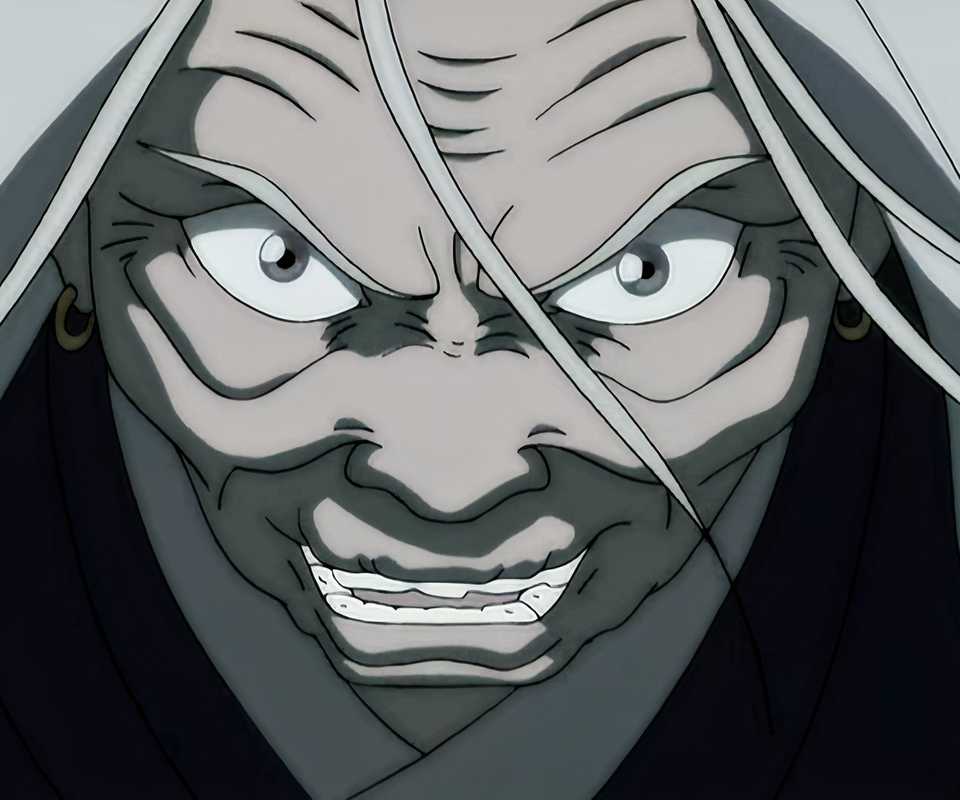
Late in the season, viewers learn that Noatak’s father was Yakone, a ruthless underworld crime boss who successfully concealed his abilities for years. Following his eventual capture and life sentence, Yakone used bloodbending to effortlessly overpower Sokka, Toph, and Aang in a courtroom brawl. However, Aang utilized the overwhelming power of the Avatar State to break free and permanently strip Yakone of his bending capabilities.
Yakone later fathered two sons, Noatak and Tarrlok, forcing them from a young age to practice bloodbending on wild animals and eventually on one another. Much like Hama, Yakone viewed his children’s immense potential merely as instruments for vengeance against the society that imprisoned him. As adults, Noatak adopted the alias Amon to spearhead an anti-bender revolution, while Tarrlok covertly infiltrated the political hierarchy of Republic City, eventually ascending to the chairmanship of the United Republic Council. Though the brothers ultimately operated independently—with Amon even stripping Tarrlok of his bending during a bitter power struggle—both relied heavily on bloodbending to execute their father’s dark ambitions through vastly different methods.
Notably, after Amon successfully deprives Korra of her water, earth, and firebending, it is an older Katara who steps forward in a medical tent to attempt healing her. Decades after Hama forced the burden of bloodbending onto her young shoulders, Katara finds herself face-to-face with the worst physical and emotional trauma the technique can inflict.

While the first season of The Legend of Korra concludes with an uplifting sequence in which Korra connects with her past lives and Aang fully restores her abilities, leaving the Avatar temporarily powerless due to an obscure and abusive offshoot of waterbending remains one of the boldest narrative choices in the franchise’s history.
Ultimately, all of these geopolitical conflicts and personal tragedies stem from a single, horrifying observation made by a tortured old woman in a damp cell: water exists inside living things. That fundamental scientific reality transformed the element traditionally associated with healing and life into an ultimate tool of domination. Years after its initial broadcast, Katara’s visceral reaction to bloodbending continues to evoke deep discomfort—often eclipsing the technique itself. While audiences are conditioned to cheer when heroes level up and unlock new capabilities, witnessing a power as violating and terrifying as bloodbending serves as a sobering reminder that some thresholds are better left uncrossed.