

While technology titans like Elon Musk have frequently looked to the stars with grand proposals of placing datacenters in space, industry trends and emerging policy discussions suggest that a much closer, yet far more unexpected, geographic frontier may soon become a widespread target: our lakes and oceans. As the global demand for artificial intelligence and cloud computing infrastructure skyrockets, tech companies are increasingly searching for alternative locations to house massive arrays of servers, moving away from congested residential land zones and toward aquatic environments.
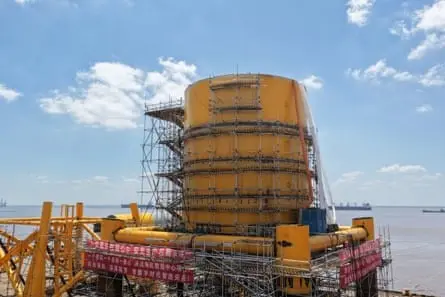
The concept is no longer confined to theoretical brainstorming. Two underwater datacenters are already operational off the coast of China, showcasing the physical viability of submerged, sealed-pod architecture. Meanwhile, recent reports indicate that the Trump administration is considering plans for four proposed underwater, sealed-pod datacenters to be built off the shores of Maine and Alaska. This federal interest aligns with broader political pushes to expand domestic technological capacity. At a campaign rally in Ohio last month, Donald Trump addressed the race for digital infrastructure, remarking that "there’s so much money to be made for Ohio… they’ll go to China… we want them."
For technology corporations, underwater iterations hold a distinct and powerful allure. Deploying datacenters beneath the water’s surface largely eliminates the intense community opposition and local zoning controversies that routinely plague terrestrial projects in residential and commercial areas on land. In theory, underwater datacenters could also significantly slash utility costs—particularly expenses related to cooling—addressing another major issue that is currently riling communities across the country over soaring electricity and water consumption.
The operational viability of this approach was highlighted by a Microsoft project set up off the coast of northern Scotland in 2018. Known as Project Natick, the initiative found that after two years of underwater deployment, server failures were reduced by an astonishing 87% compared with on-land datacenter equivalents. Sealed in a nitrogen-filled cylinder on the seabed, the servers experienced far less corrosion and wear. Microsoft executives saw the project, which concluded after its initial two-year run, as an unmitigated success, planting the seed for broader industry ambitions.
This success makes the cool, salt-free waters of the Great Lakes—which serve as a vital resource for 30 million people residing in major metropolitan hubs such as Chicago, Toronto, and Detroit—potentially attractive targets for datacenter developers seeking optimal cooling environments close to major population centers.
Federal agencies are navigating a delicate balance between encouraging technological supremacy and safeguarding natural resources. A spokesperson for the federal Environmental Protection Agency stated that the agency "supports development of data center infrastructure that is essential to remaining the world leader in Super Intelligence while using its statutory authorities to protect water quality."
However, the potential environmental consequences of any similar project in the freshwater Great Lakes, which tens of millions of people depend on for their daily drinking water, could be profound. Local environmental activists are already worried and sounding the alarm, even though no specific underwater datacenter projects are currently formally proposed for the region. For these advocacy groups, proactive engagement is paramount, as they believe it is far better to prepare for potential threats than to be caught by surprise given the high stakes associated with such an ecologically sensitive ecosystem.
"We are concerned because if you think about what a datacenter does, it throws off a lot of heat. Lake Erie already has an issue with harmful algal blooms, and they develop because of heat, not only because of fertilizers and agricultural runoff," said John Lipaj of the Lake Erie Foundation, a non-profit organization based in Ohio.
The floor of Lake Erie on the United States side falls under the direct jurisdiction of the state of Ohio. In the past, the state government—where Republicans hold a supermajority—proposed legislation that would have made it easier for datacenter companies to discharge wastewater into public waterways. That measure was ultimately denied by the state’s Environmental Protection Agency last July following a fierce public outcry. Among the eight US Great Lakes states, only New York currently maintains a temporary statewide moratorium on datacenter construction, a restriction scheduled to conclude in mid-2027.

"We’re also concerned about the possibility of contamination and leaks. These have not been around a long time," Lipaj added, pointing to the structural and chemical risks inherent in housing heavy industrial hardware underwater. "We are concerned about the types of fluid contained in a datacenter, the batteries and electrical equipment. These are all things that could lead to a catastrophic failure that we don’t want happening in the Great Lakes."
Lake Erie sits adjacent to or close by major urban centers including Cleveland, Detroit, and Buffalo. It is already by far the warmest of the five Great Lakes during the summer months and ranks as one of the most polluted large lakes in the nation, largely due to heavy agricultural runoff in its western basin. A number of native fish species are already under severe threat due to the lake’s ongoing warming trend.
"Warm water can impact aquatic life and ecosystems in a number of ways. One immediate effect is what is known as a thermal shock," explained Helena Volzer of the Alliance for the Great Lakes, an environmental advocacy group based in Chicago. "Aquatic organisms are highly sensitive to temperature changes, and even a small, rapid increase of just two to five degrees Fahrenheit can be dramatic for the aquatic ecosystem. When a facility releases warm water, it can alter metabolism and increase oxygen demand, reduce dissolved oxygen availability, disrupt food webs, [and] force fish to move away from preferred habitats."
Public resistance is already materializing at the grassroots level. On November 3, residents of Conneaut, a Lake Erie community of approximately 12,000 people located an hour’s drive northeast of Cleveland, voted decisively in favor of a charter amendment to prohibit the construction of large datacenters in their area.
Despite the looming environmental concerns, the broader concept of offshore underwater datacenters continues to draw interest from technologists who point out that, unlike the open ocean, the Great Lakes ecosystem lacks large marine fauna that might be disturbed by physical infrastructure.
"They require a lot of energy for cooling… one of the biggest advantages of these underwater datacenters is the low cooling cost associated. They don’t have to spend a lot to cool the servers," said Nir Kshetri, a professor of emerging technologies at the University of North Carolina Greensboro. "Datacenters have been a big issue for communities and in the recent elections. Also, datacenters don’t have to worry about any latency problems because they can be located close to large population centers where they are needed. A lake is a great place to do a datacenter. Cold water is even better."
Nevertheless, the Great Lakes present significant logistical and physical challenges for any such marine engineering projects. Last winter brought one of the most extensive Great Lakes freeze-ups in decades, with almost all of Lake Erie and up to half of the other four lakes freezing over to depths of several feet. Experts note that it remains unclear to what extent shifting ice cover and deep winter freezes could impact submerged installations.
Furthermore, major technology players are treading carefully. A Microsoft spokesperson stated that the company has "no plans to deploy an underwater datacenter in any location at this time," adding that "our focus today is on building and operating datacenters responsibly on land." Meanwhile, a spokesperson for the Ohio Environmental Protection Agency confirmed that the agency has not yet received any applications to permit an underwater datacenter in its designated sector of Lake Erie.
For community advocates like Lipaj, waiting for formal applications to arrive is not a viable strategy. The Lake Erie Foundation has already initiated contact with state representatives and state senators across New York, Ohio, and Michigan to discuss the emerging issue.
"Whether or not they happen, [we’re saying] let’s propose to state legislatures in Great Lakes states that they consider that this may be coming down the line and let’s get some regulations in place before the datacenter developers make their proposals and then state legislators are scrambling. That’s what we’re trying to avoid. We’re exercising an abundance of caution," Lipaj said. "The Great Lakes states should take some leadership in this, get the regulations written so that nothing is forced on them."