


For generations, wrapping russet potatoes in aluminum foil has been a standard practice in many households, often seen as a way to lock in moisture and ensure an evenly cooked interior. Culinary authorities, however, caution against this method, explaining that while foil does create a tender inside, it traps steam and ultimately renders the potato skin unappealingly soft. To achieve a truly crisp, savory skin, experts recommend abandoning the foil entirely and baking the potatoes directly on the oven grate at a high temperature. Rubbing scrubbed russets with vegetable oil and applying a generous layer of salt before baking can even yield a texture and flavor reminiscent of a crispy potato chip.
A common misconception among home cooks is that baking potatoes directly on the oven rack at high temperatures might dry out or ruin the fluffy interior that defines a great baked potato. Surprisingly, this is not the case. The secret to achieving that coveted light, fluffy texture inside comes down to internal temperature rather than wrapped moisture. Food science dictates that the interior must reach at least 212 degrees Fahrenheit. While taking the internal temperature of a potato with a meat thermometer might feel unconventional or even overly meticulous to some, culinary professionals insist it is a fail-safe route to achieving the most enjoyable culinary result.
Once the potato emerges from the oven perfectly crisp on the outside and fluffy on the inside, a secondary culinary debate arises regarding the proper method for opening it. The technique used to expose the steamy interior can actually affect the final texture of the potato. Representatives for organizations such as the Idaho Potato Commission swear that the way a baked potato is opened matters, choosing to eschew a traditional knife in favor of a fork to gently poke a plus sign into the surface. This gentle approach avoids crushing the delicate interior structure that the cook worked hard to achieve during the high-temperature baking process.
Other culinary figures favor a more dramatic physical approach to breaking open the spud. Beloved food writer Nigel Slater prefers to strike the potato as though he were participating in a martial arts competition, bringing his hand down in a swift motion. In a piece written for The Guardian, Slater describes the technique, advising cooks to bring their hand down fast and sharp as if performing a karate chop, but only with enough force to crack open the potato skin. Whether or not to attempt this dramatic feat remains entirely in the hands of the individual potato-baker, though testing has revealed that a simpler, single fork-pricked line drawn down the length of the spud is often the most effective method for maintaining ideal texture without unnecessary destruction.
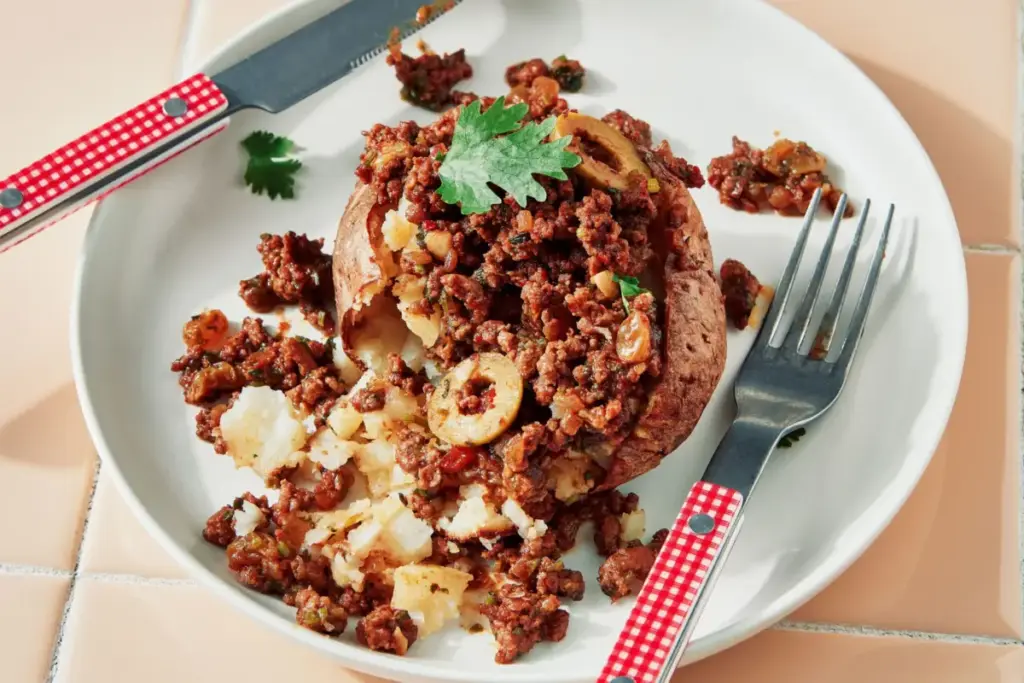
With the potato properly baked, temperature-verified, and cracked open, it transitions from a simple side dish into a versatile canvas capable of supporting a wide array of hearty fillings. A freshly opened baked potato can be loaded with ingredients ranging from classic tuna salad to cheesy baked beans, making it a flexible option for weeknight meals. Recent culinary features highlight a more complex, savory option inspired by picadillo, utilizing ground beef packed with essential nutrients like protein, iron, and creatine, though alternatives like ground turkey or chicken work just as nicely for those seeking different dietary profiles.
This picadillo-inspired filling incorporates unique flavor elements such as golden raisins and stuffed olives, creating a complex profile of sweet and savory notes. Accompanied by a spicy tomato sauce, the filling slowly soaks into the fluffy potato interior, further seasoning the starch with every passing minute it rests on the plate. Culinary experts emphasize the importance of ingredient selection when building these flavors, recommending the use of a proper chili powder that consists of a balanced blend of spices including chiles, cumin, oregano, and garlic, rather than relying solely on dried ground chiles.
This elevated approach to the baked potato aligns with a broader philosophy that healthy cooking does not have to be overly complicated. In fact, culinary professionals often find that the simpler a dish is prepared, the better it ultimately tastes. Through regular recipe features in culinary publications, Test Kitchen editors and food writers continue to share approachable, feel-good recipes designed for any day of the week, reminding home cooks that humble ingredients like white potatoes are far from empty calories and can actually serve as a nutritious and satisfying foundation for wholesome meals.