
When society photographer and author Jessica Craig-Martin set out to explore real estate options in Hudson, New York, the historic property on Willard Place was never intended to be a serious contender. It was added to her itinerary purely out of a sense of morbid curiosity. The house appeared entirely eccentric in its online listing, boasting a wild array of colors and unorthodox architectural embellishments both inside and out. It struck a confounding balance between hideous and fabulous, compelling Craig-Martin to witness its madness in person.

Accompanied by real estate agent Julia Crowley, who scheduled Willard Place as the very first stop on their house-hunting tour, and artist Helen Marden—a close friend and the owner of the nearby Hotel Tivoli—Craig-Martin arrived at the property. Stepping out of the vehicle, Marden voiced the confusion shared by any casual observer: "What are we doing here?" Craig-Martin had simply forgotten to mention this purely voyeuristic side trip on their busy agenda.

The Reality Behind the Online Listing
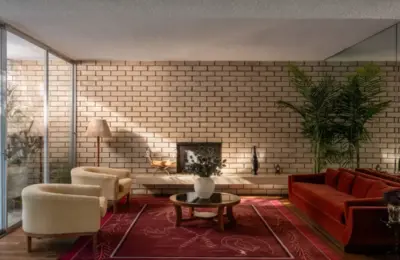
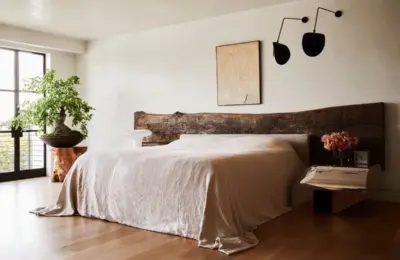
Anticipating a cramped interior packed to the brim with the bizarre furniture showcased in the digital listing, the trio was met with an entirely different reality upon crossing the threshold. The polychrome Victorian house was breathtakingly empty. The generous rooms and well-worn wood floors were illuminated solely by sharp shafts of winter sunlight. It quickly became apparent that the grotesque furnishings featured in the online photographs were entirely virtual—the result of a bizarre application of artificial intelligence.

The group sat quietly on the home’s vintage iron radiators, absorbing the structure’s graceful proportions and an unexpected, soothing calm. While the home’s inherent beauty was undeniable, it featured five bedrooms, making it significantly larger than what Craig-Martin had initially envisioned for herself. For a single occupant, managing such a sprawling space felt daunting. Helen Marden, however, held a starkly different view. At their next real estate stop, Marden took one look at the property from the car and refused to even step outside, silently casting her vote for Willard Place.

Uncovering the History of Willard Place
Over the following months, Craig-Martin continued her search across the region, but nothing else resonated with her creative sensibilities. Marden’s advice remained a constant refrain: "You should be thinking about Willard. It’s a good house."

Completed in 1875, the classic Victorian residence was constructed during the height of the Hudson whaling boom. That era of prosperity enriched the town and left behind a collection of similarly eccentric Victorian homes defined by multiple bow windows, sprawling terraces, and decorative turrets. Although Willard Place had stood empty and neglected for years, a thorough structural and professional assessment revealed no looming "old house" disasters waiting beneath the surface. Unable to shake the memory of the property’s unique charm and architectural integrity, Craig-Martin finally submitted an offer.

Moving day arrived with pragmatic simplicity. Enlisting a friend to help transition from New York City to upstate New York, Craig-Martin drove up in a rented van loaded with Moroccan rugs and a pair of inflatable mattresses. Their first night in the grand historic home was spent eating pizza on the bare floorboards in front of a roaring fireplace.

Two years later, the photographer cannot imagine life without the home’s abundant natural light, expansive volumes, and grand old-world flourishes. She playfully admits that surviving without a dramatic, Norma Desmond-style staircase now feels entirely unrealistic, reinforcing the notion that luxury is very much a one-way street.

A Curated Life Among Art and Oddities
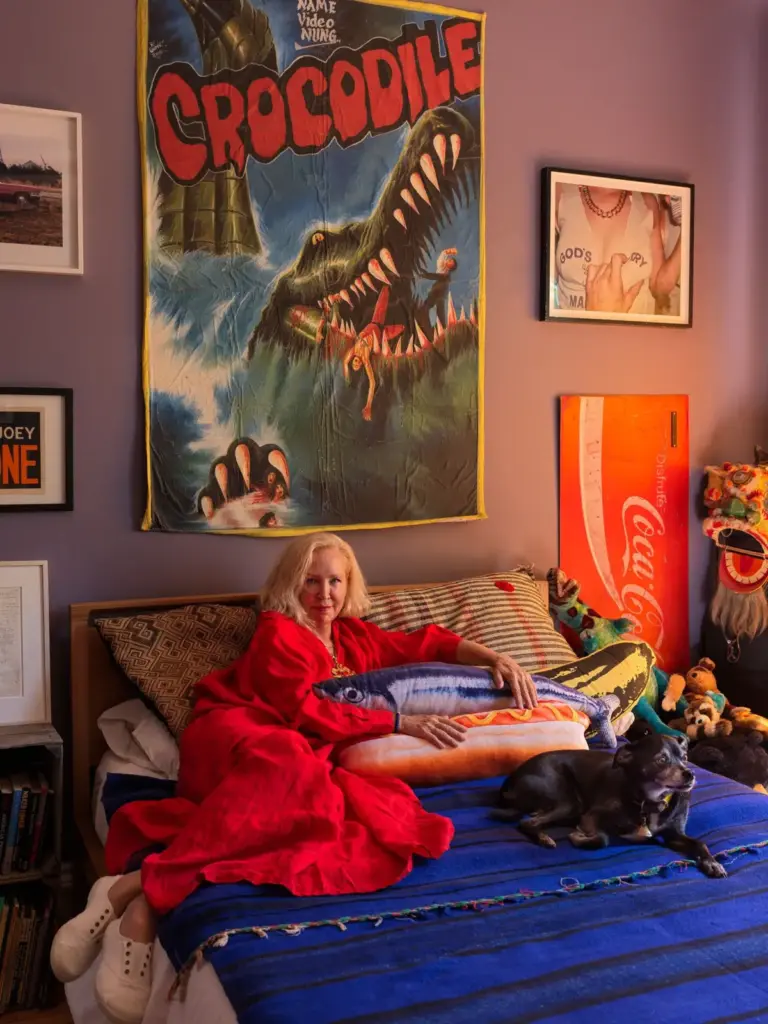
Rather than attempting to neutralize the home’s vibrant personality, Craig-Martin leaned into it completely. She introduced a red refrigerator and matching stove to complement the kitchen’s vintage red Formica countertops. The interior quickly filled with a lifetime’s accumulation of art, ephemera, and personal history. Works created by her parents and artist friends mingle effortlessly with artifacts, textiles, and natural oddities gathered from her global travels.

The eclectic collection extends into the realm of the wonderfully bizarre. Craig-Martin maintains a confessed weakness for inexpensive Japanese plush cushions, highlighted by a giant pink peach that, from a specific angle, morphs into an unmistakable pink rear end. Alligators and crocodiles also appear in various forms throughout the rooms, forming a decorative motif without a definitive explanation.

The aesthetic is decidedly detached from modernist creeds like "form follows function." Instead, the historic Victorian home has gracefully absorbed Craig-Martin’s distinct affinity for the ridiculous and the sublime alike. Willard Place proved Helen Marden right all along, serving as a welcoming sanctuary that perhaps recognizes in its owner a creative eccentricity that matches its own.

The home’s interior landscape reads like a living museum of contemporary art and personal memorabilia. In the living room, a painting by Haitian artist Ramphis Magloire hangs above the mantel, flanked by a Brice Marden etching gifted to Craig-Martin’s son at birth, and a Fernand Léger print presented by her artist father, Michael Craig-Martin. Additional furnishings and artwork span traditions from India, Morocco, Italy, China, and Indonesia.

The primary bedroom features a diverse curation including a painting by Michael Craig-Martin, a fireplace mantel piece by Charlie Lucas, a light sculpture by Theo Rosenblum, a photograph of Fran Lebowitz taken by Craig-Martin herself, and a circular glass painting by her son, Finbar Craig-Martin. Elsewhere in the house, spaces are punctuated by a tall tower of Hermès boxes topped with a playful King Kong figurine moment, alongside works by Joel Shapiro, Nate Lowman, Jason Noyes, and Mary Heilmann.

As Jessica Craig-Martin continues her life and work within the walls of the Willard House, her journey from skeptical tourist to devoted upstate homeowner stands as a testament to the unpredictable nature of architectural attraction. Her forthcoming memoir, I Regret I Am Able to Attend: A Life Among Artists, is scheduled for publication on November 10, 2026.