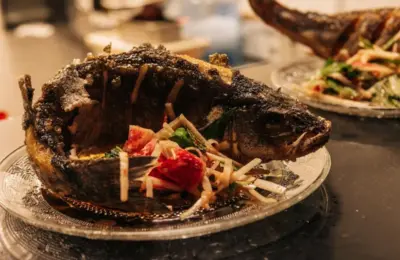



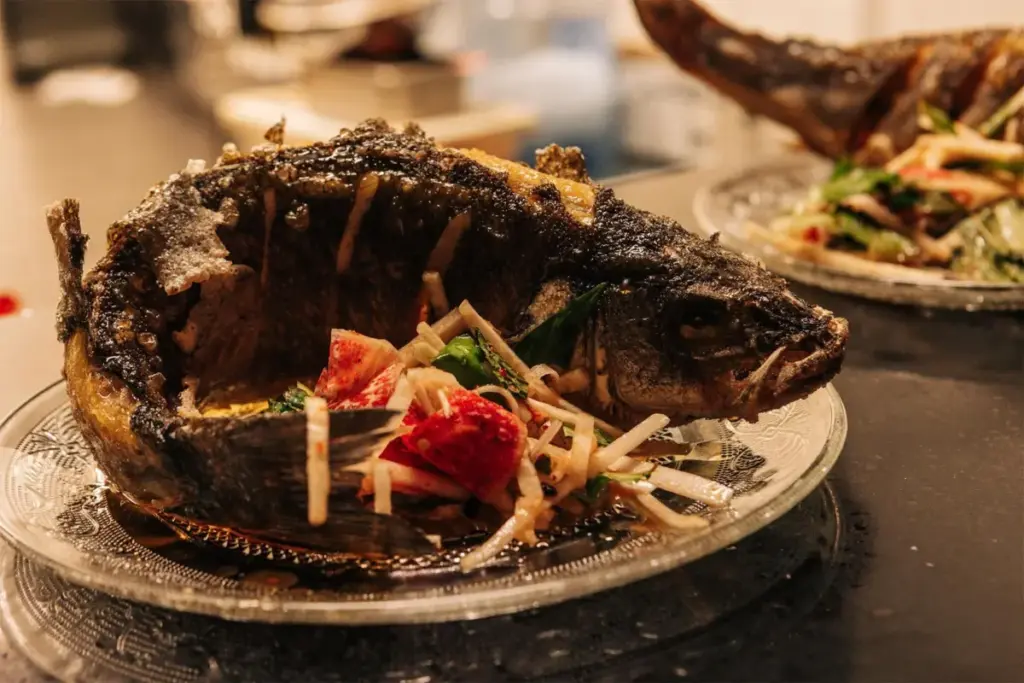
When Chanita Chayaluk set out to open Taan, her Chicago restaurant and wine bar, she harbored a clear and deliberate vision for her menu. She wanted to showcase Thai cuisine in a different light, moving past the narrow interpretations that have long dominated the American dining landscape. Explaining her motivation, Chayaluk notes that the first major wave of Thai immigration to Chicago occurred in the 1970s, and a significant portion of the Thai food available in the city still feels heavily anchored to that era. When Taan opened its doors in September, its menu boldly reflected this modern, nuanced ambition, featuring dishes such as miang, a Northern Thai delicacy made with fermented tea leaves, and a whole, deep-fried fish lacquered in a rich fish-sauce caramel.
Yet, stepping into the realities of operating an independent restaurant in the American Midwest introduced a distinct set of operational hurdles. Chayaluk quickly realized that the prevailing regional culture—often characterized by the well-meaning ethos of "Midwest nice"—permeated the dining room. Restaurants in the area frequently try to overaccommodate and appease the masses, a cultural reflex that soon began to clash with the precise execution required by Taan’s kitchen. In the early days of service, the restaurant was flooded with requests for custom modifications, substitutions, and sweeping dietary alterations.
These constant demands began to take a heavy toll. According to Chayaluk, accommodating every individual preference slowed down service speeds significantly, which ultimately degraded the overall guest experience for everyone in the room. Operating with a small kitchen staff and limited physical space, the team found it nearly impossible to keep pace with the custom orders. The tipping point arrived when a customer placed an order for green curry mussels, but with a specific demand: the dish should be prepared without the mussels. It was a surreal moment that made Chayaluk feel less like the proprietor of a distinct culinary establishment and more like a fast-food assembly line worker.
In response, Chayaluk took a decisive stand. She implemented a strict, limited substitution policy at Taan, utilizing Instagram to communicate directly with her clientele. In her public announcement, she explained that foundational ingredients like fish sauce and shrimp paste are not optional additions; rather, they form the very fabric that defines the cuisine, and therefore cannot be removed from any dishes that incorporate them.
This culinary battle line is part of a broader cultural friction point sweeping through the contemporary dining scene. Roughly a decade ago, menu substitution culture was widely frowned upon by culinary professionals and derided in food media as poor restaurant etiquette. Diners were generally expected to trust the vision of the chef and accept dishes as they were written on the menu. Recently, however, restaurant operators report that the culture of customization has bubbled back up into full force, presenting an unprecedented challenge to kitchen operations.
Several distinct cultural and economic factors have converged to create this environment. The proliferation of fast-casual "slop bowl" and customizable lunch spots has primed modern consumers to expect a granular level of personalization with every single order they place. Meanwhile, influential hospitality movements, such as the philosophies popularized by books like Unreasonable Hospitality, have reinforced an intensified version of the "customer is always right" mentality, encouraging service teams to bend over backward to satisfy every whim.
At the same time, the rise of food influencers in the digital review space has made any pushback from a restaurant—including a decision not to honor a specific dietary preference—ripe for an immediate, viral takedown. Couple all of this with the precarious economic reality of keeping an independent restaurant afloat in a high-cost environment, and many operators have simply given in. Some surrender to endless specific requests, while others alter their core menus entirely, contributing to trends like the widespread "de-spicification" of global cuisines to suit cautious palates.
Amid this landscape of concession, a growing vanguard of independent restaurants is choosing to stand its ground. Alongside Taan in Chicago, establishments like New York’s Ha’s Snack Bar proudly broadcast their uncompromising culinary identity, using platforms like Instagram to announce plainly that everything on their menu contains fish sauce.
A similar dynamic unfolded at Lom Wong in Phoenix, Arizona, where chef-owners Yotaka "Sunny" Martin and Alex Martin experienced a sharp spike in modification requests following a wave of high-profile national attention. Last year, Sunny Martin was recognized by the James Beard Foundation, and in August, the restaurant earned a prestigious Michelin Bib Gourmand designation.
According to Alex Martin, the accolades brought a sudden influx of new guests who were eager to pick dishes apart. Diners began asking for modifications or expressing confusion over the restaurant’s service style, questioning why courses were not paced in a traditional European fashion. Alex Martin points out that there is a prevailing European distinction of what an award-winning restaurant is supposed to look like, leading many guests to mistakenly equate that kind of recognition with a formal, white-tablecloth dining room. The team’s response was steadfast: that has never been who they are, and it is never what their restaurant will become.
Following the playbook established by peers like Taan, Lom Wong turned to social media to clearly set expectations before diners even stepped through the front door. The restaurant announced that it would not make substitutions simply to make a dish more familiar to Western palates, and explicitly warned that certain menu choices would retain authentic characteristics—such as beef containing gristle and fish being served whole—that were fully intentional.
Reflecting on the philosophy guiding these decisions, Alex Martin describes Sunny Martin as their guiding light of cultural context. The kitchen constantly evaluates whether changing a specific element of a dish would compromise its structural and cultural integrity. While compromises are occasionally made—such as allowing the restaurant’s mango salad to be ordered with shrimp served on the side—they draw a firm line against removing essential proteins like beef or eliminating shrimp paste from dishes where it is structurally necessary.
Chayaluk has adopted a similarly structured approach at Taan. To accommodate diners with genuine dietary restrictions without altering the core menu, the restaurant consistently offers a dedicated vegan and gluten-free option—currently a fried rice dish—that Chayaluk describes as a catchall for guests who cannot consume other items. She emphasizes that this option is crafted with care, ensuring the dish is substantial and genuinely delicious rather than serving as an afterthought or a meager appetizer.
Behind these boundary-setting measures is a shared recognition that staff protection is just as vital as guest satisfaction. Both Chayaluk and Alex Martin emphasize that their firm policies are designed to protect their kitchen and front-of-house teams’ peace of mind just as much as they are meant to maintain quality control for the diners. While these boundaries have occasionally triggered minor backlash, the proactive expectation-setting—reinforced by social media posts and clear communication at the start of the meal—has been overwhelmingly well-received by the public.
When addressing guests who request modifications, the approach is rooted in polite firmness rather than confrontation. As Alex Martin explains, their strategy involves kindly acknowledging a diner’s personal preferences while reminding them that those are individual choices, and subsequently steering them toward existing menu items that naturally align with their tastes.