


Some of the most enduring and memorable works of science fiction rely on a deceptively simple premise, taking one impossible or dystopian concept and patiently exploring the ripple effects across everyday life. From the genetic stratification of Gattaca to the societal aftermath of The Leftovers, the best speculative fiction uses high-concept world-building to examine deeply human themes. Netflix’s latest original anime contribution looks to follow in that exact tradition, offering a striking and melancholic look at a world pushed to the absolute brink of survival.
Arriving as a surprising collaboration between two of the most iconic animation studios in the industry, Sunrise and Shaft, Fool Night imagines a bleak future where the sun has completely vanished from the sky. Left without natural sunlight, humanity is forced to adopt an unusual and unsettling solution to secure breathable oxygen: turning volunteer humans into living plants. It is a grim, heavy setup, made all the more gripping by a visual identity that constantly juxtaposes human decay with budding, creeping flora. Reviewers who have received early access to the first three episodes of the 12-episode series report being entirely hooked, drawn in by its sharp character work, unsettling world-building, and pervasive atmosphere.
A Chilling Premise Rooted in Unsettling Beauty
Based on the manga created by Kasumi Yasuda and directed by Atsuyuki Yukawa, Fool Night is a surprisingly intimate story set against the backdrop of an enormous environmental catastrophe. Rather than thrusting viewers directly into an expansive, fast-paced science fiction mystery, Yukawa takes a methodical approach. He introduces the main characters with patience, showing how their lives become intertwined by circumstances neither could have anticipated. This deliberate pacing offers plenty of room to establish the people at the center of a world literally steeped in perpetual darkness, comforted only by the discarded remains of volunteers transformed into grotesque flora.
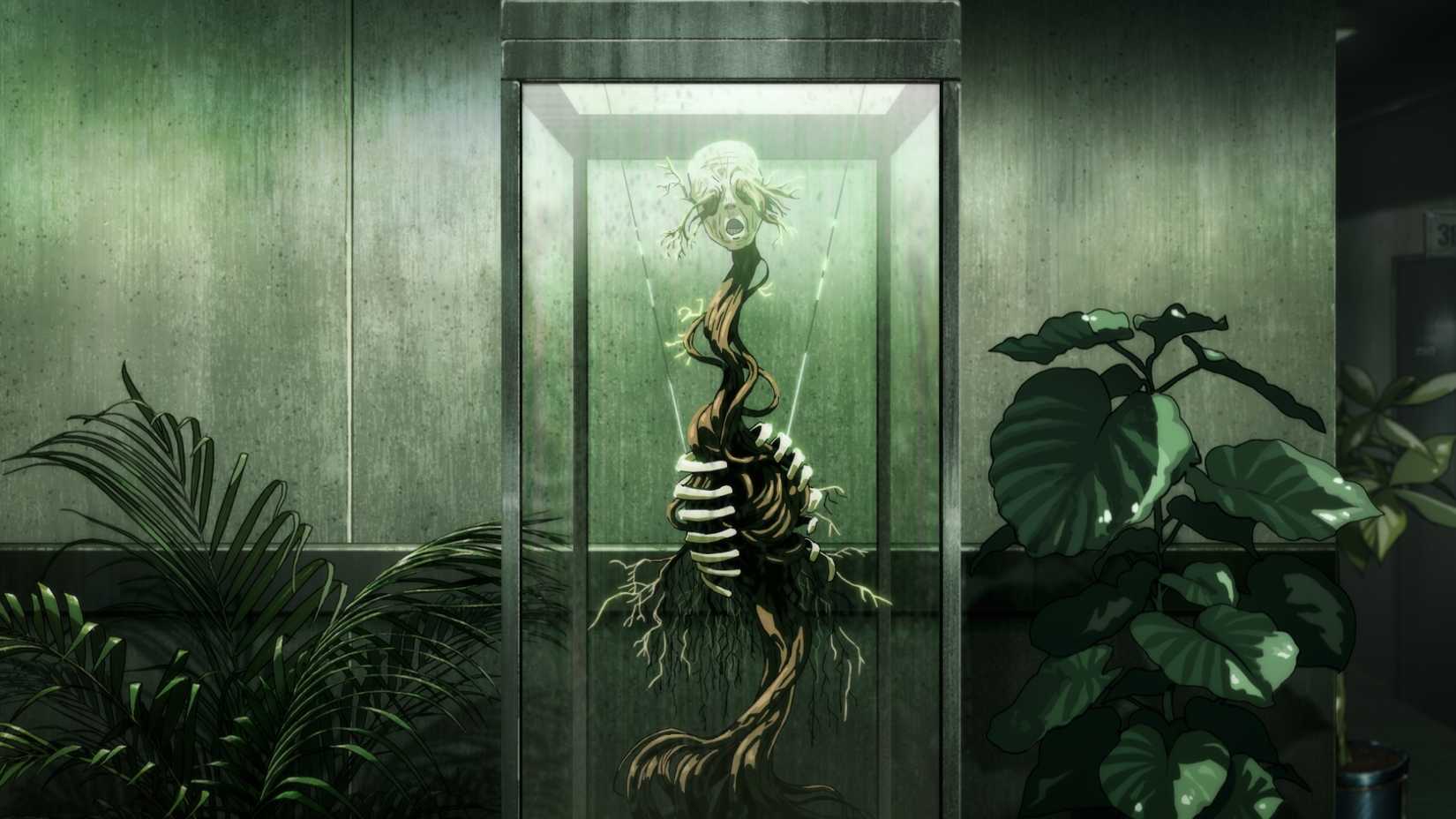
That is the reality of the setting: a miserable environment governed purely by the laws of survival. With the sun gone, oxygen increasingly scarce, and most traditional plant life dying off as a result, humanity has turned to a process called transfloration. This procedure allows terminally ill or desperate volunteers to undergo an operation that implants a seed inside their bodies in exchange for a payout of 10 million yen. Over the course of two years, that seed gradually grows until the individual becomes what the society calls a "spiritflor"—essentially a human-plant hybrid sprout that helps replenish the dwindling oxygen supply. It is an extraordinary solution to an unprecedented problem, though the implications become considerably more disturbing when witnessing what it actually looks like in practice.

Spiritflor are omnipresent in the world of Fool Night. Their bodies litter city streets, fill abandoned alleyways, and even occupy the stairwells and corridors of ordinary apartment buildings. Some retain a hauntingly tragic beauty, with delicate sprouts and foliage emerging from the remains of their human frames. Others are considerably more grotesque, their former appearances barely recognizable beneath thick, sprawling vegetation. They serve as jarring reminders of the people who once lived there, existing in a state that is simultaneously beautiful and deeply unsettling. Perhaps the most harrowing aspect of the phenomenon is that, during the transformation process, they are still fundamentally alive.
The series introduces this grotesque imagery with narrative ingenuity in its opening sequence, establishing just how accustomed the world’s inhabitants have become to their surreal environment. Standing outside a guitar store, a young child named Toshio Kamiya insists to his friend Yomiko Horai that he is going to be a musician one day. It is pure wishful thinking, and Yomiko attempts to ground him in reality, even as Toshio beams at the thought of future stardom. As they walk down an alleyway, with Toshio making playful guitar noises and pretending to play an instrument while twirling around, this lighthearted moment is starkly juxtaposed with the bodies of spiritflor lining the fences right beside them.
It is an especially eerie scene, with the children paying little to no mind to the grotesquery surrounding them. They have presumably walked past these bodies countless times before, and that normalization is perhaps the most disturbing takeaway of the entire sequence. This is simply what life looks like now. It serves as an effective mechanism for introducing the series’ central conceit without stopping the narrative to deliver heavy-handed exposition. The world has adapted to something that should be horrifying, and the younger generation has grown up knowing nothing else.
Two Sides of a Dying World
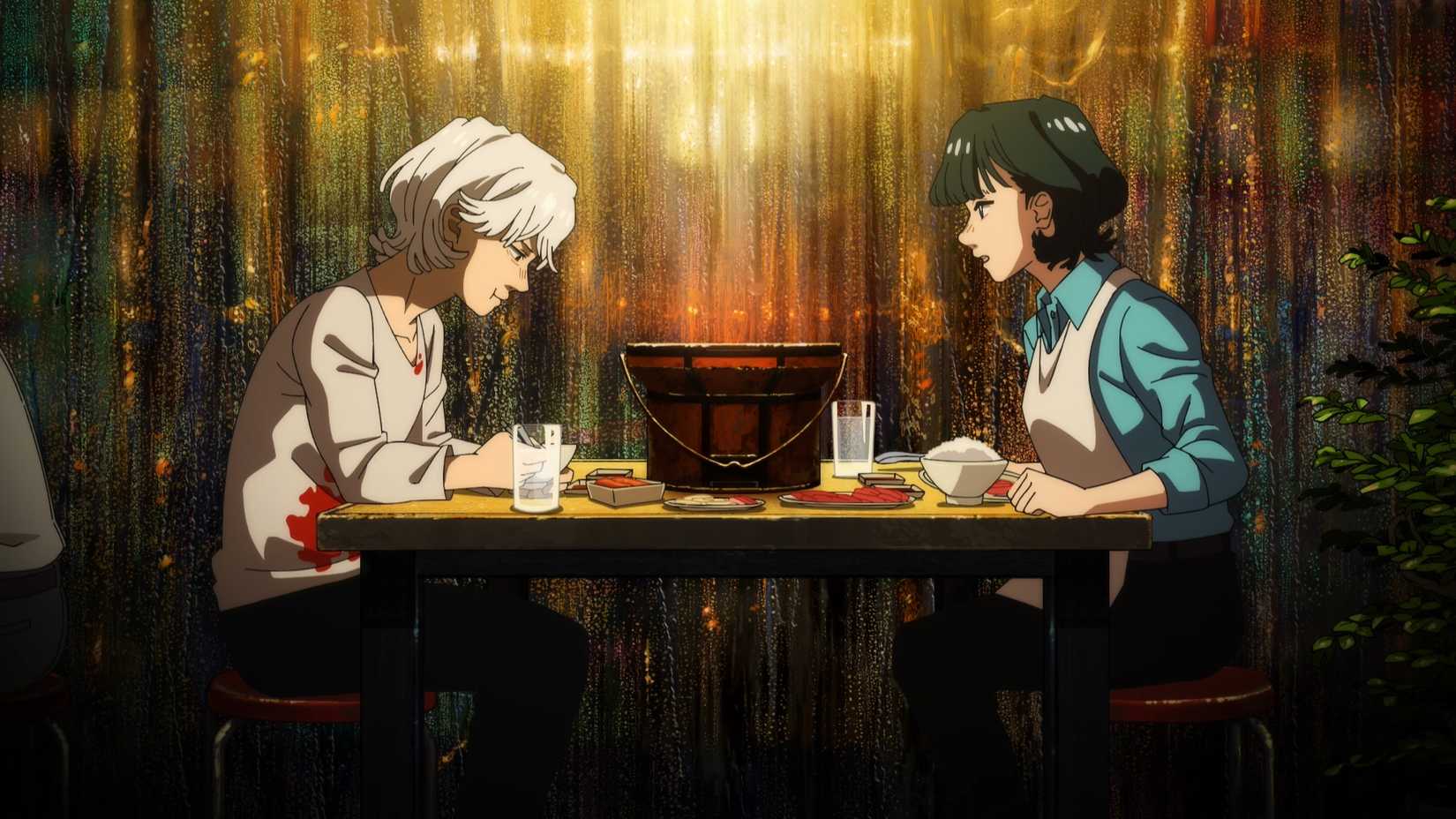
What makes Fool Night immediately compelling is not just its grim premise and striking setting, but how sharply it uses childhood friends Toshio and Yomiko to expose the severe class divide at the heart of its dying society. Now adults who have been reunited after years apart, the two characters represent completely opposite ends of transfloration’s bleak economic ladder.
Toshio is trapped at the absolute bottom of society. As a disillusioned factory worker crushed by unrelenting poverty, systemic debt, and an abusive home life, he is eventually left with no viable future other than to sell his body to the state. By undergoing the procedure, Toshio trades his remaining two years of humanity for a 10-million-yen payout, only to be robbed almost immediately after leaving the facility. Yomiko, by contrast, sits comfortably on the clinical side of the glass. She works as a researcher at Transflora Medical Facility 4, approving candidates and overseeing transfloration procedures, all while the moral weight of what she is doing hangs over her head like a creeping vine gathering blight.
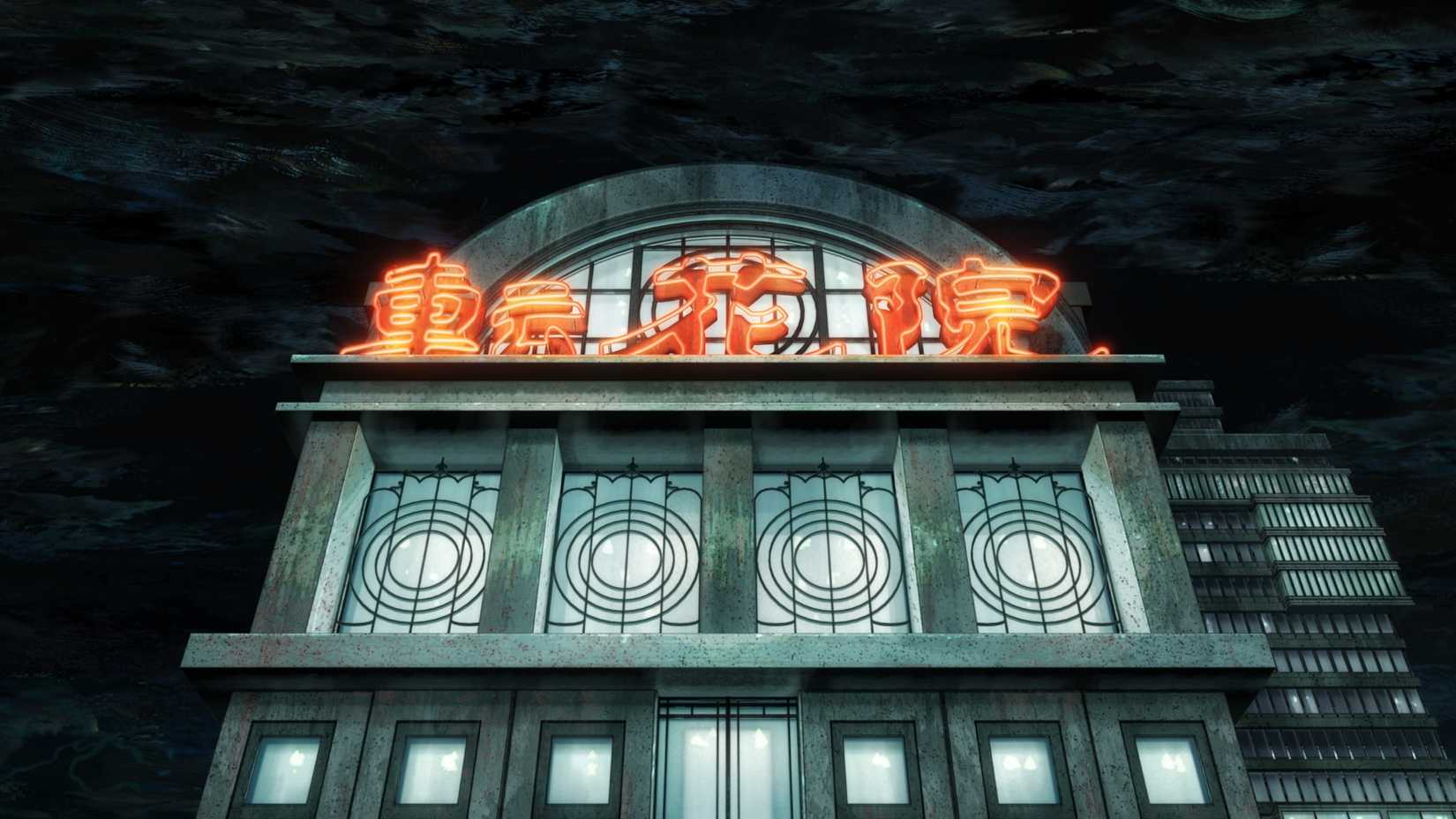
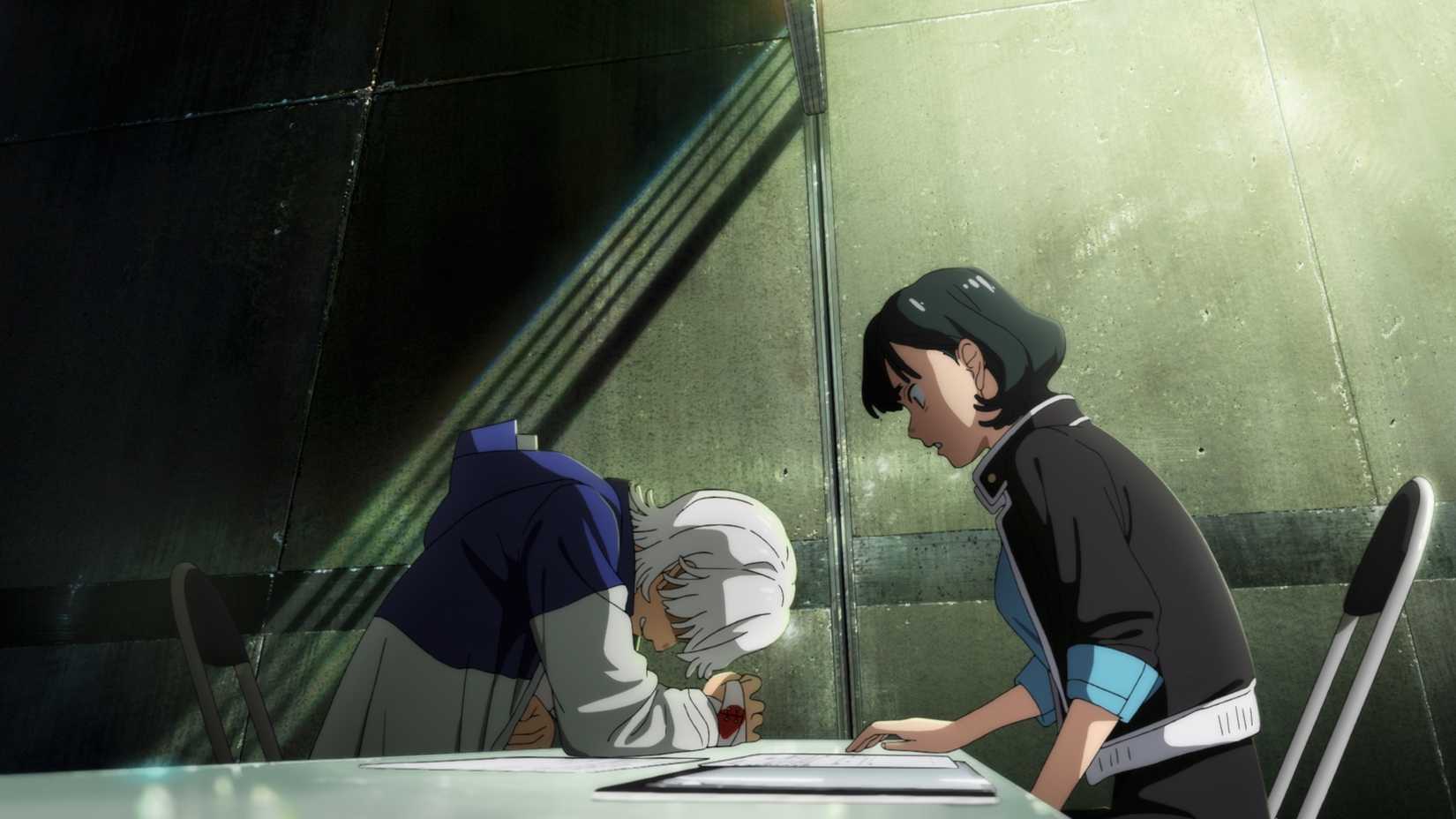
Their contrasting situations provide the series with its strongest dramatic friction. Early in the narrative, Yomiko is defined by a chilling professional detachment. When a colleague admits he feels like they have essentially committed murder after performing a procedure, she coolly insists they have merely "extended" a human life, hiding behind the clinical rhetoric of personal choice and patient consent. It is easy for her to rationalize transfloration when the patients are anonymous strangers, which is precisely why Toshio’s sudden appearance in her waiting room hits with such emotional force. Reuniting after years apart only to discover that someone she genuinely cares about has been cornered into becoming a plant shatters her clinical distance, turning an abstract ethical debate into an immediate personal crisis.
Rather than sinking entirely into unrelenting misery, the show smartly pivots their reunion into an intriguing partnership. When Yomiko discovers that the procedure has left Toshio with the bizarre, unprecedented ability to hear the faint voices of spiritflor, she pulls him deeper into the facility’s orbit. Alongside a sour-faced unsection chief named Jin Hiragishi, the two begin untangling the darker mysteries behind the program. It provides a character-first hook that grounds the high-concept science fiction in genuine human stakes, all set against the backdrop of a looming murder investigation that could alter the world forever.
Sunrise and Shaft Deliver Visual Distinction
If there is one element that immediately separates Fool Night from other science fiction anime, it is the sheer confidence of its visual presentation. The collaboration between two of the industry’s most legendary animation studios—Sunrise, best known for its work on Gundam and Cowboy Bebop, and Shaft, renowned for the Monogatari series and Virgin Punk—brings significant pedigree to the project. Seeing these two distinct creative forces unite on a production of this caliber yields results that more than live up to the occasion.
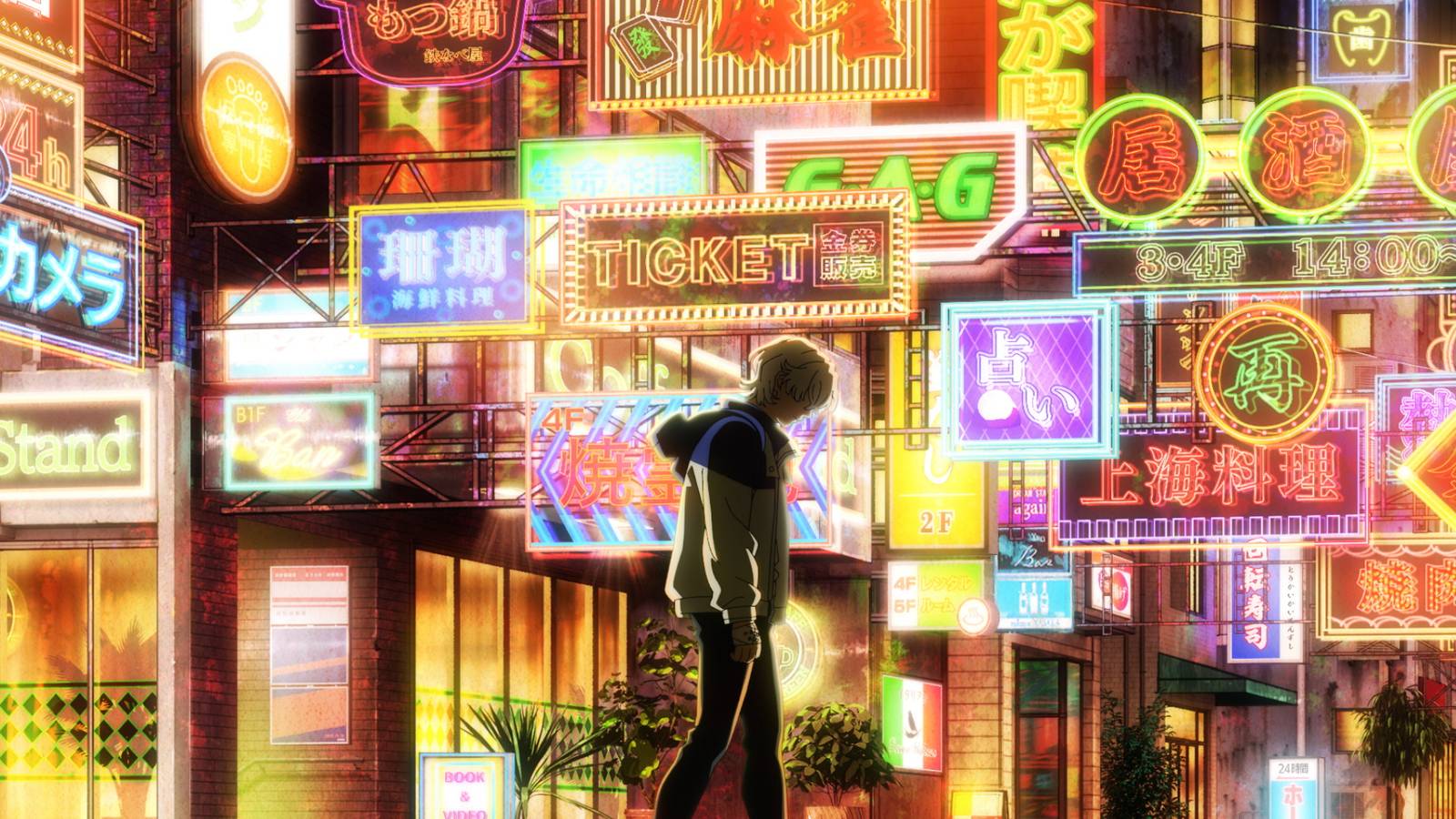
What stands out most is not merely the scale of the animation, but the meticulous attention paid to visual composition. The series frequently positions characters in unexpected parts of the frame, sometimes leaving enormous portions of the screen occupied by seemingly unimportant scenery. Rather than constantly tracking characters dead-center with the camera, Fool Night allows its subjects to exist naturally within their environment, permitting the decaying world around them to communicate just as much as the spoken dialogue.
This deliberate framing is evident when Yomiko speaks with a front desk clerk midway through the first episode, inquiring whether Toshio has gone through with the transfloration procedure. It is a somber, quiet moment, with Yomiko and the clerk occupying only a small fraction of the left side of the screen. Taking up almost the entirety of the remaining composition is an out-of-focus plant, filling the space rather than centering the emotional focus entirely on Yomiko’s back.
The same philosophy is applied at the very beginning of the series, when child versions of Toshio and Yomiko walk down a fenced-off alleyway. Instead of cutting directly to Toshio’s movements as he pretends to play a guitar, the camera tracks the cold steel fence on his left, moving along the barrier while the jogging child occupies only the right edge of the frame. These directorial decisions amplify the darker implications of the sci-fi dystopia, lending the show a distinct visual identity.
A Slow-Burning Mystery That Earns Patience
Fool Night is in no rush to lay all its narrative cards on the table simultaneously. While the early episodes drop subtle breadcrumbs regarding a wider conspiracy—including an investigation into bizarre murders involving plant-based lacerations and a shadowy faction attempting to sabotage transfloration procedures—the series largely holds its burgeoning mysteries at bay until the final moments of the third episode. Rather than feeling sluggish, this restraint pays off by giving the audience a firm grasp on how transfloration has warped society and why the central characters are so deeply entangled in its mechanics.
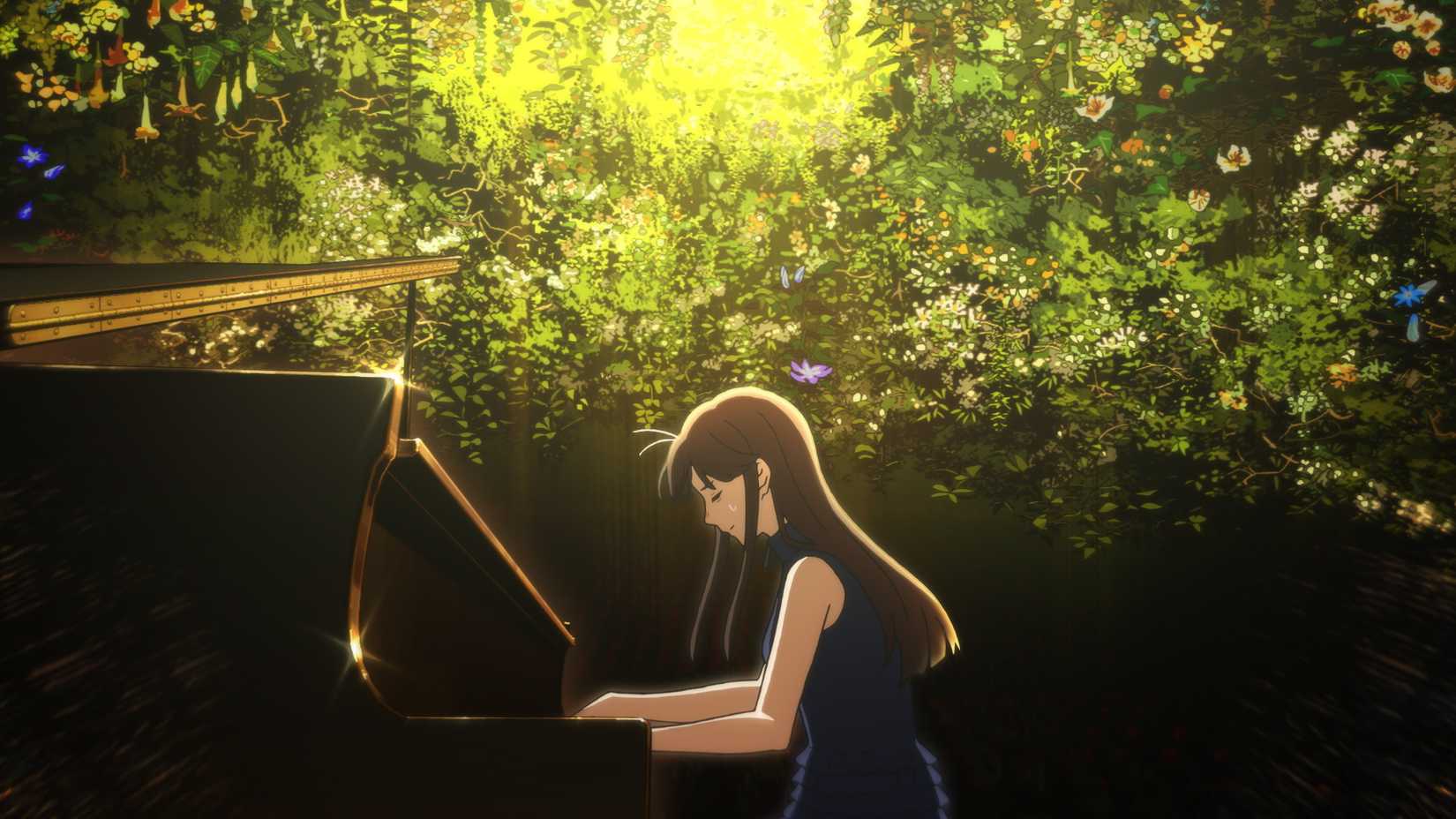
With three episodes evaluated ahead of its premiere, it remains early to predict the ultimate destination of Fool Night, especially given how much of its sunless world remains unexplored. However, the initial offering establishes an unsettling premise, complex characters, and striking animation that set a high standard for the fall anime season. As the series prepares to make its debut on Netflix on November 26, viewers awaiting the release will soon discover whether the production can sustain its visual ambition and successfully unpack its central mysteries.