Published September 25, 2026
The popular imagination of a mountain guide is etched with romanticized, celluloid heroism. We picture the tanned, sharp-jawed figure rolling effortlessly into a ski resort parking lot in a well-worn vehicle, a cigarette dangling casually from their lips, radiating the untouchable confidence of someone who makes high-consequence alpine environments look routine. We grow up watching high-octane video-game-style footage from production houses like Teton Gravity Research, fantasizing about hucking off massive cliffs, barely outpacing the cascading wall of sluff on a 50-degree spine, and turning to high-five a breathless client with a casual shout of encouragement.
For a long time, the barrier between dreaming about that life and living it in the United States seemed porous. Historical land regulations managed by federal park services maintained relatively loose formal certification requirements. Once an aspiring professional jumped through the requisite insurance and municipal permit hoops, transforming from a seasonal ski bum into a recognized mountain professional often felt like little more than a wardrobe change.
Yet, beneath that glamorous surface lies a world of rigorous physical demands, profound psychological weight, and sobering mortality rates.
That romantic illusion shattered quickly during a three-day avalanche safety course led by Pete Mason, one of the first American professionals to achieve dual certification from both the Union Internationale des Associations de Guides de Montagne (UIAGM)—collectively known as the IFMGA internationally—and the École Nationale de Ski et d’Alpinisme (ENSA) in France. These credentials represent two of the most demanding, elite, and internationally respected qualifications a mountain guide can earn.
Mason delivered a statistic that immediately grounded the room in reality. "Almost a quarter of my graduating class is dead," he recalled telling the class, offering a chilling window into the true cost of a lifetime spent navigating high-alpine terrain.
Hearing those words made it clear that viewing professional guiding through the lens of pop-culture media was as delusional as believing one could perform surgery simply by binge-watching medical dramas. It prompted a deeper, more necessary inquiry: What is it actually like to step behind the curtain of the mountain guiding profession? To find out, SKI sat down with Mason, Seattle-born UIAGM guide Erin Smart, and Filip Rentschler, an aspiring young professional hailing from Sweden.
What Makes It Worthwhile
Once a guide successfully navigates the grueling certification pipeline, the professional perks are undeniable. The job offers access to remote, untouched landscapes, endless hours immersed in the natural world, and the deep gratification of sharing a profound passion for the mountains with others.
However, the path leading to that destination is anything but straightforward.
Filip Rentschler, a 27-year-old freelance carpenter, grew up in southern Sweden—a landscape defined far more by crayfish and canoeing than steep couloirs and glaciated peaks. His ambition to enter the profession crystallized during his very first winter season in the legendary Swiss resort town of Verbier.
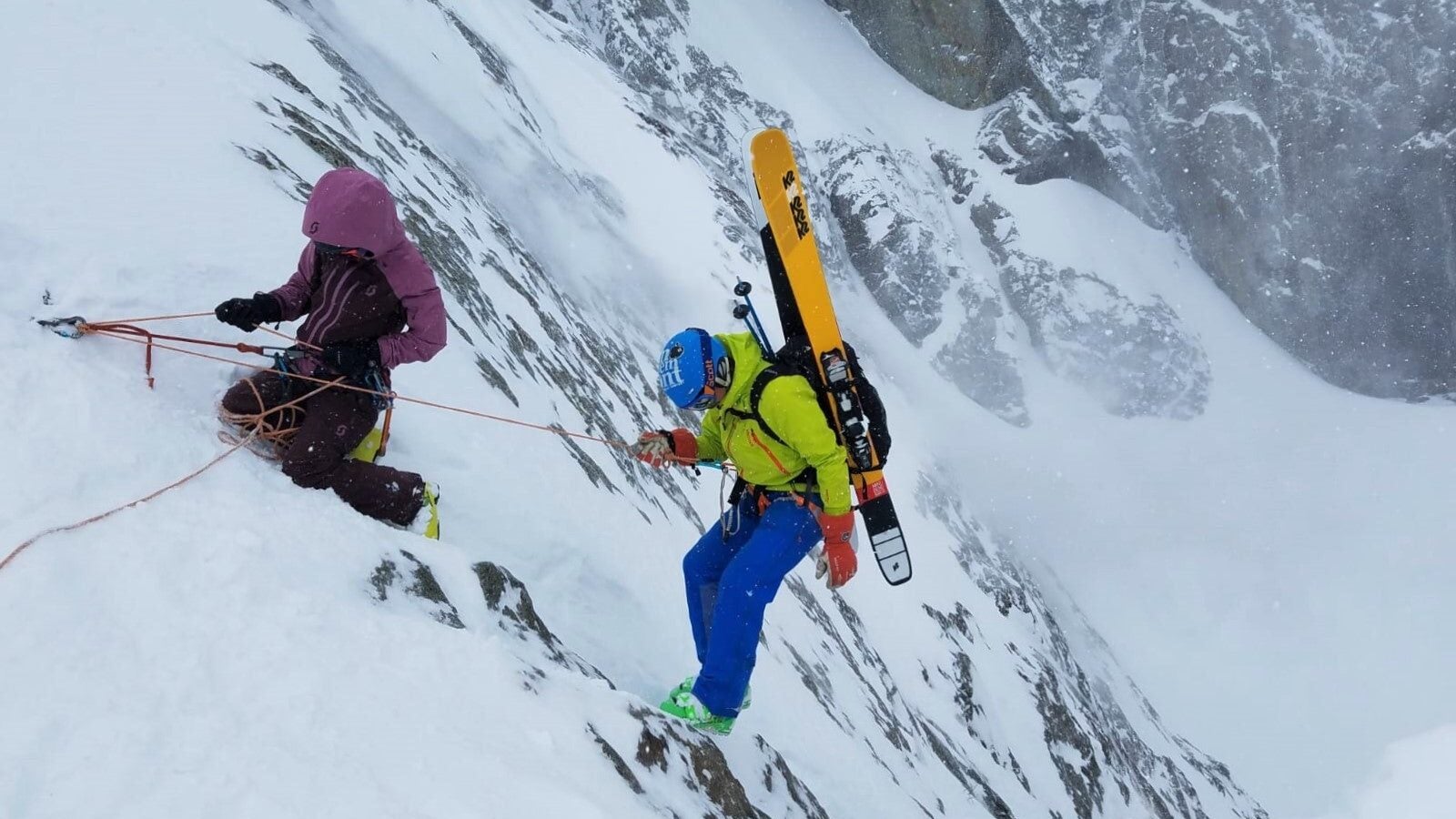
"When you talk to guides, many of them share a past of being these jack-of-all-trades," Rentschler noted. "They worked hard to make the money necessary to support their passion."
That foundational dedication often manifests as years of living out of the back of a van, eating solitary meals on the road, and enduring long stretches of separation from family and friends. It means waking up before dawn in freezing sleet, tackling grueling 6B-rated climbs, and living with the constant financial and logistical uncertainty surrounding examination schedules.
Crucially, those immense sacrifices are rarely driven by a selfish desire to log personal ski lines. For Rentschler and many of his peers, the motivation shifts outward. "I want to become a guide to bring people along in the mountains and give them a good experience," he explained. "I find more joy in that compared to solely pursuing personal goals."
The Art of Managing People
Despite the nobility of that mission, commercial clients frequently reduce mountain guides to mere "powder concierges"—hired hands paid a few hundred dollars an hour to escort recreational skiers into novel terrain and guarantee access to untracked snow.
In reality, an experienced professional operates under an entirely different operational philosophy. A competent guide has zero hesitation about calling off a planned excursion when conditions demand restraint. As a touring service in Chamonix succinctly put it to visitors on a prime powder morning, "We are not kamikaze."
Ultimately, the core art of managing people in the mountains comes down to a single, difficult skill: saying no.
Erin Smart grew up exploring the rugged wilderness of Washington’s Cascade Range and now works as a guide in La Grave, France, a globally renowned freeride mecca famous for its steep, unpaved descents. She is intimately familiar with the challenge of reining in client overexcitement before it turns dangerous.
"If someone is pretty aggressive and comes with a checklist—‘Oh, I want to ski and do this and this’—I tell them I’m busy," Smart said.
In an era dominated by advanced safety technology like avalanche airbags and sophisticated digital transceivers, clients often view guides as a simple safety accessory—someone to evaluate snow stability and double-check climbing knots so they can safely access terrain that would otherwise remain out of reach. But this consumer-facing view ignores the hidden psychological toll of the job. It glosses over the wheelchairs, the memorial services, and the harrowing moments that never make it onto a curated social media reel.
A Game of Numbers
As a veteran of the industry, Pete Mason understands that no amount of preparation or technical scrutiny can eliminate the underlying reality of the environment. Operating in the mountains is ultimately a game of probability. And unlike a traditional corporate job where performance metrics provide immediate feedback, the mountains operate on a timeline of delayed consequences—sometimes disastrously so.
"When people tell me they accept the risk, I don’t know if they have any idea what they are talking about," Mason observed.
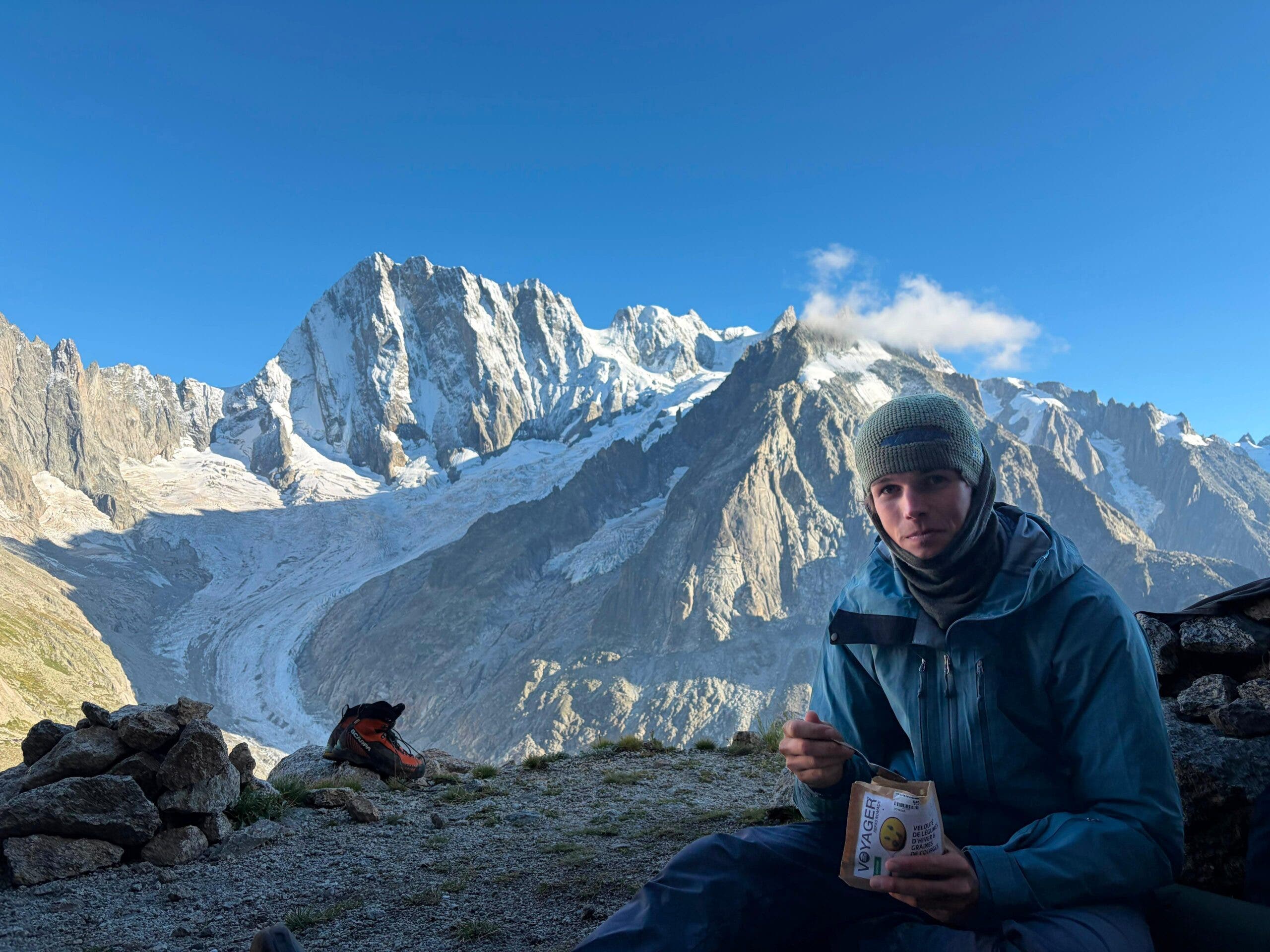
To illustrate the mathematical reality of risk accumulation, Swiss avalanche safety expert Manuel Genswein notes that ski touring within the conservative "green range" of risk management carries a baseline case fatality rate of roughly one in every 100,000 outings. However, for a professional who remains active for 20 seasons, logging 50 days in the field every year, that cumulative risk rises dramatically to roughly one in 100.
"From a pure mathematical perspective, there’s gonna be a dark side, and that could be tomorrow," Mason said.
The Unspoken Truth
The stark reality of those numbers hit home for Erin Smart last winter, when she was forced to confront the cruelty of the mountains firsthand. A deadly avalanche claimed the lives of two people near where she was skiing, and she stepped up to assist in the intensive rescue response. Just a few months later in March, her life partner and fellow mountain guide was killed in a tragic accident caused by a sudden, catastrophic failure of a ski anchor.
"Sometimes life can be incredibly unfair," Smart reflected. "No one knows why it failed; the rescuers later commented that the anchor looked textbook."
Faced with such profound loss, the fundamental question remains: Is skiing, and the life built around it, still worthwhile?
"You know, there are just these things that happen that make you question everything that you do in life," Smart admitted. "But a life without any risk is not really a life worth living. And that’s one thing I’m grappling with currently."
Hearing those stories forces an internal reckoning, raising questions about one’s own relationship with the alpine environment and prompting wonder over how many similar stories of quiet grief remain unspoken across the broader guiding community.
While the profound weight of these realities may convince some aspiring professionals to remain recreational weekend skiers rather than stepping across the professional threshold, the allure of the mountains remains complex.
"One of the things I enjoy most about guiding is the life-long relationships you build with recurring clients," Smart noted.
For anyone who has looked up at a mountain guide standing atop a windswept ridge, the perspective is permanently altered. The polished exterior of the trade remains, but it is now inseparable from the heavy, enduring truth of what it takes to stand there.