



That familiar rush of crisp citrus, fresh pine, or soothing lavender that fills a room after a deep clean is universally associated with a healthy, sterile environment. For generations, consumers have relied on these bright aromas as sensory proof that a living space is truly clean. However, atmospheric and engineering researchers are warning that those very same comforting fragrances are actually signaling active, invisible chemical reactions unfolding directly in the air we breathe.
Recent research led by Brandon Boor, an assistant professor of civil and construction engineering at Purdue University, has revealed that fragrance compounds released by both conventional household cleaners and botanical, essential-oil-based products can rapidly react indoors. These chemical interactions generate billions or even trillions of microscopic nanoparticles. If inhaled, many of these extremely small particles bypass the body’s upper respiratory defenses, penetrating deep into the lungs and potentially entering the bloodstream.
The findings, which were presented by researchers at the fall meeting of the American Chemical Society (ACS) during the "Healthy Indoor Spaces: Bridging the Microbiome and Chemistry" symposium held at McCormick Place, shed light on an overlooked aspect of indoor air quality. While surface sanitation remains vital for public health, the process itself can inadvertently introduce hidden hazards into the domestic atmosphere.
"Importantly, cleaning removes viruses and bacteria from surfaces, but it can also generate invisible air pollution," says Boor, who studies indoor air quality. "There’s no visible dust or smoke in the air, but these particles are forming."
Cleaning Can Create Invisible Nanoparticles
The investigation into how everyday cleaning agents and chemical disinfectants impact indoor environments began in earnest during the COVID-19 pandemic. Working alongside his Purdue colleague Nusrat Jung, also an assistant professor of civil and construction engineering, Boor noticed a pervasive feature across countless consumer goods: the heavy reliance on strong fragrances designed to mask chemical odors and provide a pleasant sensory experience.
"That’s often to create a pleasant smellscape in the indoor space," Boor explains. "But clean air should not smell like highly concentrated citrus fruit. It should not really smell of anything."
For decades, atmospheric scientists have understood that organic compounds released by plants can react with ozone in the open air. Terpenes, such as pinene emitted naturally by pine trees, participate in complex chemical reactions that generate tiny airborne particles. Over extended periods, these particles can accumulate and grow, eventually helping to seed clouds. In natural, outdoor forest environments, this atmospheric chemistry proceeds relatively slowly because the baseline concentration of biogenic terpenes is generally low.
Indoors, however, the dynamic is profoundly different. Scented cleaning formulations release volatile organic compounds when fragrance elements evaporate from sprayed liquids or freshly wiped surfaces. Cleaning solutions commonly rely on a suite of potent chemical compounds, including pinene, limonene derived from lemons, thymol extracted from thyme, and linalool found in lavender.
During routine domestic cleaning, the airborne concentrations of these terpenes can skyrocket. Boor notes that terpene levels inside a room while cleaning can surge to tens or even hundreds of times the concentrations typically measured in a dense forest.
Cleaning Products Release High Levels of Terpenes
To observe these chemical phenomena under realistic, everyday conditions, the Purdue research team moved their experiments out of traditional chemistry laboratories and into a model home located directly on the university’s campus. This fully functional residential structure features a complete kitchen, hardwood flooring, and a bathroom, enabling the researchers to simulate genuine household cleaning routines with high fidelity.
Their controlled experiments demonstrated that the identical atmospheric chemistry responsible for nanoparticle formation outdoors can occur indoors at a much faster rate and under vastly higher chemical concentrations. This creates a unique exposure scenario for anyone occupying the home.
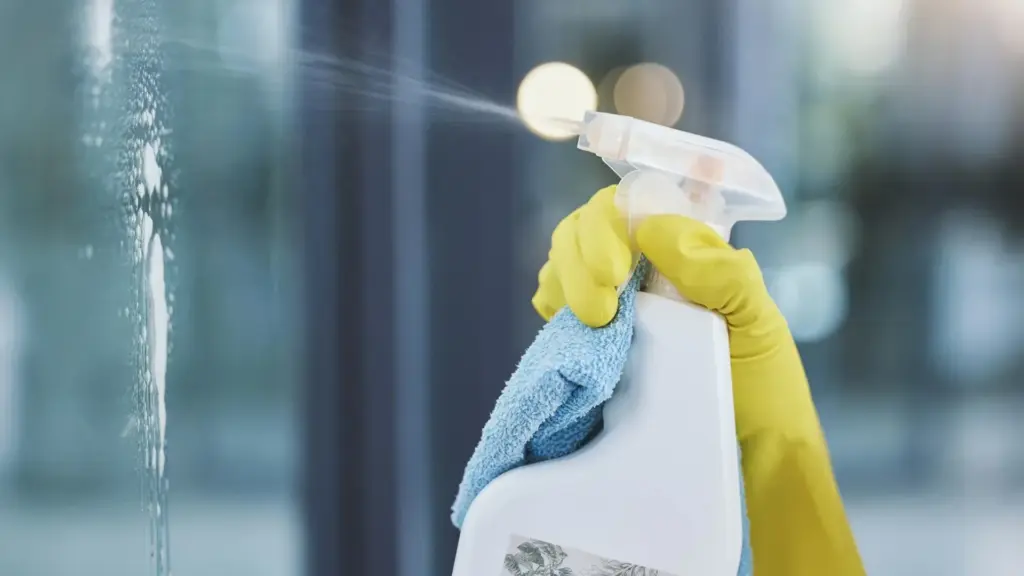
Routine chores such as mopping floors, spraying down kitchen counters, and wiping bathroom fixtures with scented products were shown to generate immense quantities of particulate matter. Depending on the specific product utilized, a single cleaning session can release billions or trillions of individual particles into the indoor atmosphere.
The vast majority of these newly formed pollutants are nanoparticles or ultrafine particles measuring between one and thirty nanometers across. Because particles of this infinitesimal scale routinely fall well below the detection limits of standard, at-home consumer air quality monitors, residents have zero visual or technological indication that local particle concentrations have spiked dramatically. The Purdue experiments confirmed that ordinary domestic cleaning can temporarily push ultrafine particle levels significantly higher than those typically recorded in outdoor urban environments.
This minuscule size holds profound implications for human health. Ultrafine particles are capable of settling throughout the entire human respiratory tract, navigating past the nasal passages and reaching the deepest alveolar regions of the lungs. Once deposited in these delicate tissues, they can induce cellular irritation and systemic inflammation. Furthermore, some of these nanoparticles possess physicochemical properties that may allow them to cross biological membranes and enter the bloodstream.
One of the most startling discoveries for the research team was the sheer velocity of the chemical transformation. The nucleation, formation, and growth of these nanoparticles occurred within a matter of minutes.
"By the time you finish cleaning up an indoor space, you’ve already formed a lot of nanoparticles and inhaled them," Boor warns.
Ozone Can Intensify Indoor Particle Formation
The complexity of indoor atmospheric chemistry deepened during subsequent research conducted by Boor alongside Ernest Blatchley, a professor at Purdue University. The team investigated the compounding effects that occur when scented surface cleaners are utilized simultaneously with germicidal far-UV, or UV-C, lamps increasingly deployed to disinfect indoor air.
This specific combination creates an environment exceptionally favorable for accelerated nanoparticle generation. The germicidal lamps interact directly with ambient oxygen molecules in the room to produce ozone. During experiments inside the university’s model home, indoor ozone concentrations climbed to roughly 20 to 40 parts per billion. While these figures remained somewhat below outdoor ozone levels recorded concurrently, the elevated presence of ozone paired with high concentrations of cleaning-derived terpenes supercharged the production of secondary organic aerosols.
This synergistic chemical reaction raised acute concerns among the researchers regarding the total cumulative particulate burden occupants might inhale during routine cleaning and air disinfection cycles.
How to Reduce Exposure While Cleaning
Despite these concerning findings, Boor strongly emphasizes that the goal of the research is not to discourage consumers from cleaning their homes. Surface sanitation remains an indispensable public health practice for eliminating harmful bacteria and viruses from living spaces. Instead, the research aims to empower consumers to make informed choices that mitigate unnecessary exposure to secondary indoor air pollution.
The Purdue researchers suggest that exposure can be significantly minimized by adopting simple, proactive habits. Opting for unscented or fragrance-free cleaning products removes the primary source of reactive terpenes from the indoor equation. Additionally, improving indoor ventilation by operating mechanical exhaust fans or opening windows during and immediately after cleaning helps disperse volatile organic compounds before they can fully react. Finally, consumers are advised to avoid operating devices that generate ozone, such as certain air cleaners or disinfection systems, while actively using scented cleaning products.
The research was supported by a Faculty Early Career Development Program (CAREER) grant from the National Science Foundation, alongside funding from the Alfred P. Sloan Foundation. As scientists continue to unravel the complex chemistry of the modern indoor environment, the findings highlight a compelling need for improved building ventilation strategies, advanced air cleaning technologies, and thoughtful reformulations of household chemical products to protect public health.