

The Magic: The Gathering crossover set featuring Final Fantasy stands as a loving tribute to one of the most enduring franchises in video game history, successfully drawing together characters, creatures, locations, and iconic moments from across the decades. Spanning 16 mainline games alongside a vast library of sequels and spinoffs, Wizards of the Coast faced a monumental challenge in translating decades of role-playing game storytelling into a distinct card game language with its own established mechanics.
Packed with both humorous nods, such as the Suplex card, and incredible powerhouses like Diamond Weapon, the Final Fantasy release has quickly emerged as one of the most celebrated Universes Beyond sets within the game ecosystem. However, the most successful designs among them capture a fundamental element of their source material, ranging from Bahamut’s devastating Mega Flare and Phoenix Down’s clutch resurrection to the sheer visual and mechanical spectacle of summoning Primal Odin.
Whether through clever mechanics or an inspired touch of flavor, a curated selection of cards represents the absolute best of what this crossover collection has to offer fans of both legendary properties.
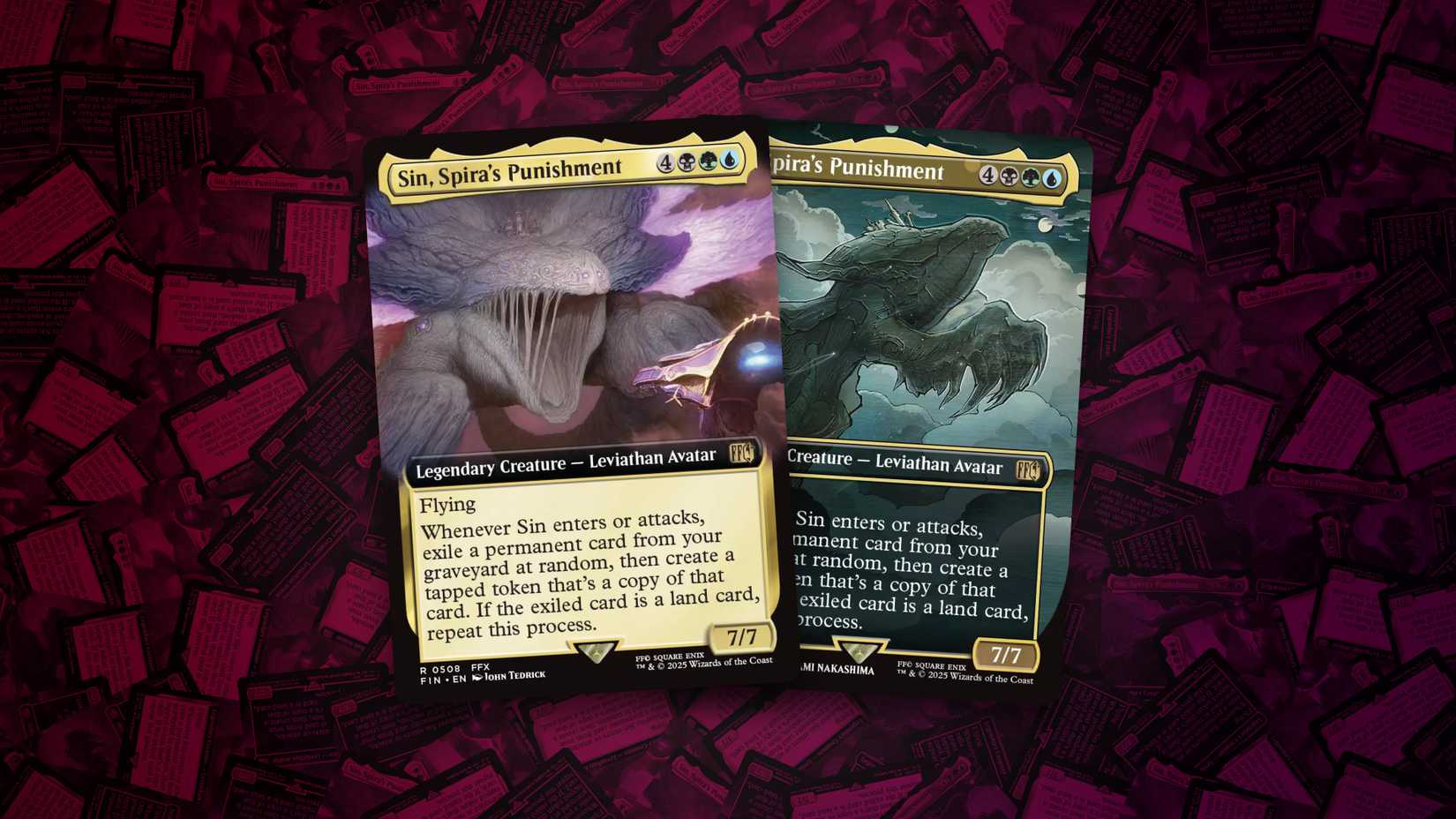
Sin, Spira’s Punishment
Sin anchors the legacy of Final Fantasy antagonists through crushing generational dread, and its card design captures that weight without relying on a lazy or uninspired stat line. Whenever Sin, Spira’s Punishment enters the battlefield or attacks, it exiles a random permanent card from the player’s graveyard, creating a tapped token copy if it turns out to be a permanent and repeating the process if a land is hit.
The card proves particularly disruptive in Commander formats built around graveyard recursion and land synergies, especially when paired with support cards like Adrix and Nev, Twincasters, which doubles the generated tokens, or Hedron Crab, which helps stock the graveyard with fresh targets. It functions as an unpredictable engine that turns the remnants of the battlefield into compounding threats throughout the duration of a match.
Spira’s Punishment also evokes the inescapable cycle of destruction and rebirth that defines Final Fantasy 10, where the people of Spira have endured a thousand years of devastation, rebuilding their homes after each assault and relying on Summoners to temporarily hold back the monster through ritual sacrifice. Even its seven-mana cost feels entirely appropriate for an entity of such magnitude, though some players note that a cost of ten would have carried an extra layer of thematic poetry.
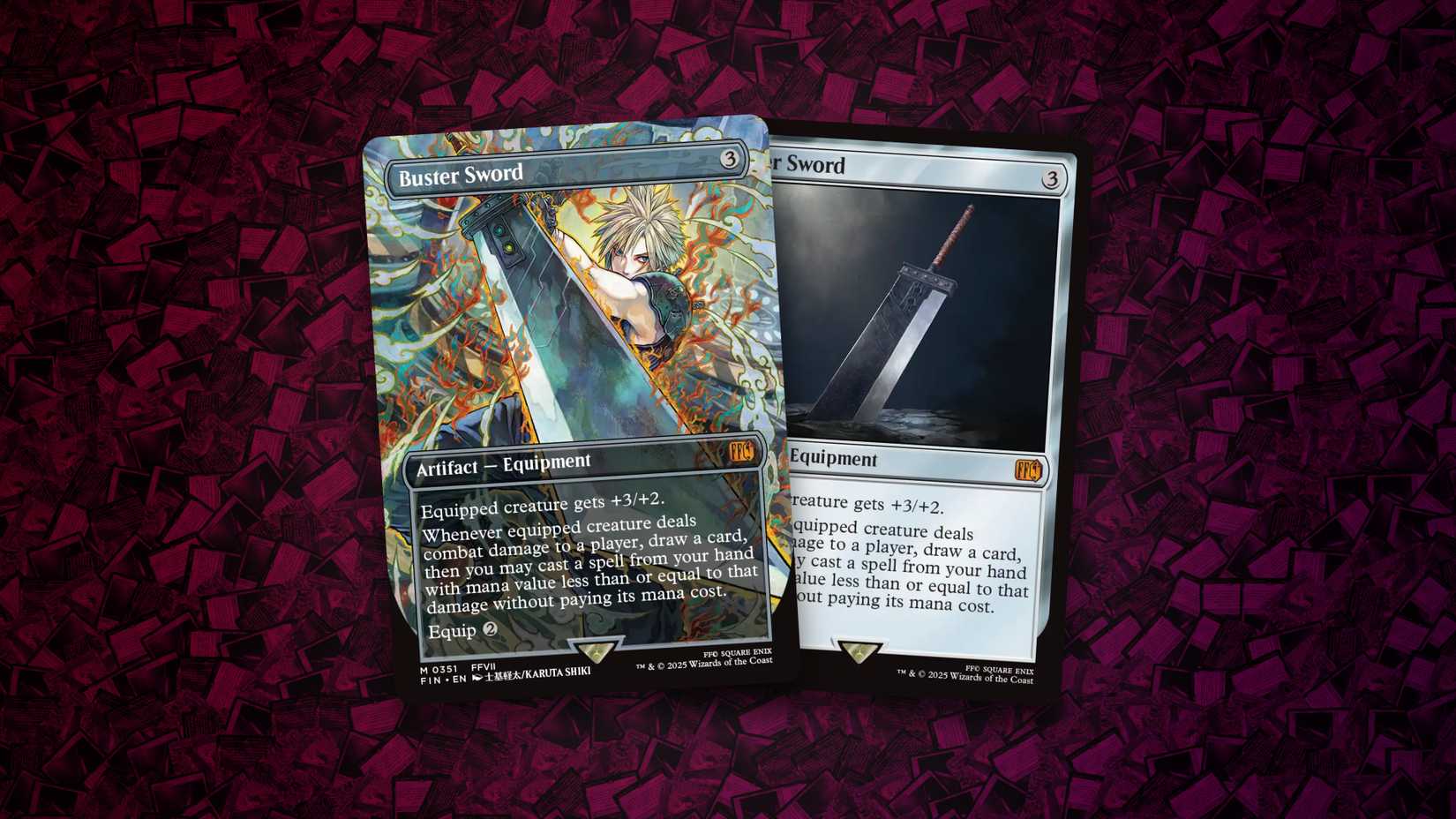
Buster Sword
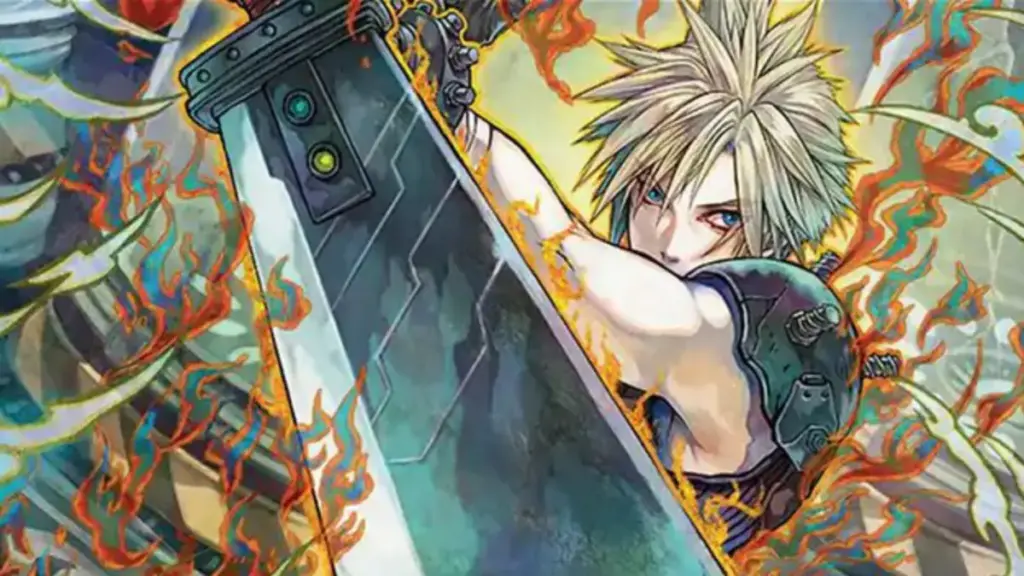
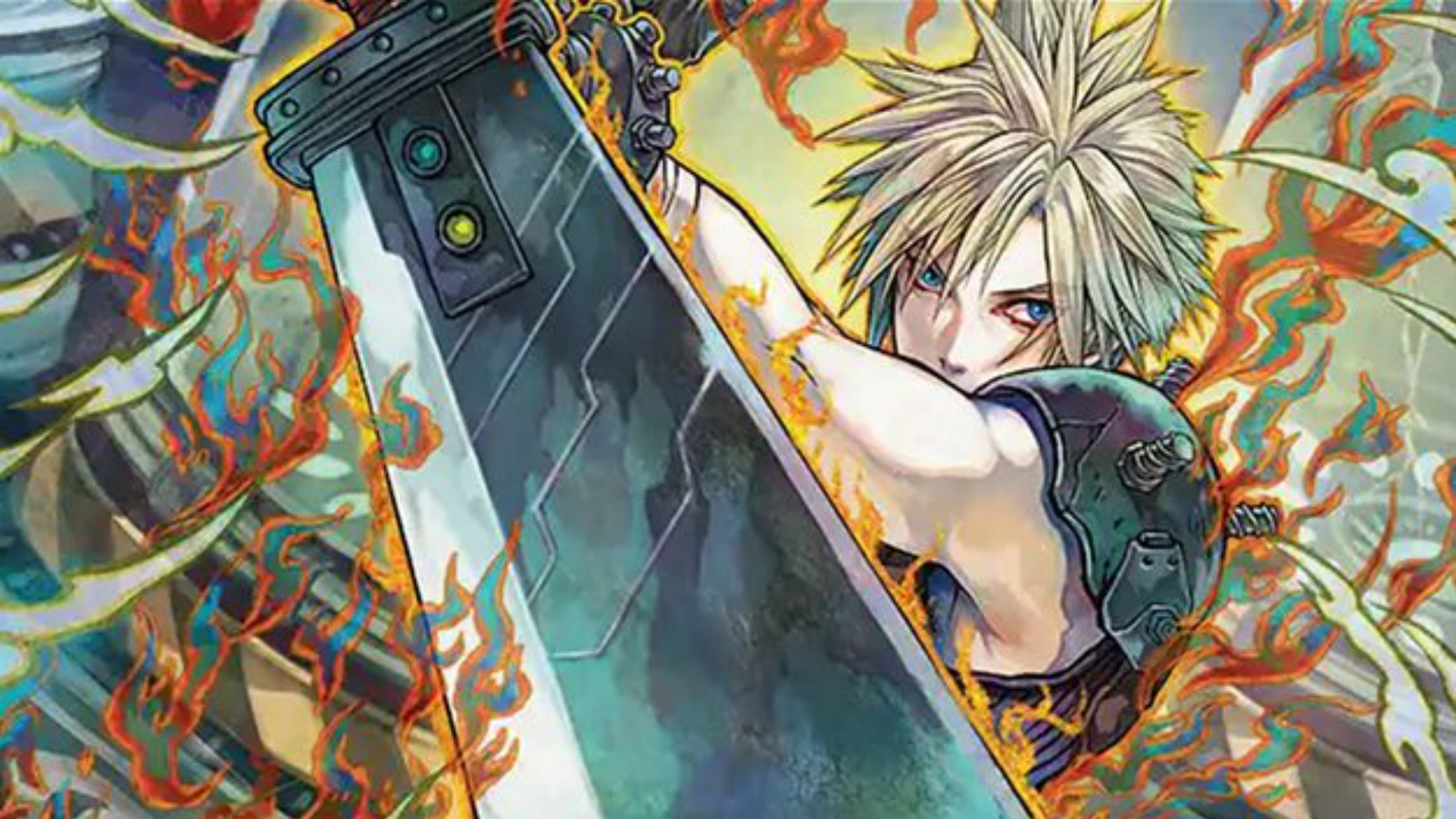
Weapons in modern gaming rarely carry the instant recognition of Cloud Strife’s enormous Buster Sword. Whether players picture it crudely strapped to his back during the bleak industrial sprawl of the early Final Fantasy 7 or dragging it through the mud in the modern Remake series, its significance extends well beyond its imposing silhouette. Passed down through Angeal, Zack, and eventually Cloud himself, the sword represents the heavy burden of legacy and what one generation leaves behind for the next.
Magic: The Gathering captures a portion of that narrative history through its equipment design. The Buster Sword grants its wielder a substantial power and toughness boost of +3/+2. Furthermore, whenever the equipped creature strikes an opponent directly, the controller draws a card and gains the opportunity to cast a spell from their hand for free, provided its mana value does not exceed the damage dealt. It serves as a suitably devastating reward for landing a direct hit and acts as a fitting tribute to one of the franchise’s most enduring symbols.
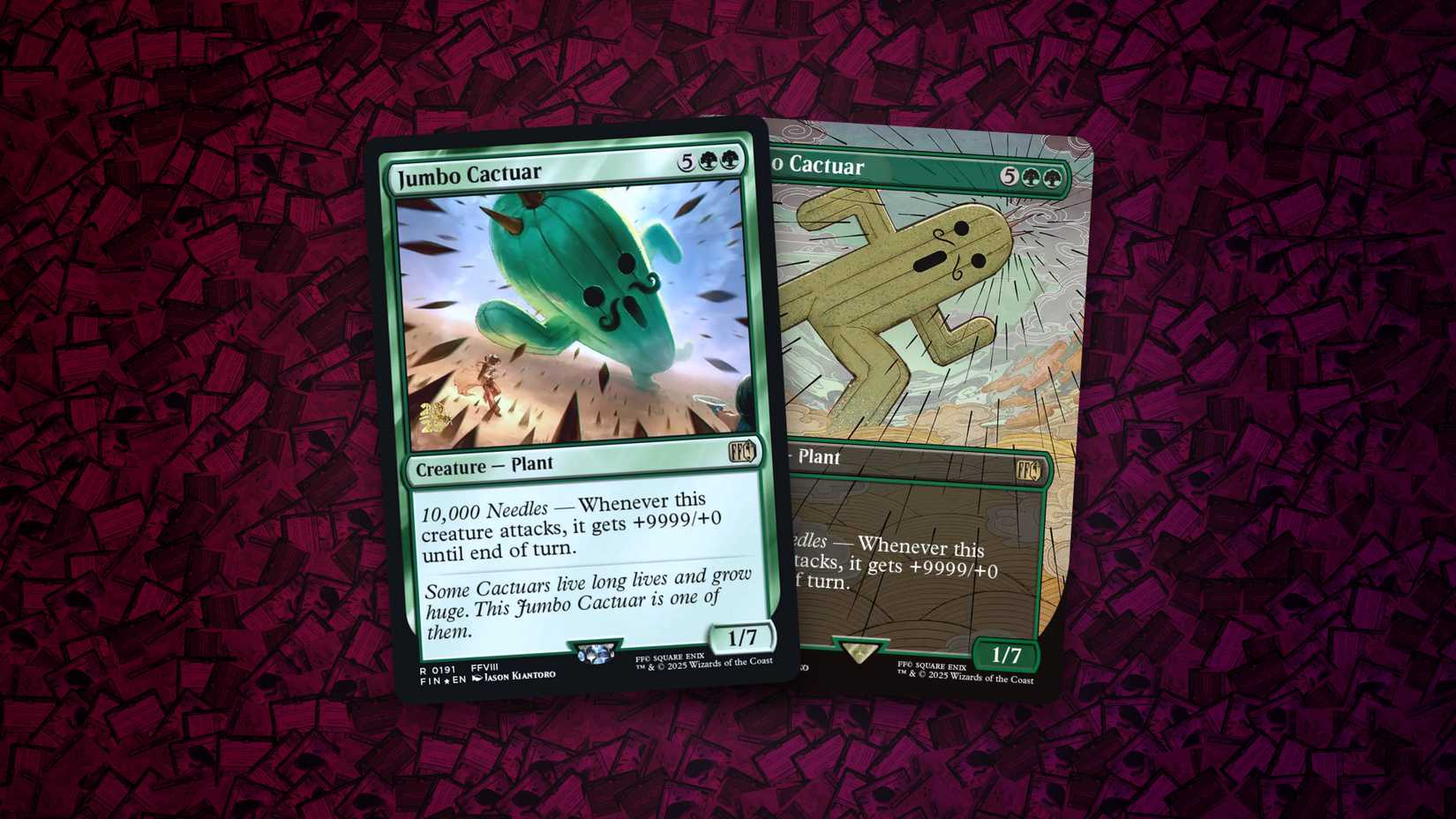
Jumbo Cactuar
At first glance, Cactuars resemble little more than walking houseplants, but when provoked, they can unleash a devastating flurry of needles. Among Final Fantasy‘s most recognizable recurring monsters, Cactuars have built a reputation for appearing harmless before delivering staggering blows, much like the goofy-looking Tonberries.
Magic‘s Jumbo Cactuar follows that lineage gracefully through a seven-mana creature featuring a seemingly unassuming 1/7 stat line. It blends in with standard green common creatures until players notice its signature ability, 10,000 Needles, which grants it an astonishing +9,999/+0 whenever it declares an attack.
This transformation turns a docile plant into a 10,000-power monster capable of flattening almost any obstacle in its path. It represents a comically literal interpretation of the monster family’s signature attack, requiring no elaborate transformations or complex mechanical synergies to make its presence felt on the board.
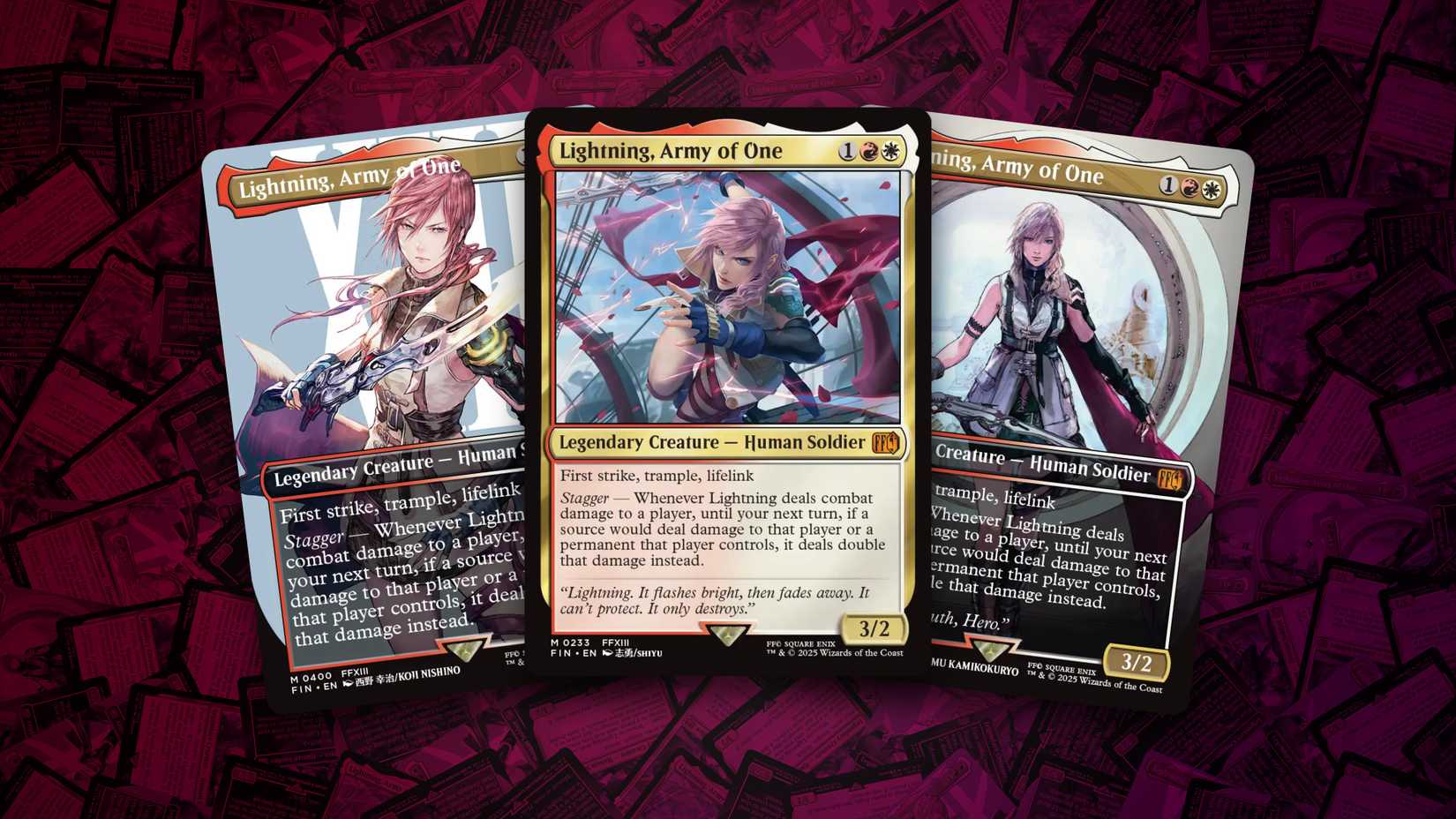
Lightning, Army of One
While Final Fantasy 13 remains one of the more divisive entries in the franchise’s storied history, Lightning herself stands tall as one of its most definitive protagonists. She is a relentless soldier defined by unwavering resolve and immediate action, a former Guardian Corps sergeant who goes AWOL during the violent exile of Bodhum’s citizens, derailing a Purge train and battling through the Hanging Edge to rescue her sister.
Her Magic card captures that uncompromising spirit from the moment it hits the board. As a three-mana creature with first strike, trample, and lifelink, she arrives as a formidable combatant, but her stagger ability is what truly defines the design. Whenever Lightning, Army of One deals combat damage to an opponent, all damage dealt to that player and their permanents by any source is doubled until the controller’s next turn.
This mechanic serves as a brilliant adaptation of Final Fantasy 13‘s combat rhythm, where staggering an enemy leaves them completely exposed to devastating follow-up attacks. The card transforms her into the tip of the spear for an aggressive assault, translating a signature video game mechanic into a tactical engine.
Zack Fair
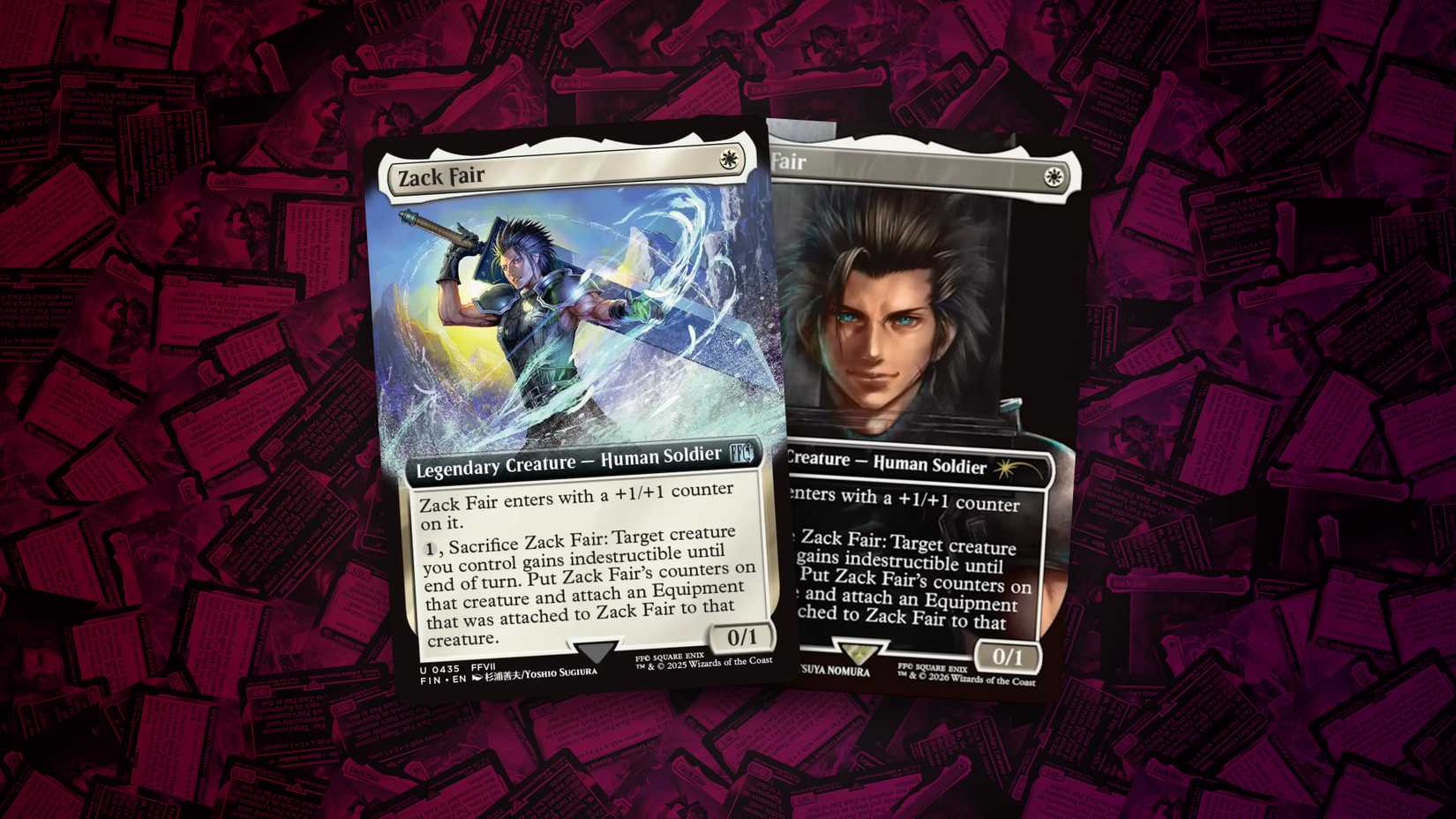
Zack Fair’s story remains one of the most heartbreaking arcs in Final Fantasy 7, particularly because his final moments exert such a profound influence on Cloud’s journey. Magic honors the character through a 0/1 legendary creature that enters the battlefield with a single +1/+1 counter. Players can invest one mana to sacrifice Zack Fair and grant another target creature indestructible status, alongside Zack’s accumulated counters and any attached equipment.
This thoughtful design transforms his sacrifice into an act of protection and inheritance. Rather than relying on complicated transformations, Zack’s final act becomes a playable mechanic that allows another hero to carry his strength forward. Reanimation engines like Sun Titan or Lurrus allow players to loop him from the graveyard repeatedly, granting their board enduring protection while passing stat boosts down the line.
Aerith Gainsborough
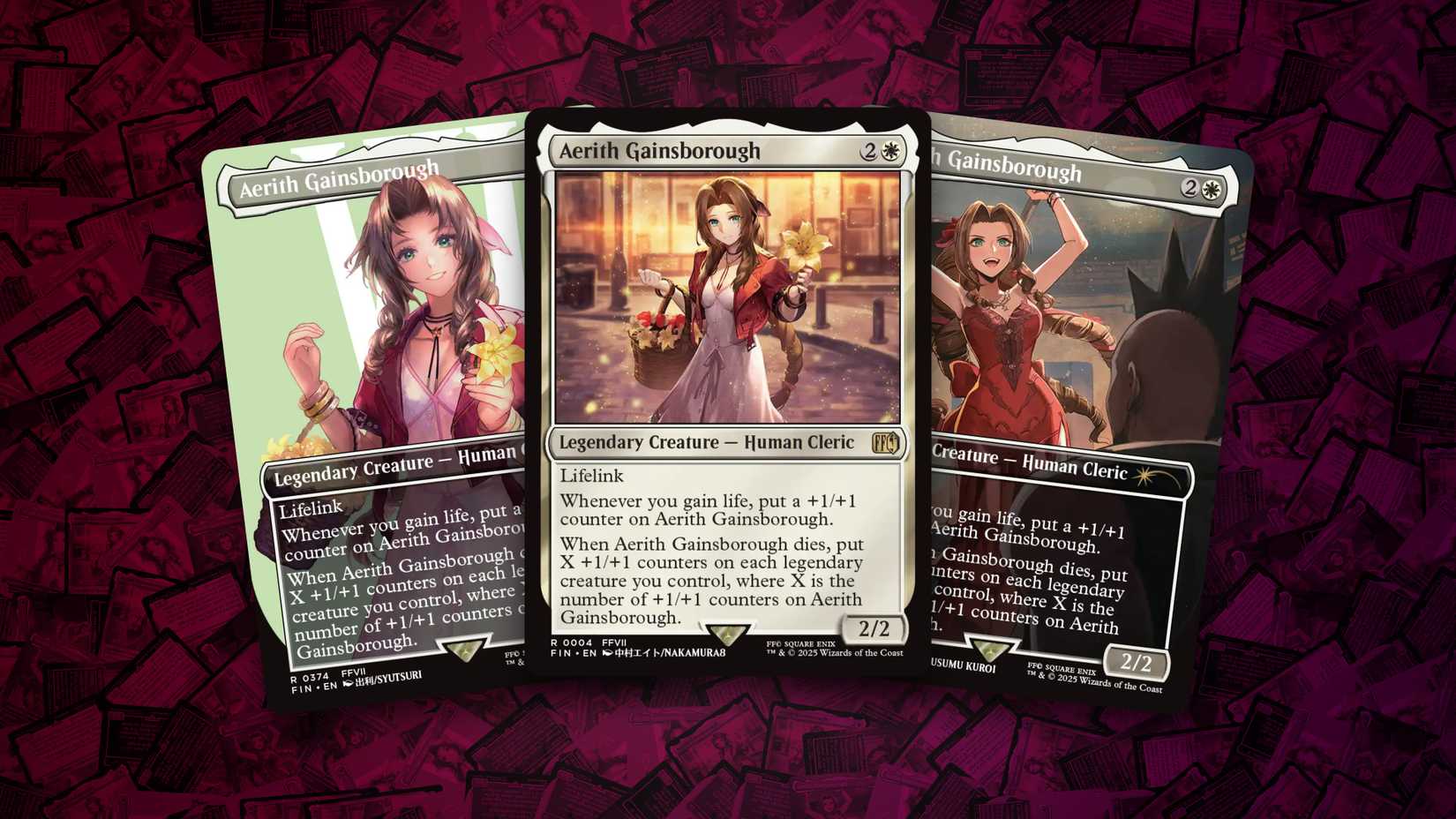
Aerith’s power has consistently stemmed from gentle resilience rather than overwhelming force. As a healer and the last surviving Cetra, she hides in plain sight selling flowers in the Sector 5 slums while carrying the solitary burden of the Planet’s survival. In card form, Aerith Gainsborough is a 2/2 legendary creature that enters the battlefield with lifelink, gaining a +1/+1 counter whenever the player gains life. This mechanic allows her to grow progressively stronger as she supports allied creatures and maintains a healthy life total advantage over opponents.
The true stroke of creative genius emerges when Aerith dies. Every legendary creature under the player’s control receives +1/+1 counters equal to the number Aerith accumulated during her time on the battlefield. It functions as a mechanical interpretation of her legacy, mirroring the profound impact her absence leaves on Cloud and the party in the original game.
Yuna, Hope of Spira
As a summoner first and foremost, Final Fantasy 10‘s Yuna makes a natural candidate for a card centered around enchantments and their associated creatures. Yuna, Hope of Spira encourages players to assemble a collection of saga creatures, which are the specialized enchantments introduced in the set to represent the franchise’s iconic summons.
During the player’s turn, Yuna grants herself and all other enchantment creatures trample, lifelink, and ward 2, providing the entire group with substantial protection against removal. She can also return an enchantment from the graveyard to the battlefield at the end of the turn, though it receives a finality counter that prevents it from returning to the graveyard again. This design reinforces her role as a summoner, positioning her at the center of an Aeon-focused strategy alongside cards like Yojimbo, Bahamut, and Knights of Round.
Summon: Knights of Round
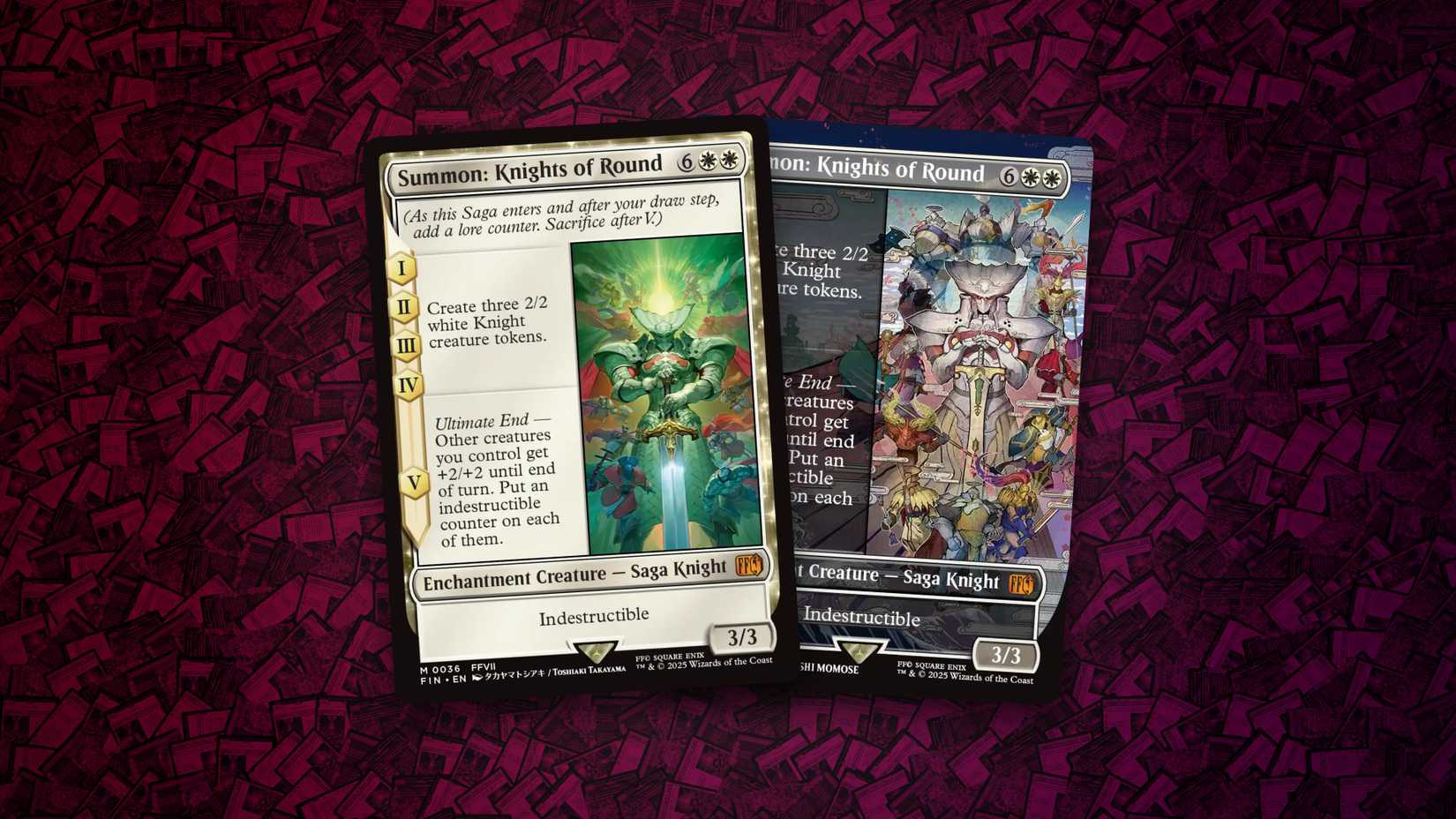
Knights of Round functions as both a powerful Magic card and a legendary summon within the video games. First appearing as the ultimate secret Materia in Final Fantasy 7—tucked away on an unmapped island and requiring a Gold Chocobo to reach—the spell calls forth 13 holy knights to rain down a prolonged assault of apocalyptic damage.
The Magic adaptation matches that theatrical scale. Designed as an eight-mana Saga creature, Knights of Round builds an army by creating three 2/2 Knight tokens across each of its first four chapters. That results in a total of twelve knights before its fifth and final chapter delivers Ultimate End, buffing the entire board with +2/+2 and placing an indestructible counter on each creature. The design rewards patience, turning a notoriously long video game animation into a looming countdown for opponents.
Sephiroth, Fabled SOLDIER / Sephiroth, One-Winged Angel
Sephiroth’s transformation from a celebrated First Class SOLDIER hero into the cold One-Winged Angel remains a pivotal narrative turning point. Engineering from the alien entity Jenova shattered his sanity upon discovery within the Nibelheim mansion, driving him to burn the town to the ground and view humanity as parasitic organisms.
Magic translates that descent onto a double-faced creature that grows increasingly dangerous as the game progresses. On the front side, Sephiroth, Fabled SOLDIER allows the player to sacrifice another creature whenever he enters the battlefield or attacks, drawing a card in return. Additionally, whenever another creature dies, the controller drains one life from an opponent and gains one life. Once that second ability resolves for the fourth time in a single turn, Sephiroth transforms into his One-Winged Angel form, generating a permanent emblem that sustains the life-drain engine whenever creatures die.
Absolute Virtue
Final Fantasy 11 features many formidable foes, but few developed the legendary reputation of Absolute Virtue. This optional superboss became infamous for its extraordinary durability and punishing difficulty, utilizing powerful abilities borrowed from multiple player classes—including Benediction, which restored massive amounts of health when defeat seemed imminent. Some player groups spent more than 18 hours attempting a single victory.
Magic distills this intimidating presence into an eight-mana 8/8 construct that cannot be countered upon casting and features flying. Its secondary ability grants the controller protection from each opponent, rendering the player untouchable while Absolute Virtue remains on the battlefield. Opponents cannot attack the player, target them with spells, or enchant them, serving as a fitting translation of a boss that once seemed insurmountable.