
Sponsored Disclosure: SportDOG provided the FieldTrainer 425X featured in this review. The observations and assessments detailed below are derived from firsthand product handling and real-world field trials. SportDOG did not dictate or influence these findings. This article may contain affiliate links through which a commission may be earned on purchases.
Electronic collars, commonly referred to as e-collars, are highly specialized tools designed to deliver a remote cue to a dog that already understands a handler’s commands. They are not shortcuts for teaching new behaviors, nor are they intended to replace positive rewards, standard leashes, or a handler’s close attention to canine body language. With this foundational philosophy established, we conducted a real-world trial of the compact SportDOG FieldTrainer 425X, exploring its setup, physical fit, control interface, and performance on the trail with an adult dog.
Our hands-on experience with the system was highly positive. Throughout our training sessions, the unit operated precisely as engineered, and the test dog responded exceptionally well without displaying any signs of discomfort or stress. The handheld transmitter proved to be structurally solid and intuitive to operate, while the receiver sat comfortably and securely on the dog’s neck. Additionally, we utilized a separate, premium SportDOG leash during the trials, which delivered a notable sense of durability and physical security.
Overview of the FieldTrainer 425X
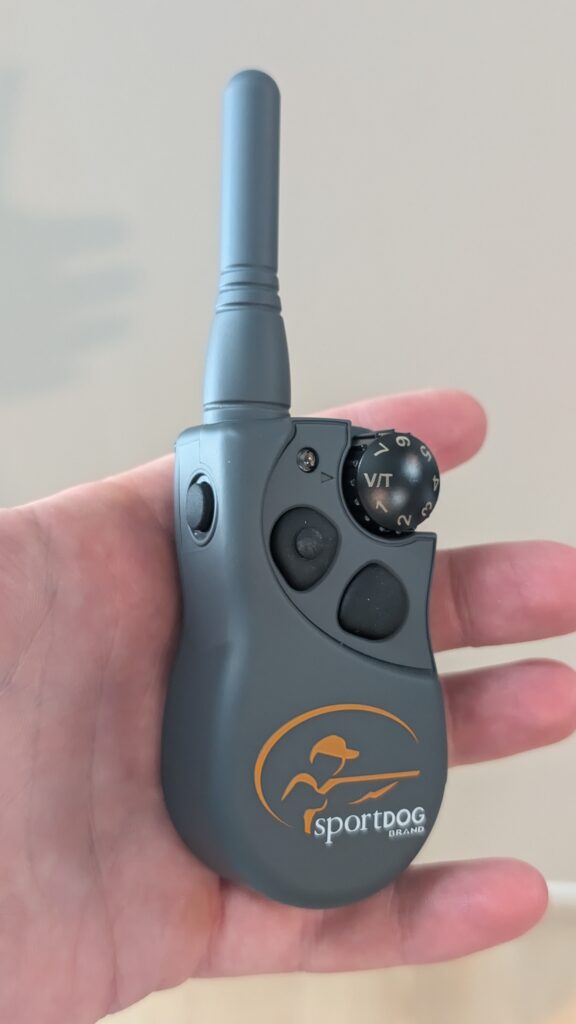
The SportDOG FieldTrainer 425X is positioned as the manufacturer’s smallest and lightest remote training system, specifically optimized for close-working field and hunting dogs. According to product specifications, the system is capable of delivering three distinct types of feedback—auditory tones, vibrations, or static stimulation—at a maximum range of up to 500 yards. The handheld transmitter is ergonomically designed for "no-look" operation, featuring a top-mounted intensity dial and three side buttons that handlers can easily identify and navigate by touch alone.
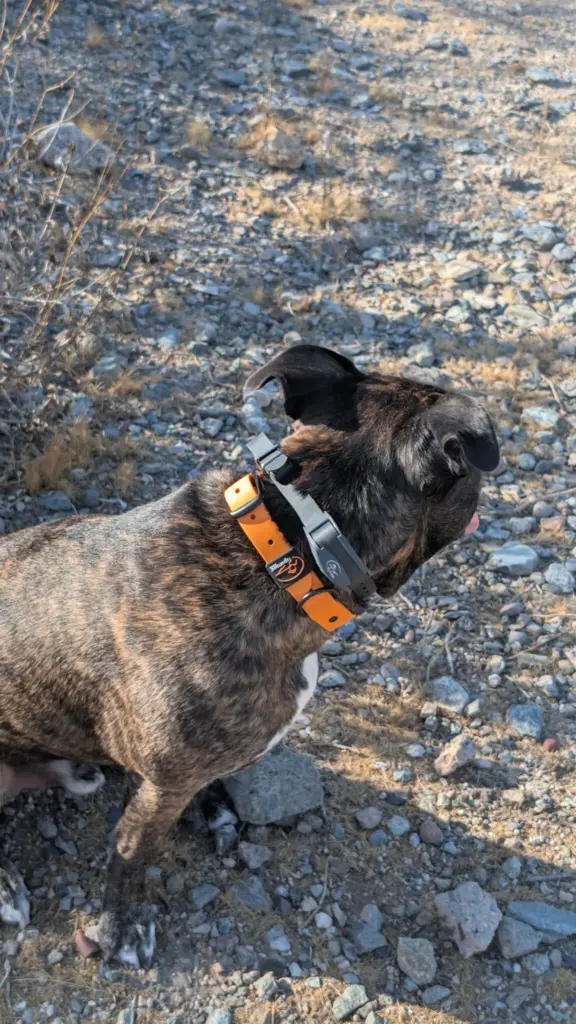
During our field testing, the adult brindle dog accepted the fitted receiver collar without issue and remained highly responsive throughout our sessions. The physical construction of the handheld transmitter felt robust and prepared for rugged outdoor use, matching the premium feel of the separate walking leash. For dog owners who have already established a solid foundation of basic obedience and are seeking a compact, field-ready remote system, the 425X offers an easily understood physical interface and a lightweight profile that is comfortable to carry over extended distances.
Defining the E-Collar and Its Role in Training
An e-collar is a remote training system consisting of a handheld transmitter used by the handler and a collar-mounted receiver worn by the dog. Unlike standard walking collars, an e-collar receiver is not designed to serve as an attachment point for a leash. Instead, it serves purely as a communication device. Depending on the specific model and settings, the transmitter sends a signal that prompts the receiver to emit a tone, a vibration, or a localized static sensation.

In responsible dog training, the primary purpose of a remote cue is to reinforce and support commands that the dog has already mastered in low-distraction environments. For example, a handler might practice a reliable recall command on a long training line, reward the dog with praise or treats upon its return, and integrate the remote cue only as a gentle, secondary prompt within a structured training program. The device should never be used to introduce an unfamiliar command or to startle a dog into submission.
Leading veterinary and animal behavior organizations emphasize the importance of reward-based training methodologies. The American Veterinary Society of Animal Behavior (AVSAB) officially recommends reward-based training techniques and advises against the use of aversive training tools, including electronic collars. Consequently, pet parents considering an e-collar should discuss their training goals with a veterinarian or a qualified, humane professional trainer who can evaluate the individual dog’s temperament. If a dog exhibits signs of fear, anxiety, aggression, or sudden behavioral changes, handlers should seek veterinary guidance rather than introducing new training equipment.
Technical Specifications and System Features
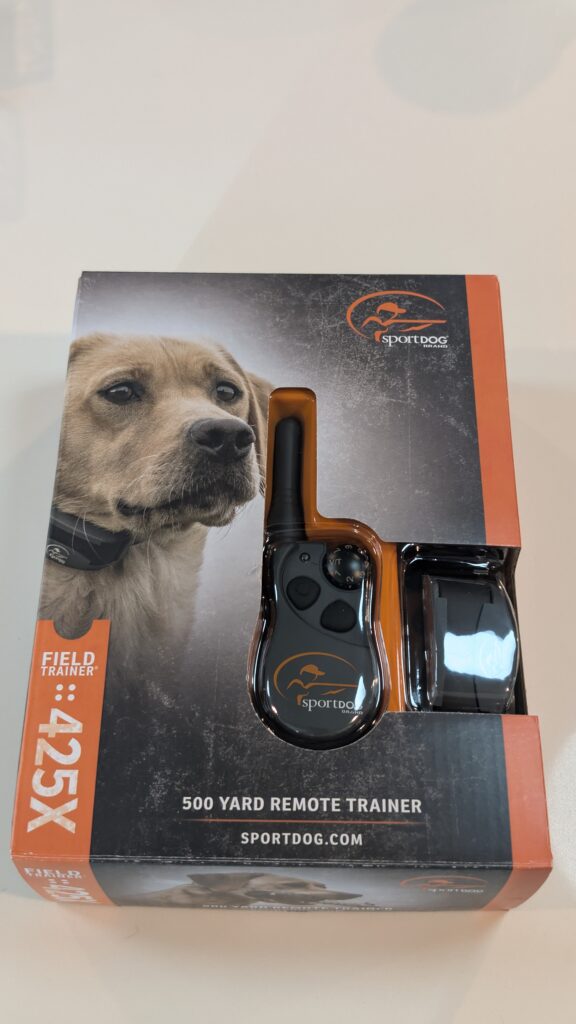
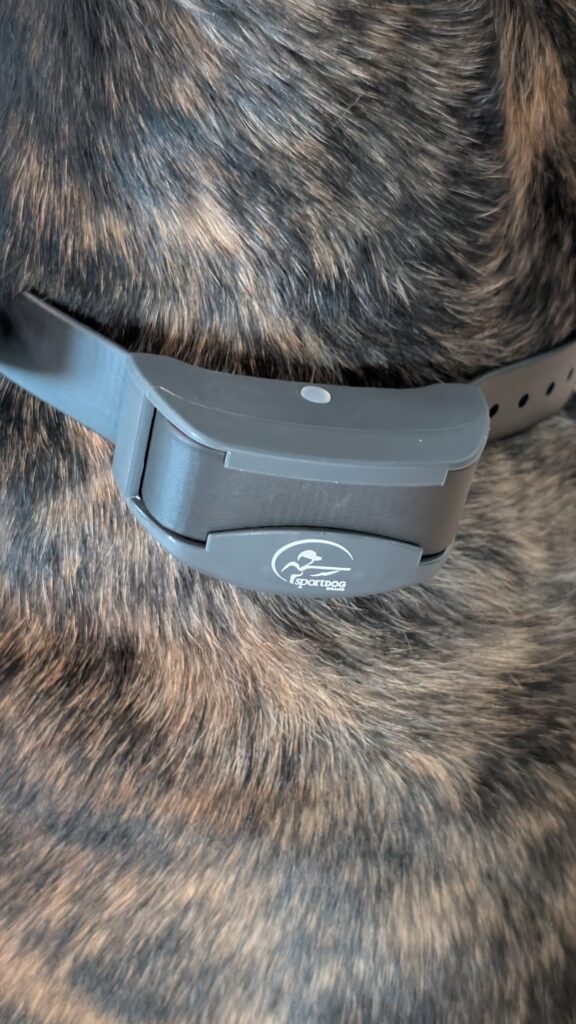
The compact design of the FieldTrainer 425X makes it well-suited for active trail use. The transmitter fits comfortably in the palm of a hand, and the receiver has a streamlined profile that does not look overly bulky on an adult dog. Out of the box, the system is pre-programmed for single-dog use and includes one receiver mounted on a black three-quarter-inch collar strap. To accommodate multi-dog households or professional handlers, the transmitter can be expanded to control up to three dogs simultaneously using compatible SportDOG Add-A-Dog receivers, which are sold separately.
The complete retail package includes the handheld transmitter, the receiver collar, standard and long contact points to accommodate different coat lengths, a dual-lead charging adapter, a test light tool, a basic lanyard, replacement mud plugs for the charging ports, an operating guide, and a basic training manual.
According to manufacturer specifications, the system features:
- A maximum operating range of up to 500 yards under optimal conditions.
- Three feedback options, including tone, vibration, and static stimulation.
- Up to 21 levels of static stimulation, depending on the chosen operating mode.
- A design rated for dogs weighing 8 pounds or more, with neck sizes ranging from 5 to 22 inches.
- Rechargeable lithium-ion batteries in both the transmitter and receiver, which charge fully in approximately two hours.
- An estimated battery runtime of 50 to 70 hours per charge, depending on the frequency of use.
- A DryTek waterproof construction, making both the transmitter and receiver submersible up to 25 feet.
These specifications are provided directly by SportDOG and do not represent independent laboratory verification. During our trial, we did not instrument-test the maximum signal range, exact battery longevity, recharge times, depth of water immersion, electrical output levels, or long-term wear resistance. However, we confirmed that both units charged quickly, paired seamlessly, and functioned reliably throughout our field exercises.
Proper Fitting and System Setup
Proper preparation is essential before introducing the FieldTrainer 425X to a dog. Rather than rushing from unboxing directly to field training, handlers should take the time to fully charge both devices, thoroughly read the operating manual, select the appropriate operating mode, and practice using the transmitter while the receiver is off the dog. Familiarity with which buttons trigger the tone, vibration, or static functions is a critical component of safe and responsible use.
Achieving a correct fit with the receiver collar is the most important step of the physical setup. The receiver should be positioned high on the dog’s neck, directly under its jaw, as this area is highly sensitive to the contact points. The collar strap must be adjusted so that it is snug yet comfortable. A reliable rule of thumb is that the handler should be able to snugly fit two fingers between the contact points and the dog’s skin. If the dog has a thick or long coat, the handler may need to swap the pre-installed standard contact points for the longer set included in the box to ensure they reach the skin through the fur.
Crucially, the walking leash must always be attached to a separate, non-metallic collar or a harness, rather than the receiver collar strap. Attaching a leash directly to the receiver strap can pull or jerk the device, forcing the metal contact points painfully into the dog’s neck. During our trail sessions, we kept the dog’s bright orange walking collar visually distinct from the gray receiver strap, making it simple to verify that the walking leash was secured to the correct collar.
Methodical Training and Application
When introducing an e-collar, handlers should always begin in a quiet, low-distraction environment using a command the dog already performs reliably. If a dog does not consistently respond to basic cues like "come" or "sit" without the device, the handler must return to basic reward-based training before incorporating the remote system.
An effective and humane introduction sequence involves first giving the verbal command that the dog knows well. Immediately afterward, the handler applies the chosen remote cue—such as a vibration or a low-level static stimulation—and guides the dog to complete the action using a physical leash or training line. The moment the dog complies, the remote cue is stopped, and the dog is immediately rewarded with high-value treats, physical affection, or enthusiastic praise.
This structured approach ensures the dog associates the remote cue with the desired behavior rather than viewing it as an unpredictable or frightening sensation. Training sessions should remain calm, predictable, and brief. Whether utilizing tone, vibration, or static stimulation, the handler must ensure the dog understands exactly how to succeed. Integrating positive rewards throughout the process helps maintain the dog’s motivation and confidence.
Hands-On Field Performance and Observations
Our field test of the SportDOG FieldTrainer 425X yielded positive results from initial setup to active trail navigation. The remote trainer performed consistently, and our test dog responded beautifully to the gentle vibration and tone settings. We observed no signs of skin irritation, physical discomfort, or behavioral stress during or after our sessions. However, we advise all dog owners to routinely inspect their dog’s neck, posture, movement, and skin condition to ensure continued safety.
The physical design of the transmitter proved to be one of the system’s standout features. It felt solid, durable, and well-balanced in the hand without adding unnecessary bulk to our gear. The intensity dial on top has a tactile, notched movement that is easy to adjust without looking, and the side buttons are distinct enough to be operated by touch alone. This "no-look" ergonomics allowed us to keep our eyes locked on the dog’s body language and environmental hazards rather than looking down at the controller.
The separate SportDOG leash and walking collar used during our test also performed exceptionally well. The leash was constructed from highly durable, premium materials that felt secure in the hand—an important factor when navigating uneven trail terrain, wildlife encounters, or sudden distractions. The high-visibility orange color of the walking gear provided excellent contrast against the dog’s brindle coat and the surrounding woods. We also confirmed that the separate orange walking collar floated in water, which is a practical benefit for dogs that enjoy swimming. It is important to note that this floating orange collar is a separate walking accessory and is not the receiver collar included in the 425X package.
Understanding Controls and Operating Modes
The FieldTrainer 425X transmitter features seven distinct operating modes, which must be selected and understood before beginning a training session. The specific function of each button changes depending on the active mode. For instance, the system’s advertised 21 levels of static stimulation are accessible only in modes 5 and 6, rather than being uniformly distributed across all settings.
Before heading outdoors, handlers should set their preferred mode, verify that the transmitter and receiver are paired correctly, and practice the button layouts off the dog, using the included test light tool to confirm static output if necessary. Additionally, SportDOG builds a 10-second safety shutoff into the system, which automatically terminates continuous vibration or static stimulation if a button is held down too long. While this is an important safety feature, it does not replace the handler’s responsibility for precise timing and close supervision.
Before departing for an outdoor session, handlers should perform a quick four-point check:
- Verify that both the transmitter and receiver batteries are fully charged.
- Inspect the receiver collar to ensure the contact points are clean, tight, and appropriate for the dog’s coat.
- Confirm that the transmitter is set to the correct operating mode and intensity level.
- Ensure that a separate walking collar or harness is properly fitted for leash attachment.
While SportDOG rates the electronic components of the 425X as waterproof and submersible to 25 feet under its DryTek standards, we did not perform deep-water immersion testing on the electronics. The floating characteristic observed during our trail test applied strictly to the separate orange walking collar, not the electronic receiver unit.
Crucial Pitfalls and Safety Guidelines
Many common difficulties associated with e-collars stem from handler error rather than equipment malfunction. Rushing the training process, using the collar to reinforce unfamiliar commands, or operating the dog off-leash prematurely can confuse the animal and lead to anxiety or avoidance behaviors.
Handlers should actively avoid several critical mistakes:
- Over-relying on the remote: The e-collar should never replace active handler engagement, physical training lines, or positive reinforcement.
- Improper collar fit: A collar that is too loose will fail to make consistent contact, leading to erratic stimulation, while a collar left on too long can cause skin irritation or pressure sores.
- Poor timing: Applying a cue after a dog has already complied, or failing to release the stimulation immediately upon compliance, confuses the dog and stalls progress.
- Ignoring stress signals: Handlers must remain highly sensitive to canine body language. Signs of stress—such as a tense body, tucked tail, lowered posture, excessive lip licking, panting, freezing, or avoidance—indicate that the training session should be stopped immediately so the handler can reassess their approach.
Furthermore, an e-collar must never be used as a tool for punishment, particularly after the fact. Dogs cannot connect a delayed correction with an action they performed minutes earlier. Similarly, handlers should never test high stimulation levels out of curiosity or operate the device out of anger or frustration. Finally, the manufacturer’s 500-yard range rating should not be viewed as an invitation to let a dog run out of sight or off-leash in unsafe areas. Real-world factors such as terrain, heavy foliage, weather, and physical obstructions can significantly reduce signal range, making physical safety and visual contact paramount.
Conclusion and Final Recommendations
The SportDOG FieldTrainer 425X stands out as a highly capable, durable, and well-designed remote training system. Its compact size, ergonomic "no-look" transmitter, and reliable performance make it an appealing option for experienced handlers seeking a refined communication tool for close-working dogs. The inclusion of multiple cue types—tone, vibration, and static stimulation—provides flexibility to match different training styles and canine temperaments.
However, the success of any training tool depends entirely on the methodology of the person holding the transmitter. Responsible e-collar use requires patience, a commitment to positive reinforcement, and a deep understanding of canine behavior. By prioritizing the dog’s physical comfort, keeping training sessions positive and clear, and working in harmony with professional veterinary and training advice, handlers can utilize the FieldTrainer 425X as a balanced and effective extension of their training communication.