


After 14 years of calling Bangkok home, I have watched the Thai capital evolve into one of the most electric, dynamic destinations in Southeast Asia. It is a city defined by a striking sense of duality—constantly on the move with a flurry of high-end hotel openings, world-class restaurants, and an ever-shifting retail landscape, yet maintaining traditional heritage firmly at its core.
There is something in Bangkok for every kind of traveler, regardless of age, background, or budget. You can easily spend an afternoon enjoying a casual lunch made by an 80-year-old street vendor who has been serving the exact same style of crab omelet for decades, and then transition to dining at Thailand’s only three-Michelin-starred restaurant for dinner. Ancient, glittering golden temples stand proudly alongside futuristic shopping centers, while historic shophouses are routinely revived by a younger generation of creatives eager to preserve the city’s architectural and cultural roots.
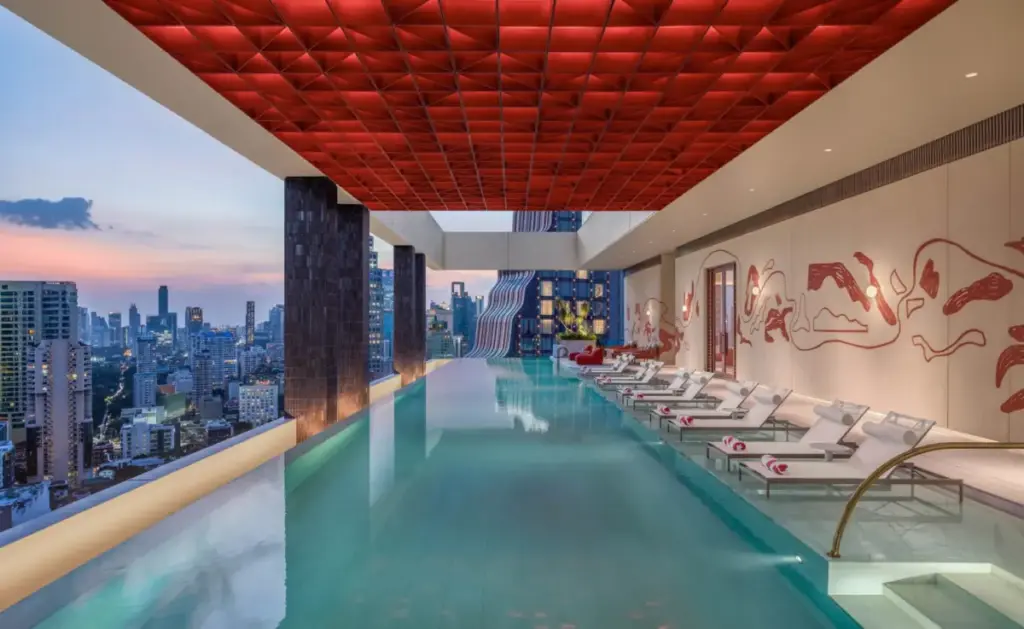
This deep dichotomy is equally evident across the hospitality landscape. Guests arriving in the city can choose between historic boutique properties that whisper tales of old Siam or glamorous, glass-clad new builds that push the boundaries of contemporary design. In doing so, visitors encounter every conceivable amenity, architectural style, and culinary philosophy under the sun.
Equally captivating is the innate warmth and hospitality of the Thai people, something I have found to be entirely unique. Thailand has long held the global moniker of the “Land of Smiles,” and from my extensive personal experience, the destination more than lives up to its legendary reputation. The city reveals its soul through a combination of small, thoughtful moments mixed with grand, larger-than-life experiences, all set to an energetic, pulsating pace that continues to cement its status as one of the world’s premier urban destinations.
Navigating the Neighborhoods: Where to Stay and Explore
For travelers mapping out their itineraries, understanding Bangkok’s diverse neighborhoods is essential to experiencing the city’s multifaceted personality. The historic riverside neighborhoods of Rattanakosin and adjacent Banglamphu serve as a natural starting point for any first-time visitor. These areas are home to some of the nation’s most celebrated cultural landmarks, including the sprawling temple complex of Wat Po, the majestic Grand Palace, ancient military forts, sunny riverside parks, and the legendary backpacker thoroughfare of Khao San Road. Here, the historical weight of the kingdom is palpable on every corner.
For travelers who prefer stiff drinks, sharp tailoring, and a cosmopolitan atmosphere, the neighborhood of Thonglor offers a stark contrast. Often compared internationally to Brooklyn, Thonglor has developed a heavy Japanese expatriate community over the years, which in turn has given rise to exceptional omakase restaurants, curated vintage clothing boutiques, and a collection of high-end bespoke tailors. Furthermore, this upscale district serves as the city’s primary nexus for cutting-edge cocktail bars and nightlife venues.
Meanwhile, Chinatown introduces a completely different rhythm. Its narrowest lane, Soi Nana, has earned global acclaim for housing a handful of craft cocktail and beer bars that manage to feel simultaneously avant-garde and delightfully ramshackle. Exploring Chinatown could easily consume an entire week. The district is densely packed with 300-year-old Taoist temples, charming independent coffee houses, serious dim sum dining rooms, eclectic shopping stalls, and a sprawling, labyrinthine network of old-world food markets.
For those whose travel agendas center around modern retail therapy and contemporary art, the Siam district is the ultimate destination. Here, visitors will find the city’s largest art museum alongside a dense concentration of mega-malls catering to every global luxury and streetwear brand imaginable.
Logistics: Getting Around the Capital
Bangkok’s traffic is globally infamous, but with proper planning, transit congestion rarely poses an insurmountable obstacle. In the historic riverside neighborhoods and Chinatown, walking remains one of the best ways to explore. The streets are largely flat, and the major sites sit in close proximity to one another, allowing pedestrians to absorb the street-level atmosphere organically.
Along Sukhumvit Road—the primary urban artery connecting mid-city neighborhoods such as Thonglor, Siam, Phrom Phong, and Sathorn—the BTS SkyTrain provides a fast, reliable alternative to road transport. The elevated rail system is exceptionally user-friendly, featuring clear English maps posted at virtually every station, color-coded lines, and a straightforward ticket-purchasing process. The SkyTrain operates daily from 6 a.m. to midnight across three separate lines, effectively connecting massive portions of the metropolitan area and bypassing street-level gridlock entirely.
No trip to the capital would be complete without experiencing its iconic three-wheeled transport. Hopping in a tuk-tuk offers a thrilling, high-energy way to navigate the shorter stretches of the city while taking in the sights, sounds, and ambient energy of the streets.
Timing Your Visit and Planning the Duration
Travelers frequently ask how long they should commit to a stay in Bangkok. Industry experts and long-term residents generally recommend a minimum of three days. This timeframe allows visitors to explore a handful of historic temples, sample authentic street food in Chinatown, unwind with a traditional Thai foot massage, and dedicate an afternoon to gallery hopping at contemporary spaces like the Dib Bangkok art museum or browsing the city’s vast retail complexes.
When it comes to the ideal time of year to visit, the period between November and February is widely considered the optimal window. During these months, the heavy monsoon rains have subsided, giving way to the capital’s cooler season—though, in tropical terms, "cooler" simply translates to a welcome drop of a degree or two from the year-round humidity.
Ultimately, whether you are returning for the tenth time or discovering the city for the first initial journey, Bangkok continues to redefine itself while honoring its timeless foundations, ensuring an unforgettable experience for every traveler who walks its vibrant streets.