

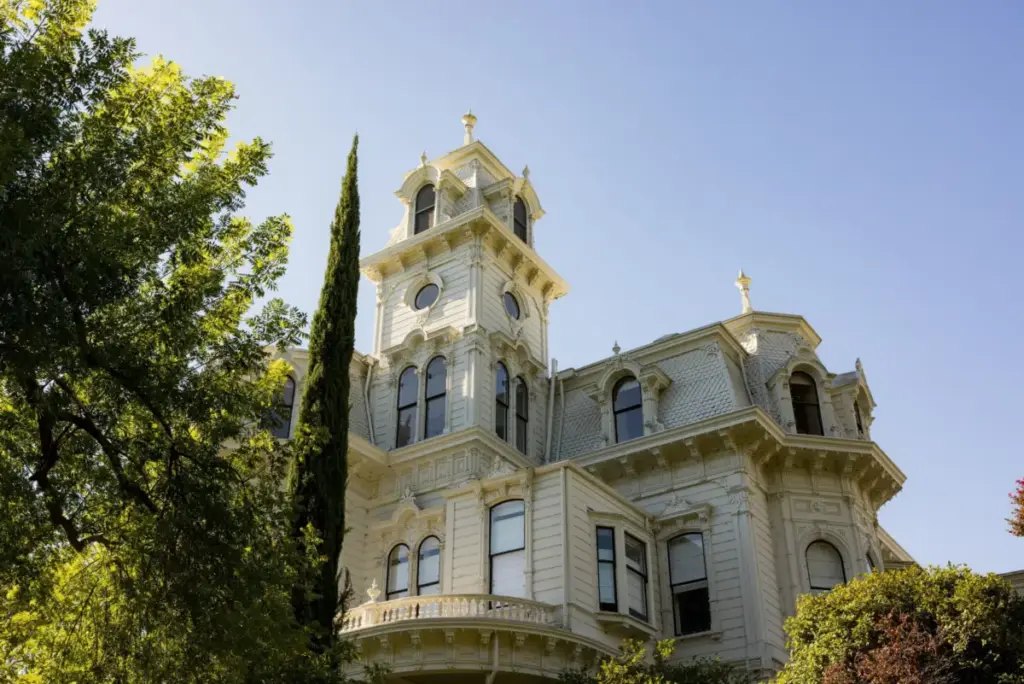
As the calendar turns to January, the nation’s 19 newly elected governors face more than just the monumental task of transitioning into executive office and preparing for their official inauguration days—they are also staring down moving day. While the ceremonial transition of power dominates political headlines, the domestic side of taking office involves stepping into some of the most historic, architecturally significant, and occasionally eccentric residential properties in the country.
Across the United States, 45 states maintain official governor’s mansions for their chief executives to live and work from. Only five states—Arizona, Idaho, Massachusetts, Rhode Island, and Vermont—buck this tradition, leaving their leaders to rely entirely on private housing. For the vast majority of states, however, these executive residences are grand in style and scale, carrying deep historical roots that stretch back centuries. Some are even famous for local legends and tales of things going bump in the night, adding a touch of folklore to their stately facades.

Yet maintaining tradition is not always straightforward. In recent years, several states have seen their official executive properties fall into complicated states of flux. Governors occasionally choose to forgo official residences altogether in favor of privately owned homes. For instance, former California Governor Gavin Newsom opted to live in a $7.5 million Fair Oaks home rather than the state’s official executive residence—a 19th-century Victorian in Sacramento—and recently listed the property. Meanwhile, Montana’s governor’s mansion currently sits empty and in a state of disrepair, and Nebraska’s official residence has remained completely unoccupied by a sitting governor for over a decade.
Despite these modern departures, the vast majority of states uphold a longstanding tradition of housing their leaders in official state-owned mansions. Virginia currently holds the record for the oldest continuously inhabited executive residence in the nation, with every governor having called it home since 1813. As a fresh wave of state leaders prepares to take the reins, a look at the architectural landmarks and historic properties awaiting them reveals a fascinating cross-section of American design, heritage, and state pride.

Alabama: Tommy Tuberville
In Alabama, Republican Tommy Tuberville secured victory in the gubernatorial race and will soon make the transition to a 119-year-old neoclassical mansion located in Montgomery. Constructed in 1907 by architect T. Weatherly Carter, the grand 17-room residence is defined by a striking row of four Corinthian columns at its primary entrance. Stepping through the front doors reveals a welcoming foyer anchored by a dramatic bifurcated staircase, blending southern history with classical architectural grandeur.
California: Xavier Becerra
California’s incoming governor-elect, Democrat Xavier Becerra, will soon take up residence in a landmark three-story Victorian structure situated in Sacramento. Originally built in 1877, the sprawling 20,000-square-foot house underwent a comprehensive, multi-million-dollar renovation in 2015. This update came decades after Ronald and Nancy Reagan briefly lived in the home in 1967 before famously declaring it a fire trap and entirely uninhabitable. For many years following the Reagans’ departure, the mansion functioned as a state museum. Following its 2015 modernization, it was restored to its original purpose as a working gubernatorial home. The residence features 30 distinct rooms, intricate Italian marble fireplaces, original hardwood flooring, and an outdoor kidney-shaped swimming pool.

Colorado: Phil Weiser
In Denver, Democrat Phil Weiser will receive the keys to a stately red brick Georgian Colonial Revival-style home affectionately known as Colorado’s Home. Established as the official governor’s residence in 1960 after being built in 1908, the 27-room property sits on a lush one-acre plot. The grounds feature meticulously landscaped gardens, a historic gazebo, a greenhouse, and a separate carriage house. Reflecting the personal touches of former governors—most notably John Hickenlooper, who served from 2011 to 2019—the home even features a rotating selection of local craft beers on tap for visiting dignitaries and guests.
Florida: Byron Donalds
Republican Byron Donalds made history by winning election as Florida’s first Black governor. His official residence in Tallahassee is a striking Greek Revival-style mansion completed in 1956. The structure was built on the exact site of the state’s original 1907 governor’s mansion, which had ultimately succumbed to structural decay. Among its extensive amenities are a private screened swimming pool, a dedicated greenhouse, and a sprawling rose garden that serves as a backdrop for official state functions.

Georgia: Keisha Lance Bottoms
Democrat Keisha Lance Bottoms achieved a historic milestone of her own, winning election as the first Black woman governor in United States history. Her upcoming residence in Atlanta is an imposing 30-room Greek Revival mansion designed by architect A. Thomas Bradbury and constructed in 1967. Spread across three expansive levels, the property measures an impressive 30,000 square feet, providing ample space for both private family living and official state entertaining.
Iowa: Rob Sand
Iowa’s official governor’s mansion, widely known as Terrace Hill, will soon welcome Democrat Rob Sand. Dating back to 1869, Terrace Hill is a magnificent 18,000-square-foot Second Empire-style residence located in Des Moines. Iowa’s governors have continuously resided in the historic home since 1976. Uniquely, the mansion balances its role as a private home with public accessibility, opening its first two floors to the public to operate as an educational museum and community events space.

Maine: Hannah Pingree
Democrat Hannah Pingree is set to move into the historic Blaine House located in Augusta, Maine. Originally constructed in 1833 and showcasing a unique blend of Federal and Greek Revival architectural styles, the mansion became the official gubernatorial residence in 1919. A subsequent major renovation gave the exterior a more pronounced Colonial aesthetic. The 28-room, two-story home includes specialized spaces like a traditional billiards room, while the surrounding grounds boast beautifully manicured formal gardens and a private tennis court.
Michigan: Jocelyn Benson
In Michigan, Democrat Jocelyn Benson enjoys the unique administrative advantage of governing a state that maintains two separate official executive residences: a primary home in the state capital of Lansing, and an official summer residence situated on Mackinac Island. The Lansing property is a single-story, ranch-style home built in 1957 encompassing 8,700 square feet with five bedrooms and four bathrooms. In contrast, the summer home on Mackinac Island is a picturesque Arts-and-Crafts-style mansion originally constructed in 1901.

Minnesota: Amy Klobuchar
Democrat Amy Klobuchar, transitioning from her role as a U.S. senator representing Minnesota, won her state’s gubernatorial contest and will soon relocate to a sprawling 16,000-square-foot residence in St. Paul. Dating back to 1912, the stone-and-brick dwelling was designed by prominent architect William Channing Whitney in a harmonious blend of English Tudor and Beaux-Arts architectural styles. The expansive estate features seven bedrooms, ten bathrooms, and nine ornate fireplaces.
Nevada: Aaron Ford
Nevada also elected its first Black governor, Democrat Aaron Ford, who will soon settle into a historic Classical Revival-style mansion in Carson City. Designed by architect George A. Ferris and completed in 1909, the stately home includes a grand entrance hall, a formal reception room, a state dining room, a dedicated governor’s study, and a luncheon room, alongside private living quarters for the family.

New Mexico: Deb Haaland
New Mexico governor-elect Deb Haaland made history as the first Native American woman to hold the state’s highest office. Located in Santa Fe, the state’s official executive residence is locally referred to as The People’s House. Designed by architect W.C. Kruger, the single-story midcentury-modern structure was completed in 1955 and provides a clean, contemporary architectural contrast to many of the nation’s 19th-century executive mansions.
Ohio: Amy Acton
Democrat Amy Acton will assume the governorship of Ohio, earning her residency inside a notable 1925 mansion located in Bexley, just outside Columbus. Constructed by architect Robert Gilmore Hanford, the Tudor-style home is surrounded by three acres of extensive, meticulously maintained gardens. Among the grounds’ most charming features is a whimsical "Storybook Trail" inspired by the classic children’s tales of Peter Rabbit.

Oklahoma: Mike Mazzei
Republican governor-elect Mike Mazzei will become the steward of Oklahoma’s official governor’s residence in Tulsa. The 14,000-square-foot Dutch Colonial home was constructed in 1928, featuring a distinctive limestone facade designed to visually match the State Capitol building located just two blocks away. The estate also boasts unique historical features, including a swimming pool custom-shaped in the outline of the state of Oklahoma, an outdoor kitchen, and a tennis court built directly over the former site of a helipad where President Lyndon B. Johnson famously landed in 1964.
Rhode Island: Helena Buonanno Foulkes
While Democrat Helena Foulkes secured a decisive victory in the race for Rhode Island’s governorship, she will not be packing her bags for a state-owned executive mansion. Rhode Island remains one of the handful of states that does not maintain an official governor’s residence. Instead, Foulkes will continue to manage her private real estate portfolio, which includes an eight-bedroom summer home in Narragansett and a three-bedroom home in Providence.

South Carolina: Alan Wilson
Republican governor-elect Alan Wilson won South Carolina’s vote, setting up his domestic transition into a two-story Federal-style mansion dating back to 1855 in Columbia. Originally built to serve as officers’ quarters for a military academy, the historic building has functioned as the official governor’s residence since 1868, just three years after the conclusion of the Civil War. The interior features a central entrance hall flanked by two formal drawing rooms, a state dining room, and a library, with private family quarters situated on the second level.
Tennessee: Marsha Blackburn
Republican Marsha Blackburn, the governor-elect of Tennessee, is set to move into a secluded 10-acre estate situated in the affluent Oak Hill suburb of Nashville. Widely known as Far Hills due to the sweeping panoramic views surrounding the property, the three-story Georgian-style mansion was built in 1931 and has served as the official state residence since 1949.

Texas: Gina Hinojosa
In Texas, Democrat Gina Hinojosa will make history as the first Latina to hold the state’s highest executive office. Her official residence will be the historic Greek Revival-style mansion located in downtown Austin. Spanning nearly 10,000 square feet, the grand home has continuously sheltered Texas governors since its construction was completed in 1856.
Wisconsin: David Crowley
Democrat David Crowley secured a historic victory in Wisconsin, becoming the state’s first Black governor. The official Wisconsin executive residence is a magnificent Classical Revival-style mansion located in Madison. Completed in 1928, the home offers 16,000 square feet of interior living space spread across three floors. The estate includes seven bedrooms, 13 bathrooms, seven fireplaces, and 10 distinct garden areas.

Wyoming: Eric Barlow
Republican Eric Barlow will soon take over the executive residence situated near Frontier Park in Cheyenne, Wyoming. Built in 1976, the current structure replaced the state’s former 1905 executive residence, which has since been converted into a public museum. While detailed structural records of the current governor’s residence remain relatively sparse, planning discussions indicate that a modernized replacement featuring upgraded security infrastructure and improved functionality may soon be in the works.