


Tick-borne illnesses continue to pose a mounting public health challenge across the United States, with Lyme disease standing firmly as the most frequently reported vector-borne infection in the country. Public health authorities estimate that nearly 500,000 Americans are diagnosed with the condition each year. The infection originates from the bacterium Borrelia burgdorferi, which is transmitted to humans primarily through the bite of an infected blacklegged tick, commonly known as a deer tick. While prompt administration of antibiotics can effectively treat Lyme disease in its early stages, failing to receive treatment can allow the infection to disseminate throughout the body, ultimately affecting the joints, heart, and nervous system. Furthermore, a subset of patients continues to experience debilitating symptoms that persist long after the initial infection has cleared.
Against this backdrop of high public health urgency, one of the longest-running ecological investigations into Lyme disease has challenged several foundational assumptions regarding the biological mechanisms that drive the spread of the disease. For more than 35 years, researchers at the Cary Institute of Ecosystem Studies located in Millbrook, New York, have meticulously tracked the intricate, often web-like relationships that exist among ticks, forest mice, oak trees, animal predators, and shifting weather patterns. This multi-decade research initiative has uncovered a series of unexpected ecological patterns. These insights are proving vital in helping scientists and public health officials better predict the specific periods when human populations face an elevated risk of exposure to infected ticks.
A landmark study published in the journal Proceedings of the National Academy of Sciences brings together nine of the most surprising discoveries yielded by this extensive project. The findings collectively demonstrate how decades of continuous observation can reveal hidden connections and delayed ecological effects that shorter, more restricted studies inevitably miss.
"On balance, these surprises have enriched our knowledge of this system, helping us to inform management of tick-borne disease risk," said lead author Richard Ostfeld, a prominent disease ecologist at the Cary Institute who oversees the long-term research program alongside colleague Shannon LaDeau.
According to Dr. Ostfeld, the vast volume of empirical data collected over the decades has proven absolutely essential for separating meaningful, long-term ecological patterns from mere coincidences and temporary statistical fluctuations.
"Studies of this depth and length are incredibly rare," Dr. LaDeau noted, emphasizing the holistic nature of the monitoring effort. "This research has followed an ecological community—including oak trees, mammals, and microorganisms—examining how interactions like predation, parasitism, and competition shape the system over time. The evolution of understanding summarized in this paper is something you simply cannot get without such a long-term and system-focused study."
Deer May Play a Smaller Role in Lyme Disease Risk Than Expected
When Lyme disease first emerged as a recognized public health crisis in the United States during the 1980s, white-tailed deer were widely viewed by scientists and the public alike as the primary drivers of rising tick populations. Hunters and field researchers frequently encountered individual deer carrying dozens, or even hundreds, of adult ticks. This striking observation led to the logical hypothesis that geographic areas supporting larger deer populations would inherently produce much larger overall tick populations.
The underlying reasoning initially seemed straightforward and undeniable. Although white-tailed deer cannot directly transmit the Lyme disease bacterium to feeding ticks, they serve as the primary and indispensable blood meal source for adult female ticks. Without these large mammalian hosts, adult female ticks would struggle to secure the nutrients necessary to reproduce. Consequently, scientists suspected that burgeoning deer populations would allow significantly more female ticks to successfully reproduce, eventually triggering a surge in the population of young ticks capable of transmitting the infection to humans.
However, the reality captured by decades of systematic monitoring on the ground has painted a fundamentally different picture. On the Cary Institute’s sprawling 2,000-acre forested research property situated in Dutchess County, New York, researchers discovered no statistically significant correlation whatsoever between local deer numbers and the subsequent abundance of nymphal ticks. Nymphs are the immature, sesame seed-sized juvenile ticks that are responsible for the vast majority of Lyme disease transmissions to humans, largely because their tiny size makes them exceptionally difficult to spot on the skin.
"We had detected a weak positive relationship between deer and subsequent nymph abundance over short subsets of the data," Dr. Ostfeld explained, reflecting on the misleading nature of preliminary findings. "But the whole data set in its entirety shows no such thing."
Mice Are a Much Stronger Predictor of Tick Surges
While white-tailed deer populations ultimately failed to predict the future abundance of nymphal ticks across the study site, mouse populations demonstrated a dramatically clearer and more reliable relationship.
Years characterized by especially large white-footed mouse populations were consistently followed by approximately 40% more nymphal ticks the very next year. White-footed mice occupy a uniquely influential role in the forest ecosystem because they provide exceptionally rich blood meals for developing tick larvae. Furthermore, these mice are extraordinarily efficient at transmitting the bacterium Borrelia burgdorferi to any uninfected larvae that feed upon them.
Once a tick becomes infected during its larval stage, it retains the bacterial pathogen safely within its gut as it molts and develops into a nymph. When these hungry nymphs climb onto vegetation to wait for a passing host—potentially a human—and take their next blood meal, they can readily pass the dangerous infection along.
The strength of this ecological link suggests that actively monitoring forest mouse populations could provide public health agencies with a valuable early warning system, granting communities advanced notice ahead of unusually severe tick seasons.
How Acorns Can Predict Tick Populations Two Years Ahead
Perhaps one of the most astonishing discoveries emerging from the 35-year dataset involves a biological phenomenon that might initially appear to have no connection to human disease whatsoever: acorns.
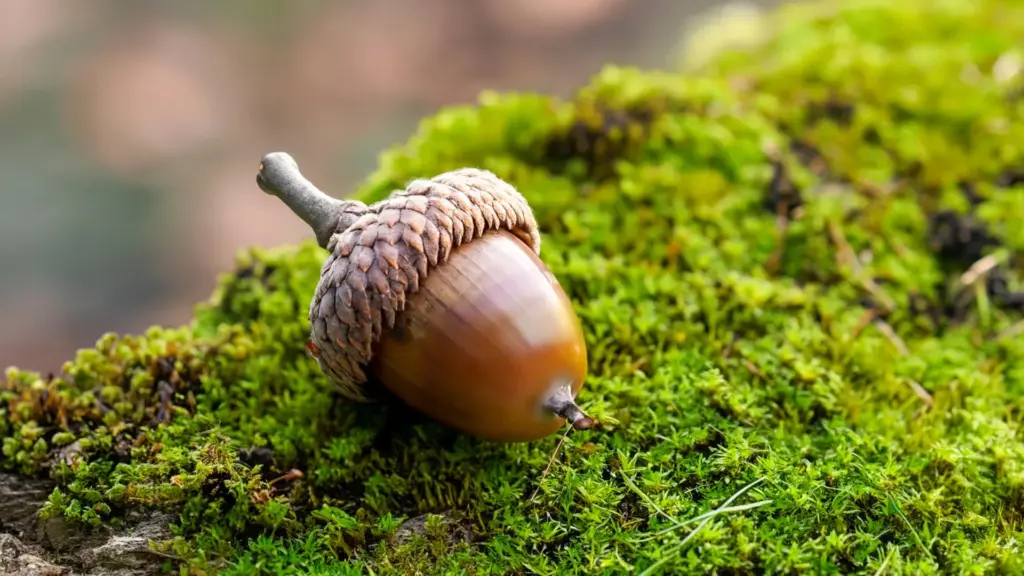
Oak trees do not produce a uniform crop of acorns year after year. Instead, they periodically produce exceptionally massive crops of acorns in highly synchronized, widespread events known scientifically as acorn masting. These unusually productive forest years provide a massive influx of rich, high-calorie food for forest rodents, most notably white-footed mice. Well-fed and protected from winter scarcity, mouse populations expand dramatically during the year following an acorn mast.
That subsequent population explosion in mice then provides a massive banquet for newly hatched tick larvae, successfully supporting larger cohorts of young ticks as they feed and develop. Because of this biological chain reaction, the researchers discovered that a particularly heavy oak acorn crop can reliably predict a substantial surge in nymphal ticks exactly two years down the line.
This multi-year relationship reveals a remarkable sequence of events in which the reproductive cycles of long-lived forest trees help dictate future tick abundance across the landscape. In practical terms, it offers researchers and public health planners yet another prospective tool for anticipating periods of heightened Lyme disease exposure long before the ticks actually hatch and seek hosts.
Why More Mice Don’t Always Mean More Infected Ticks
Even though tracking mouse abundance helps scientists forecast the total number of nymphal ticks that will emerge in a given year, the researchers made a critical secondary discovery: high mouse populations do not consistently predict what percentage of those ticks will actually carry the Lyme disease bacterium.
At the outset of the research program, scientists naturally expected both measures to rise in tandem. Because white-footed mice are such proficient transmitters of Borrelia burgdorferi, a booming mouse population seemed destined to produce not only a greater total number of ticks, but also a significantly higher proportion of infected ticks capable of transmitting disease.
Early observations gathered during the initial years of the project appeared to support that intuitive assumption. However, as decades of additional field data accumulated and were subjected to rigorous analysis, that apparent relationship gradually weakened and ultimately disappeared.
"It kept me up at night," Dr. Ostfeld admitted, describing the intellectual frustration of watching long-held hypotheses unravel in the face of accumulating data, "because it meant that my understanding of how the system works was incomplete or wrong."
The underlying biological explanation appears to involve the rich diversity of other vertebrate animals that share the forest habitat with mice. Forest-dwelling mammals such as striped skunks, eastern gray squirrels, and Virginia opossums also serve as frequent hosts for feeding larval ticks. However, unlike white-footed mice, most of these alternative hosts are remarkably poor at passing the Lyme disease bacterium along to the feeding ticks.
When these alternative host species are abundant within the forest ecosystem, a much larger proportion of larval ticks end up feeding on animals that are unlikely to infect them. This dilution effect successfully reduces the overall percentage of resulting nymphal ticks carrying the active pathogen, even during years when the forest floor is teeming with mice.
"So the infection prevalence in the nymphs really depends on how all the larval tick meals are distributed across all the hosts," Dr. Ostfeld explained. "It would have been convenient if one host predicted that for us, but that has not been the case."
This discovery underscores a fundamental and vital distinction in disease ecology: the total number of ticks present in a given environment is not the same thing as the proportion of those ticks carrying a dangerous pathogen. Accurately predicting human risk requires examining the entire community of diverse animal hosts upon which ticks feed, rather than relying on a single mammalian indicator species.
Extreme Heat and Cold May Not Kill Ticks in the Wild
Weather patterns and climatic fluctuations have similarly upended conventional wisdom regarding tick survival and mortality rates.
Earlier controlled laboratory experiments had consistently suggested that exposing blacklegged ticks to intense summer heat or severe winter cold would prove fatal. Yet, direct field observations conducted within natural forest habitats revealed that ticks are far more resilient than laboratory models indicated, demonstrating an unexpected capacity to survive harsh weather extremes.
Field researchers believe that ticks successfully protect themselves from extreme temperatures by engaging in behavioral thermoregulation—retreating safely into deeper soil layers, burrowing beneath heavy layers of fallen leaves, or hiding under insulating snowpacks where environmental conditions remain far more stable and moderate than the conditions recorded at the surface.
At the same time, the expansive long-term dataset uncovered a more complex, overarching relationship between ambient temperature and tick populations. Years characterized by higher overall average temperatures tended to be followed by fewer nymphal ticks than usual, complicating the assumption that a warming climate would universally benefit tick populations.
Simultaneously, warmer conditions generally favor the survival and reproduction of white-footed mice, which can theoretically drive tick numbers upward. These opposing ecological pressures make it exceptionally difficult for scientists to project how ongoing climatic shifts will ultimately influence future patterns of Lyme disease risk.
What 35 Years of Research Mean for Lyme Disease Prevention
Taken as a whole, the discoveries amassed over more than three decades demonstrate that the risk of contracting Lyme disease is governed by an intricate network of ecological interactions. While complex, the system is not entirely unpredictable.
The empirical proof that mouse abundance serves as a far stronger indicator of future nymphal tick numbers than deer populations at the study site offers a more focused path for ecological monitoring. Similarly, the realization that unusually harsh winters may not decimate local tick populations as severely as once believed forces a reevaluation of traditional pest management expectations.
By incorporating these nuanced patterns into their planning, public health officials may eventually find themselves better equipped to anticipate distinct periods of elevated human tick exposure, paving the way for the development of more targeted and effective community-level prevention strategies.
Nevertheless, significant questions remain unanswered, particularly regarding the cascading impacts that ongoing global climate change will exert on tick populations, their diverse animal hosts, and the mast-producing oak trees that underpin rodent population dynamics.
"You would expect that a warming climate, which makes life better for the mice, would eventually make life better for the ticks, but we have not seen that so far," Dr. Ostfeld noted. "We need to know what to expect from the different manifestations of climate change, which are sometimes warmer and drier, and sometimes warmer and wetter. The time of year when it’s very warm also matters to ticks, oaks, and acorn production."
The Cary Institute’s primary research site in Dutchess County has undergone profound environmental alterations since monitoring first commenced in 1991. Ongoing climate shifts, continuous landscape fragmentation, and the continuous arrival and spread of invasive species have collectively transformed the baseline ecological conditions experienced by the forest’s resident plants and wildlife.
Researchers intend to continue tracking these sweeping environmental changes to determine precisely how ticks and their associated hosts will adapt and respond over coming decades. Their ongoing work promises to provide increasingly vital insights into how future ecological transformations will shape human vulnerability to Lyme disease and other emerging vector-borne infections.