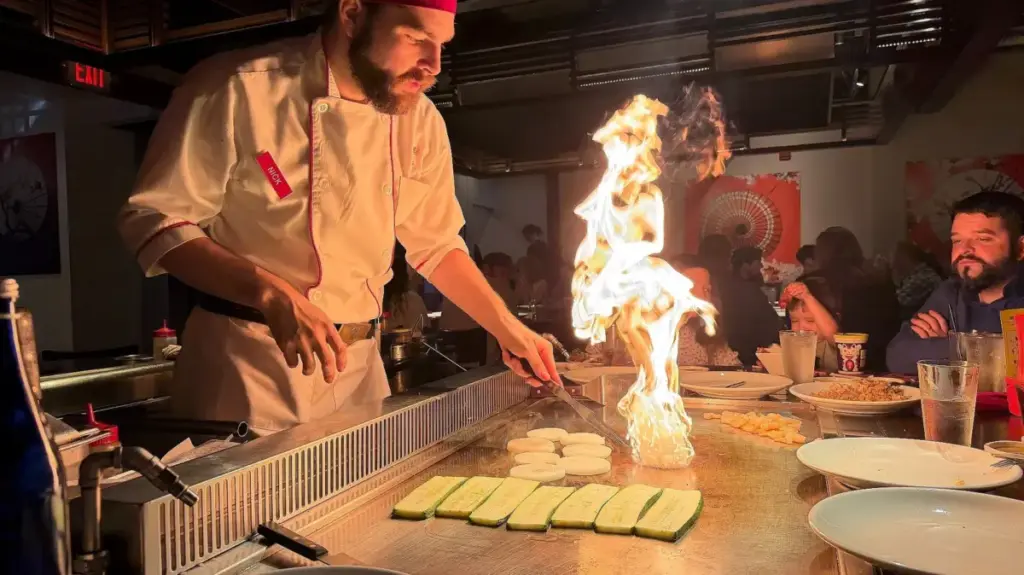
At 32 years old, food journalist Emily Hunt had achieved a rare culinary milestone: she had never stepped foot inside a Benihana. Up until a recent invitation for a complimentary tasting at her local franchise, the popular teppanyaki and hibachi chain had simply bypassed her radar, not out of intentional avoidance, but rather from a lifelong lack of occasion. Accepting the invitation with palpable enthusiasm, she set out to discover whether the decades of cultural hype surrounding the sizzling flat-top tables were genuinely warranted.
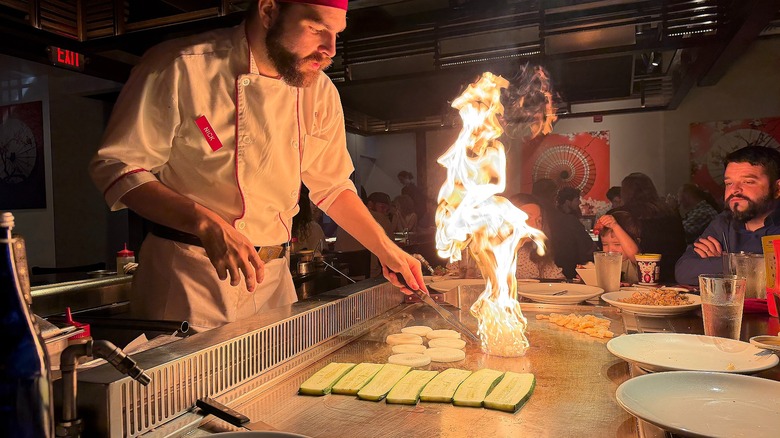
For the uninitiated, dining at a hibachi restaurant is a theatrical experience that marries dinner and live entertainment. Guests gather around a shared, blazing-hot flat-top grill—known as a teppan—while a chef performs a high-energy routine complete with knife-clacking acrobatics, theatrical onion-ring volcanoes, and flames leaping toward the ceiling. Beyond the spectacle, however, lies the food itself. During her visit, Hunt partook in the standard six-course hibachi meal. Thanks to culinary upgrades and multi-protein entree selections, her tasting ultimately encompassed eight distinct dishes.
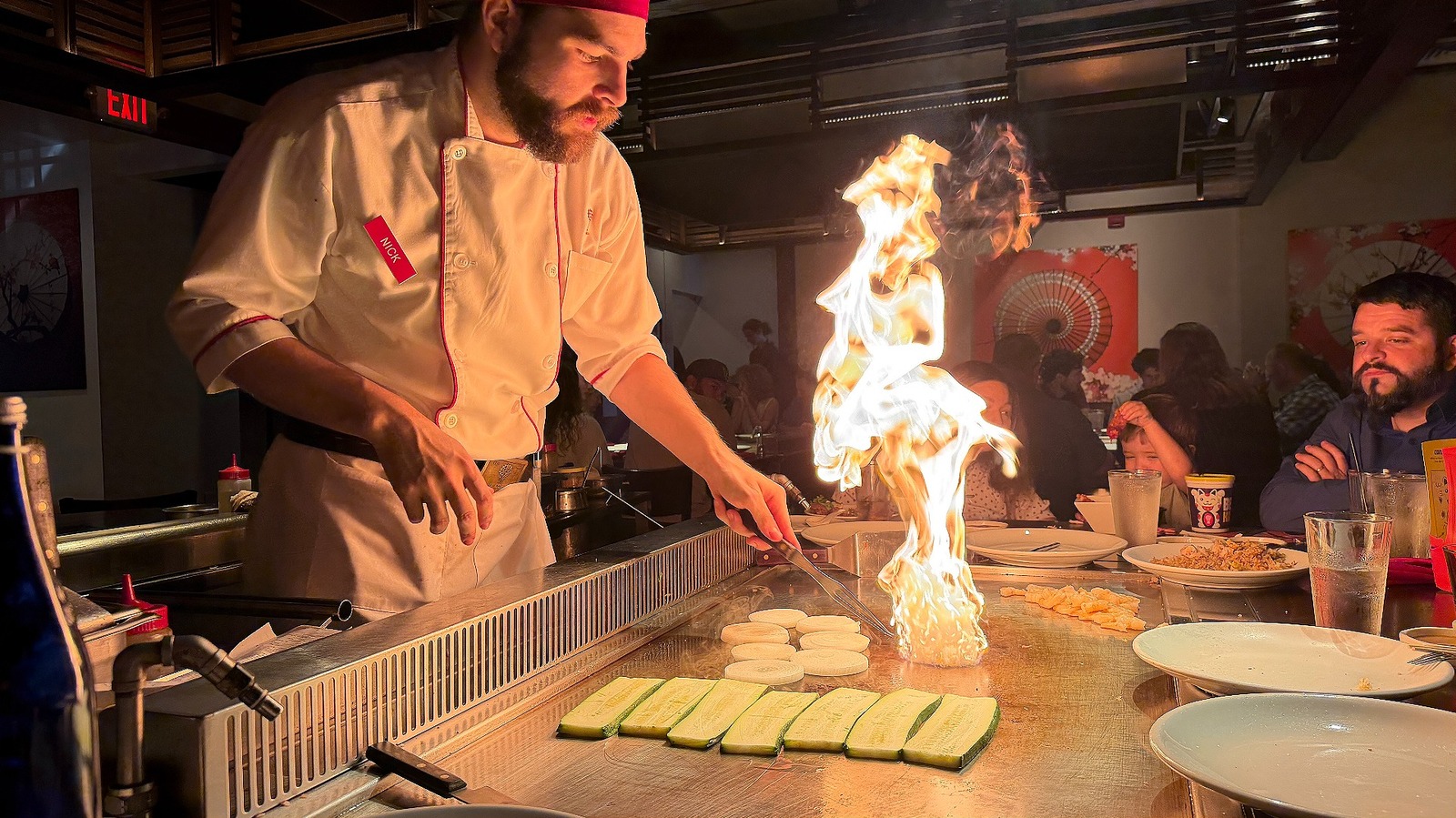
Her evaluation of the sprawling meal rests on a combination of overall flavor profiles and what she defines as the "Benihana novelty factor"—the unique theatricality and signature execution that separates a standard meal from a memorable teppanyaki experience.
8. Benihana Salad
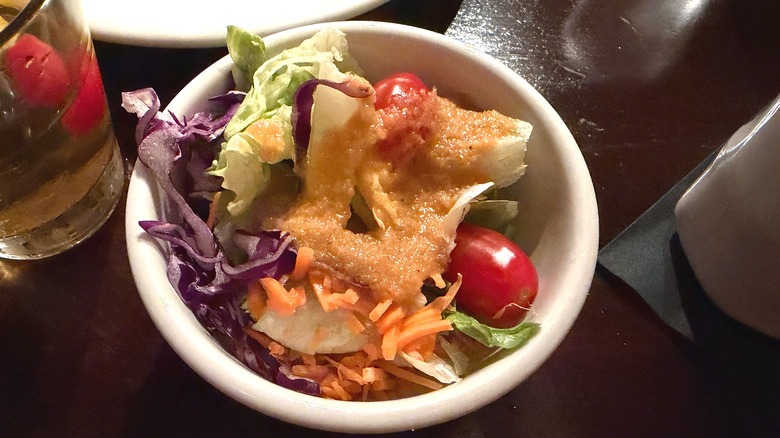
Landing at the bottom of the rankings is the restaurant’s straightforward, no-frills mixed green salad. The definitive high point of this starter was its dressing: a vibrant ginger-carrot puree that brought a welcome brightness to the bowl. Unfortunately, the salad components underneath—consisting of basic iceberg and mixed lettuce, shredded red cabbage, carrots, and sliced tomatoes—felt decidedly ordinary.
While the dish was entirely edible and executed cleanly, it suffered from a severe lack of the signature "Benihana novelty" that defines the brand. Diners do not visit a teppanyaki house expecting avant-garde mixology in their greens, yet the opening course missed an opportunity to establish an immediate sense of excitement. It served its purpose as a light prelude to the heavier courses, but ultimately failed to leave a lasting impression.
7. Vanilla Ice Cream
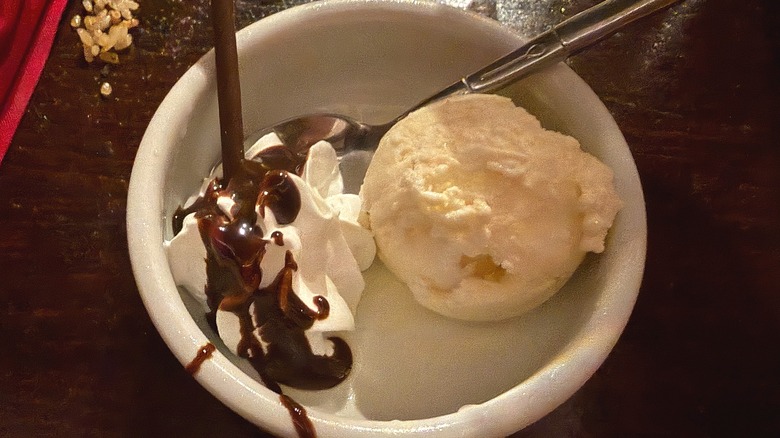
Securing the second-to-last spot is the meal’s closing sweet course: vanilla ice cream. One critical detail diners should note before heading to Benihana is the timing of dessert. Unlike traditional dining formats where courses flow seamlessly, dessert at Benihana arrives only after the entire table has been cleared and the shared flat-top grill has been meticulously cleaned by the staff. For first-timers, this intermission can create an awkward window where patrons might mistakenly assume their final course has been forgotten.
Once it arrived, the dessert proved to be a pleasant, lightweight conclusion to an otherwise heavy meal. By the time the ice cream was served, Hunt was comfortably full, making the modest portion size a welcome relief. Garnished with whipped cream, a chocolate drizzle, and a classic chocolate Pocky stick, the dish delivered a comforting familiar sweetness. Even so, it remained a fundamentally standard ice cream offering that could not justify a higher placement in a meal featuring far more inventive components.
6. Benihana Onion Soup
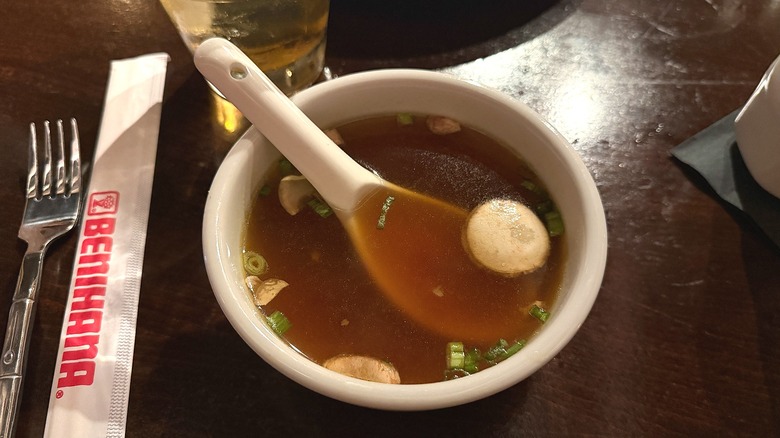
The traditional Benihana onion soup presents a fascinating culinary dichotomy: a broth that scales incredible heights paired with a structural ratio issue. The broth itself was described as simply fantastic, brimming with deep umami richness and a deeply savory complexity that would make it enjoyable to sip straight from a mug. Even for diners who do not typically gravitate toward onions, the flavor profile remains remarkably accessible, avoiding any overpowering or sharp allium notes.
The dish stumbled slightly due to its composition. Accompanied by mushrooms and green onions that tasted exceptional, the soup suffered from an imbalance between the liquid and its solid inclusions. There were simply too few vegetables to feel integrated, leaving diners wishing for either a completely clear broth or a more generous distribution of the savory add-ins. While understandable from a hospitality perspective—restaurants naturally want to avoid filling guests up on soup before the main event—the execution kept a potentially stellar starter parked in the middle of the pack.
5. Hibachi Vegetables
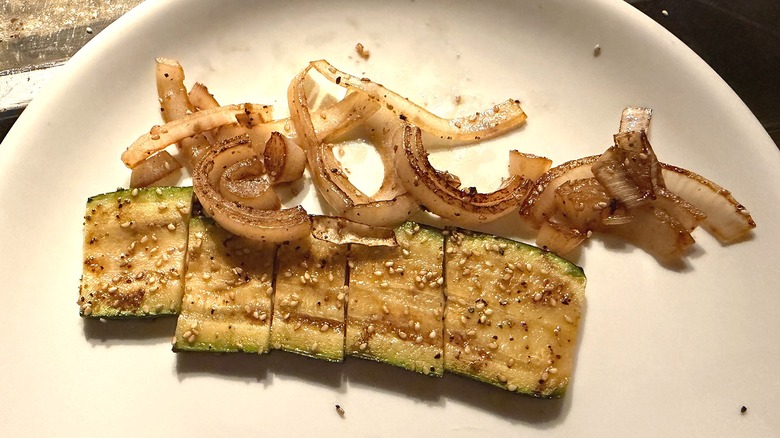
Occupying the middle tier are the classic hibachi vegetables, a simple preparation of grilled onions and zucchini expertly cooked by the chef right on the teppan grill. For anyone who appreciates the elemental appeal of well-seared vegetables, this course delivered dependable satisfaction. Neither the zucchini nor the onion attempted to steal the spotlight from the high-end proteins, yet both earned standalone recognition through sheer technical execution.
Both vegetables achieved an ideal texture, retaining a subtle, crisp bite while softening enough to remain tender and easy to chew. The seasoning relied on a minimalist blend of soy sauce and sesame oil that allowed the natural flavors of the produce to shine while harmonizing smoothly with the rest of the meal. While not a dish to brag about in isolation, it provided a necessary vegetal balance that would have left a noticeable void had it been omitted from the menu.
4. Hibachi Shrimp Appetizer
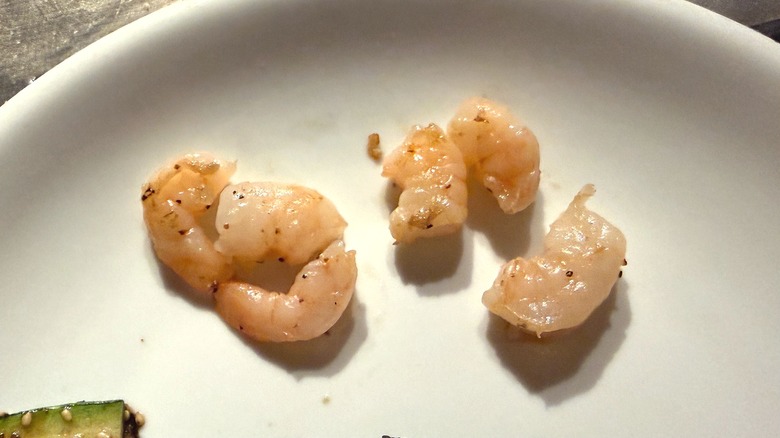
As the ranking moves into the upper half, the culinary ambition of the meal becomes increasingly apparent. The hibachi shrimp appetizer, included as a standard component of the six-course lineup, excelled on virtually all fronts. The dish also offered the evening’s introduction to a standout house accompaniment: a tangy, punchy mustard dipping sauce. Whether this sauce rotates seasonally remains unconfirmed, but its presence alongside the tender shrimp created a flavor combination described as explosive.
The singular critique leveled against this course concerned portion sizing. Given the sheer volume of dishes packed into a multi-course hibachi dinner, restraint is understandable; however, the shrimp appetizer felt vanishingly small. The individual pieces of shrimp were buttery, exceptionally tender, and cooked with precision. Had the portion been slightly more generous, the dish easily could have climbed higher in the final tally.
3. Wagyu Fried Rice
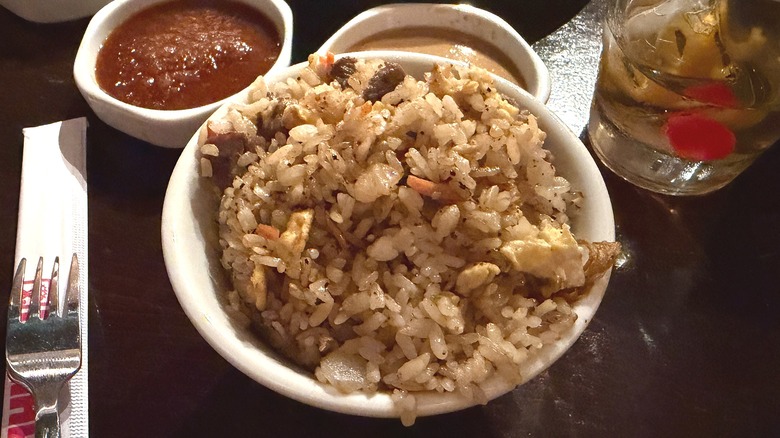
While steamed rice serves as the default accompaniment for the six-course hibachi experience, diners are given the option to upgrade to specialty fried rice variations—an opportunity few adventurous eaters would pass up. Opting for the wagyu fried rice proved to be a resounding success, validating the widespread culinary lore surrounding Benihana’s famous fried rice preparations.
The dish was expertly executed on the flat top, incorporating pieces of tender wagyu beef and subtle notes of garlic butter woven seamlessly throughout the grains. The flavor profile was intensely savory, rich, and deeply satisfying, leading to an empty bowl cleared far too quickly. If there was any critique to be made, it was a minor preference for a fraction more salt; however, given the culinary golden rule that under-seasoning is always preferable to an overly salted dish, the minor omission was easily forgiven. It stood proudly as one of the evening’s best savory components, bested only by the dual-protein main event.
2. Filet Mignon
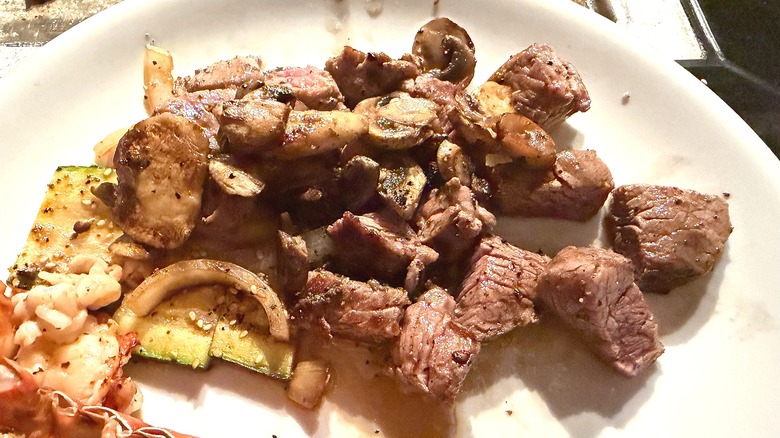
The chosen six-course entrée featured a dual-protein combination that claimed the top two positions on the list without contest. Taking second place is Benihana’s filet mignon, ordered rare. While traditional steakhouse purists might debate whether filet mignon is truly the optimal cut for high-heat, flat-top teppanyaki grilling, the execution at Benihana proved delightfully convincing.
After experiencing the dish firsthand, Hunt noted that the restaurant deserves serious consideration as a reliable destination for quality filet mignon. Though the steak arrived pre-cut and cooked in bite-sized pieces—a standard practice for teppanyaki chefs managing shared tables—the meat remained inexplicably tender and succulent. Elevating the experience further with an optional request for truffle butter pushed the dish into elite territory. The portion size struck an ideal balance, leaving the diner satisfied without feeling weighed down.
1. Cold Water Lobster Tail
Claiming the crown at the very top of the list is Benihana’s cold water lobster tail. Shellfish can frequently disappoint even at high-end dining establishments, frequently falling victim to overcooking, rubbery textures, or an under-seasoned profile that leaves diners wishing they had ordered land-based proteins instead. Benihana shattered those low expectations entirely.
The lobster tail was remarkably tender, perfectly seasoned, and elevated to extraordinary heights with the addition of a truffle butter upgrade. The portion size felt generous relative to the expansive multi-course meal that preceded it. The exceptional quality of the seafood confirmed that future visits to the chain will inevitably feature both the lobster tail and the filet mignon.
Methodology
Reflecting on her maiden voyage into the world of teppanyaki, Hunt categorized her first Benihana experience as an unqualified success, even if minor adjustments could elevate the introductory courses. The ranking of the dishes was determined primarily by personal preference, which closely mirrored how effectively each course highlighted the technical skill of Benihana’s trained chefs. The most memorable moments of the evening belonged to the signature entrees and upgraded proteins—a dynamic that underscores what a vibrant, entertainment-driven hibachi restaurant should ultimately deliver.