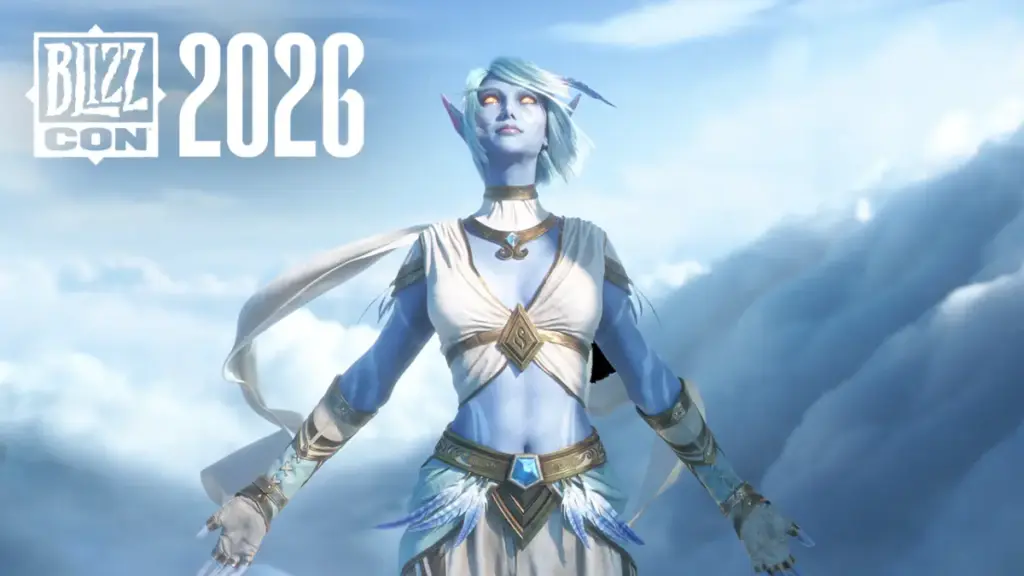
During yesterday’s explosive BlizzCon 2026 Opening Ceremony, Blizzard Entertainment delivered a massive surprise that immediately dominated discussions across the gaming community. The studio officially pulled back the curtain on World of Warcraft: Forever, an ambitious "Classic+" iteration of the enduring massively multiplayer online role-playing game. Designed to let players return to a heavily updated and modernized version of vanilla Azeroth, the project promises to introduce entirely new zones, dungeons, raids, and a wealth of fresh content. Following the momentous announcement, developers sat down to discuss not only what players can expect from the upcoming release, but also why they firmly believe this comprehensive reimagining renders the long-rumored World of Warcraft 2 completely unnecessary.
Immediately after the keynote presentation, discussions with Kris Zierhut, Principal Designer on World of Warcraft: Forever, and Mike Nuthals, the game’s Lead Encounter Designer, shed light on the philosophy driving the project. Rather than abandoning two and a half decades of continuous development, technical iteration, and community building to start from scratch with a brand-new sequel, Blizzard’s development team is choosing to supercharge the existing foundation. According to Zierhut, the core framework powering modern World of Warcraft is a technological marvel that has been meticulously refined over the last 25 years.
"I think one of the things that’s singularly great about WoW is we have this game and this world and this design that has been continuously developed for the last 25 years," Zierhut explains, pointing to the continuous efforts to make the game better with each passing expansion. "And we keep making it better. We made the graphics better, we made the rendering better, we made the lighting better; all that new stuff we showed on stage today."
The improvements go far beyond mere surface-level aesthetics. Zierhut emphasizes that the underlying architecture of the game has seen massive efficiency gains over the years. From the way the engine renders environments and objects to the sophisticated server infrastructure handling thousands of players moving seamlessly across the massive game world, the technical backbone of World of Warcraft is exceptionally robust. The engine manages complex spell systems and high-stakes combat encounters with a level of precision that few other titles in the genre can match. For the development team, throwing away that incredible engine and server infrastructure to build a sequel simply does not make logical sense when that same technology can be continuously upgraded to meet modern standards.
Furthermore, Zierhut points out that the creative vision behind the game’s long-running narrative remains strong. The team’s deep affection for the lore of Azeroth means there is no underlying problem with the story that would necessitate a clean slate. By returning to the very beginning through World of Warcraft: Forever, the developers have a unique opportunity to explore that foundational lore in fresh, unexpected ways. When evaluating what a potential sequel could offer, Zierhut suggests that World of Warcraft: Forever is already delivering those exact experiences within a proven, beloved ecosystem.
Rather than offering a simple rehashed update of the original 2004 release, World of Warcraft: Forever is shaping up to be a robust, feature-rich experience. Alongside the updated world visuals and dynamic modern lighting showcased during the BlizzCon presentation, the game will introduce 10 and 20-player raids, more than 1,000 brand-new quests, additional race and class combinations, and an entirely new playable race known as the Skyborne. Both Nuthals and Zierhut expressed immense enthusiasm for several key features they believe will redefine how players interact with the world and each other.
For Nuthals, the prospect of players discovering entirely redesigned itemization is a particular highlight. Every single dungeon and raid in the classic world has undergone a comprehensive itemization pass, ensuring that veteran players and newcomers alike will find plenty of new gear to hunt down. The goal is to encourage players to thoroughly explore the world, uncovering hidden nooks and crannies, securing powerful loot, and sharing those memorable discoveries with their peers.
The structuring of endgame content is another major area of focus. Nuthals highlights the intentional variety in raid sizes being introduced to the game, noting that the team is eager to see how communities organize around these challenges. The new Barrow Deeps instance will serve as a dedicated 10-player raid, offering a more intimate group dynamic. Meanwhile, the legendary Hyjal Summit returns as a 20-player encounter, and the iconic Onyxia will challenge massive groups of 40 players. Beyond the mechanical challenges of these encounters, Nuthals emphasizes that the primary thrill lies in watching players forge social bonds, build friendships, and organize guilds to conquer these monumental tasks together.

World of Warcraft: Forever’s New Camping Feature Explained
Among the many systems and additions revealed for World of Warcraft: Forever, the newly introduced camping feature stands out as a clever nod to the social mechanics that originally defined the classic MMORPG experience. Zierhut points out this specific mechanic as one of the features he is most excited for players to experience firsthand.
In earlier iterations of World of Warcraft, players could drop a basic cooking fire to prepare food, pausing briefly in the open world. In World of Warcraft: Forever, that simple cooking fire evolves into a fully realized campfire mechanic. Because players must sit and wait by the fire for a short duration, natural opportunities arise for organic social interaction. If another player walks past and chooses to add to the fire, a shared space is instantly created. Sitting together and waiting out the brief timer naturally prompts casual conversation, with players asking about current objectives, sharing quest goals, and ultimately deciding to form a permanent group.
Blizzard views these spontaneous interactions as the vital spark from which lasting friendships, social relationships, and successful guilds are born. By deliberately designing systems that encourage players to slow down and interact in the open world, the developers hope to recapture the authentic community spirit that made early online gaming so memorable.
Despite the addition of modern conveniences, extensive quality-of-life upgrades, and entirely new content, the team is acutely aware of the delicate balance required when revisiting a cherished classic. Zierhut and Nuthals stress that World of Warcraft: Forever will not stray too far from the core pillars that made the original game a cultural phenomenon.
The development team has made it clear that they have no intention of upending the established lore or fundamentally altering how the world feels to explore. While the chronological sequence of events may experience minor adjustments to accommodate new storylines and gameplay paths, these changes are carefully crafted to avoid contradicting established Classic canon. The goal is to provide a slightly different perspective on familiar events without creating timeline inconsistencies that might alienate purists.
According to Nuthals, the foundational pillars guiding the design process remain thoroughly rooted in the core experience of playing Classic World of Warcraft. Every decision made by the design team is measured against those universal principles, ensuring that the game retains its distinct identity while offering exciting new horizons for players to conquer.
World of Warcraft: Forever is scheduled to launch on November 4.