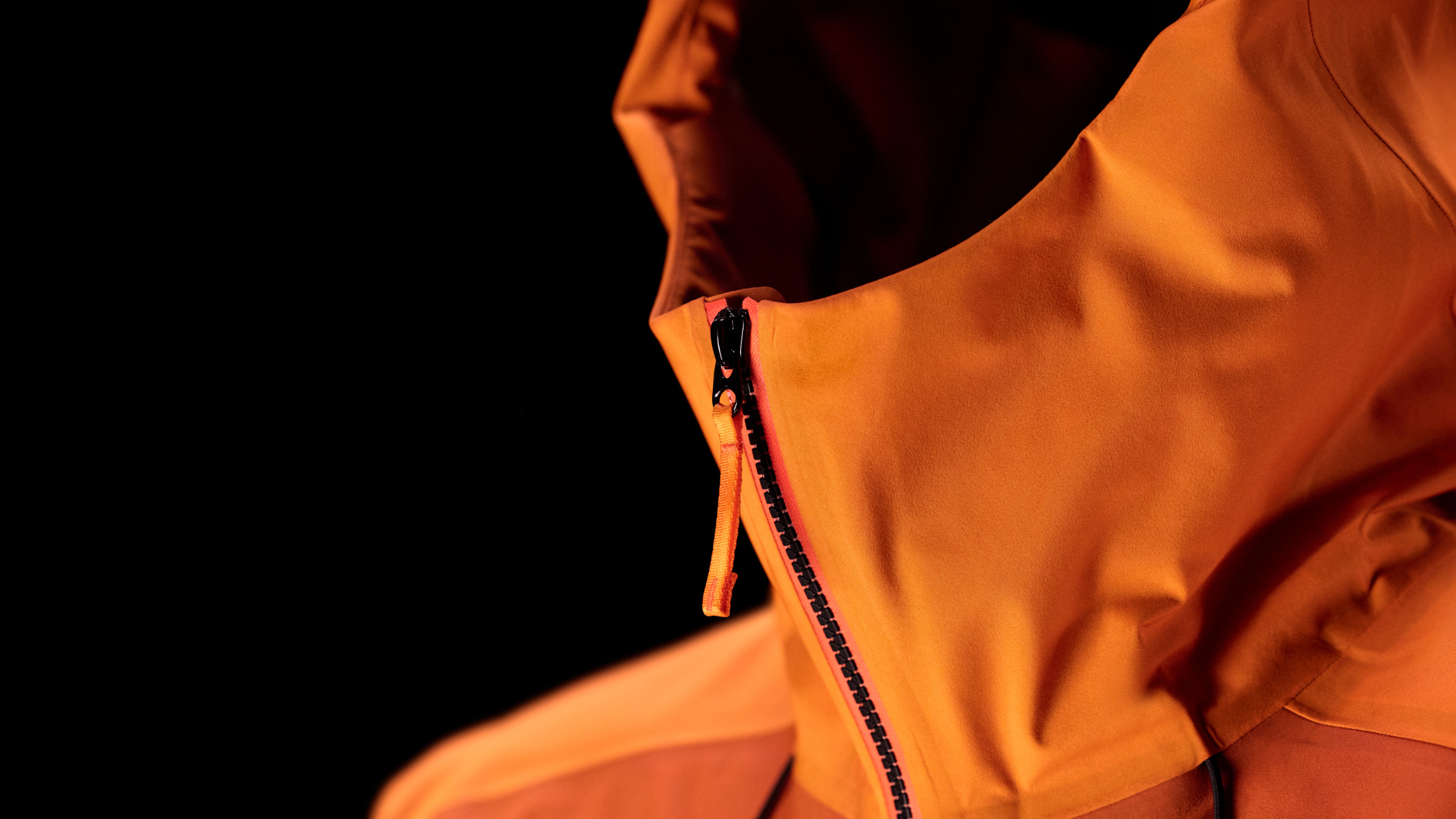
Tucked neatly alongside the interior chest pocket of a two-toned magenta and orange Arc’teryx hardshell is a laser-etched QR code. Instead of pulling up a digital menu at a local pub, scanning it prompts the wearer to register their newly acquired jacket. This digital handshake immediately initiates a comprehensive, permanent record of the garment’s specific materials, geographic origins, and, eventually, its entire repair history.
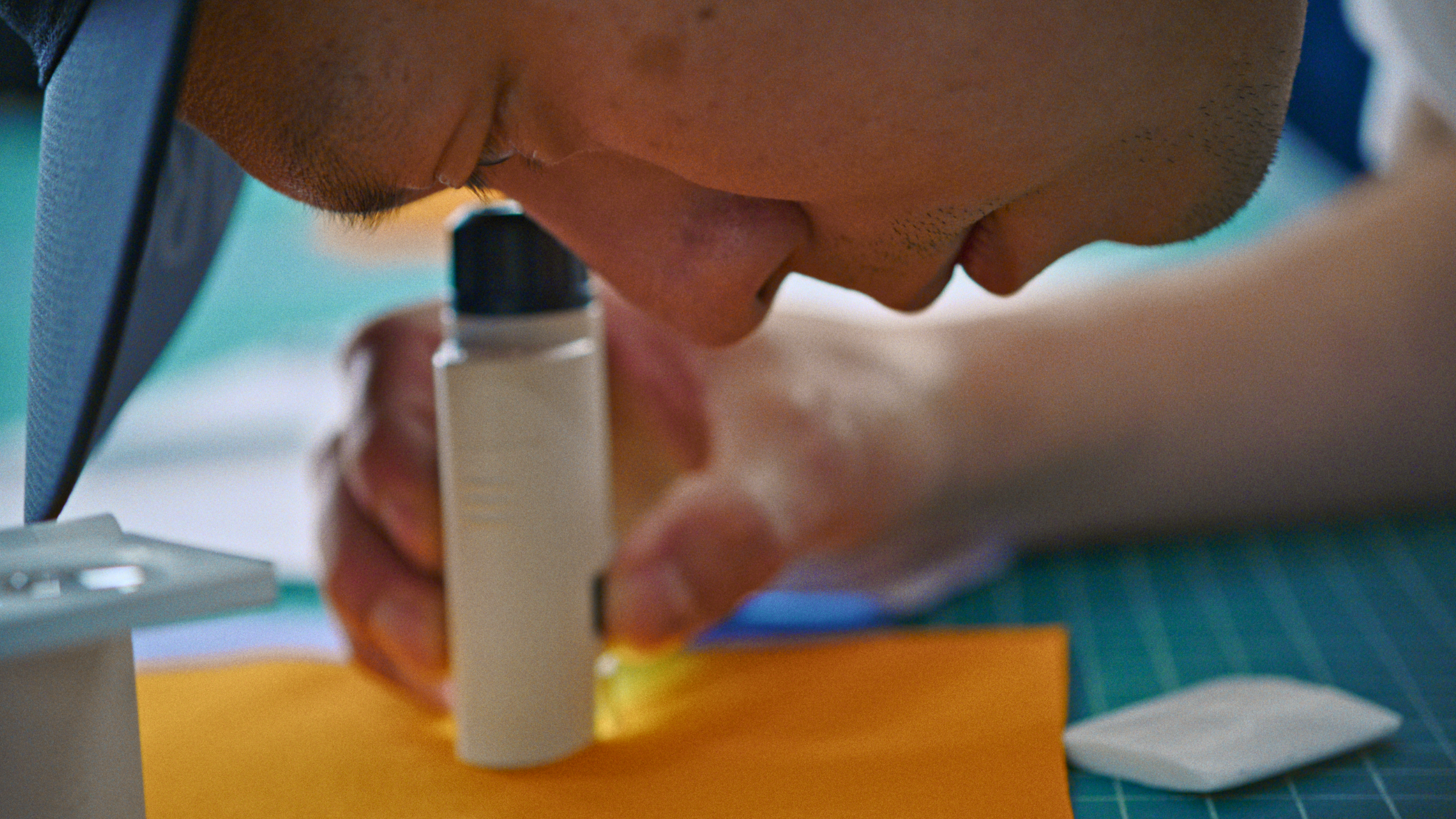
While QR codes have become ubiquitous in daily life, appearing on everything from restaurant tables to product packaging, embedding a functional tracking square directly onto a mountain-grade hardshell required an entirely different level of industrial engineering. Positioned on the interior lining, the code is placed in a spot that renders it nearly impossible to destroy, rub off, or remove through rigorous use in the alpine. Furthermore, the laser etching technique was adapted directly from the electronics manufacturing industry. Engineers subjected the fabric to multiple trials and stress tests to ensure the laser left a permanent, legible mark without degrading the technical integrity or waterproofing of the surrounding textile.
The underlying question facing the design team was simple yet daunting: why spend so much time, financial capital, and advanced engineering on a single square inch of a jacket?
Building the System While Building the Jacket
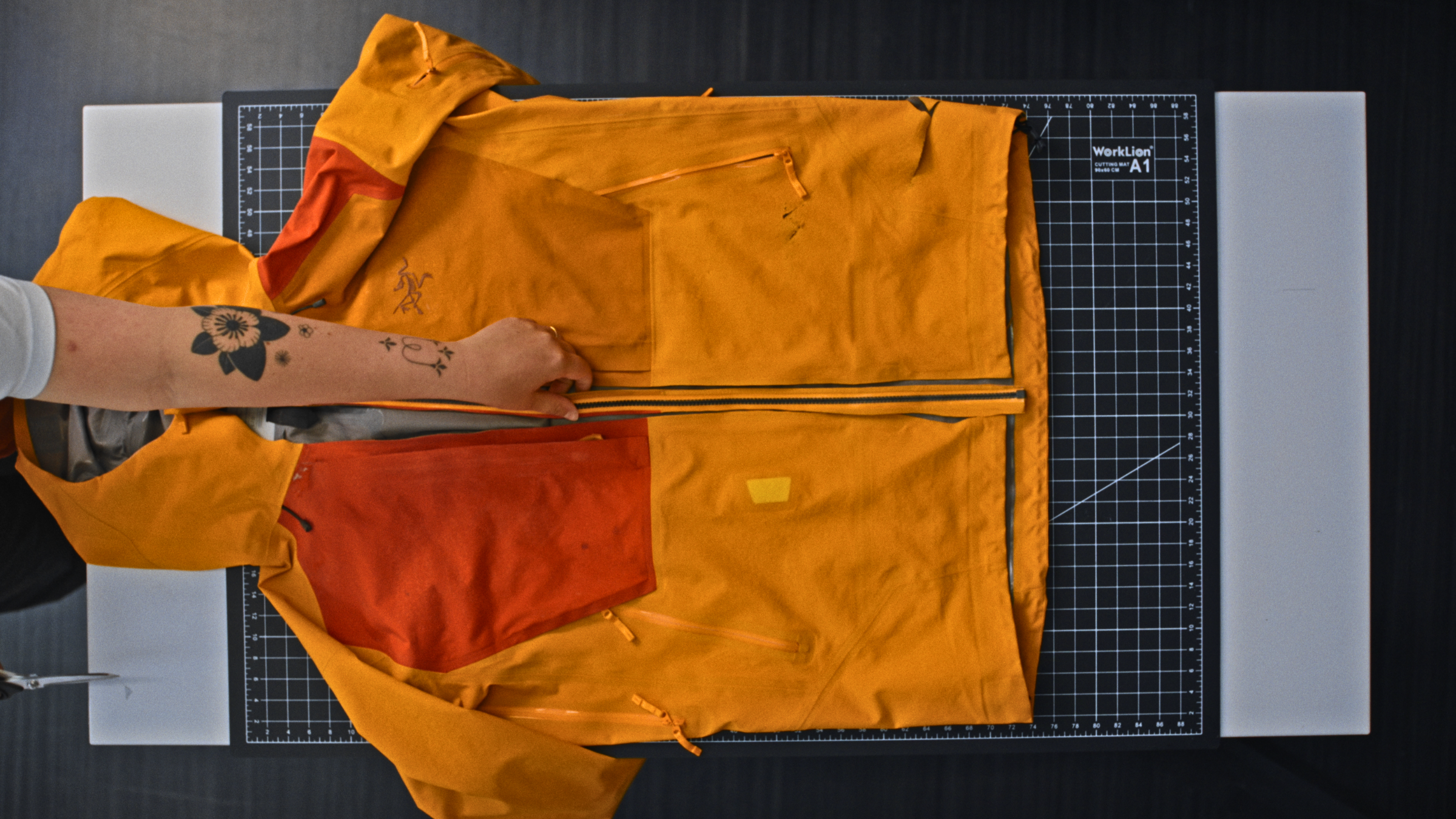
For Arc’teryx, that unassuming QR code serves as the vital entry point into System 0, a sweeping new operational framework that fundamentally reimagines how outdoor apparel can be designed, manufactured, utilized, repaired, and ultimately regenerated at the end of its useful life. In practice, the QR code is merely one of numerous technical updates and innovations that Arc’teryx integrated into its very first System 0 product, the Sperro SV. Among the other notable design overhauls are an easily repairable central front zipper, a nylon face fabric and internal backer engineered specifically for chemical recyclability, and targeted reinforcement at common points of structural failure.

The System 0 initiative originated as a speculative “what if” conversation between Arc’teryx CEO Stuart Haselden and Alex Plante, the brand’s Vice President of Advanced Concepts. The two executives were brainstorming what true circularity could and should look like for a premium technical apparel brand. At that time, Arc’teryx already operated its established ReBIRD program, which boasts a robust physical and digital infrastructure dedicated to product repairs, secondhand resale, trade-ins, and upcycling. However, the leadership team recognized that while they had excellent downstream services, they were still missing an integrated upstream process—a viable, repeatable way to manufacture products designed from inception to last significantly longer and eventually be regenerated into entirely new raw materials.
According to Andrew Yip, Senior Director of Materials Innovation at Arc’teryx, the journey required forging a new path on the fly. The team landed on the specific product category they wanted to develop within the overarching circularity concept, but quickly realized during development that they lacked all the necessary components of a complete system.
This realization prompted the brand to build its circular capabilities incrementally as development progressed. Arc’teryx brought in fresh leadership, including Kyle Wood as Vice President of Strategy, to maintain a laser focus on circularity goals. The company also recruited specialized personnel, such as dedicated raw materials sourcing managers, to secure supply chains capable of supporting closed-loop manufacturing.
“Less Bad” Isn’t Good Enough
Throughout the extensive circularity initiative, Yip and his colleagues adhered to a strict guiding principle as their primary North Star: sustainability alone is never a valid reason for a product to exist. Any material, component, or garment they created still had to live up to the notoriously rigorous Arc’teryx standards for technical excellence and uncompromising durability in harsh environments.
Yip argues that the vast majority of sustainable materials and products currently on the market are merely incremental improvements over their traditional counterparts. If a brand manufactures a garment that is slightly less harmful from an environmental perspective, yet compromises on functional performance, durability, or weather protection, Yip asserts there is no genuine justification for that product to exist.
To avoid falling into that trap, Arc’teryx prioritized superior abrasion resistance on both the face fabric and the internal backer. At the same time, the team refused to make compromises on tear strength, tensile strength, waterproofing, or breathability—the critical performance metrics that dictate whether an expensive hardshell becomes a cherished multi-season mainstay in a gear closet or a short-lived purchase.
The development team also intentionally selected nylon 6 as their core material rather than polyester. While polyester often offers more widespread commercial recycling pathways at present, the material science team knew that nylon 6 would deliver the superior performance required for a severe-weather hardshell. To determine the exact nylon content ratio—the precise formulation that would render the fabric both functionally and financially viable for chemical recycling—Arc’teryx collaborated closely with Aquafil, the well-known manufacturer of ECONYL regenerated nylon. According to Aquafil, the resulting textile is widely recognized in the technical textile industry for offering exceptional wear resistance and high impact strength, making it ideal for extreme durability.
A Swiss Army Knife, Not a Scalpel
Engineering the ideal fabric for a circular jacket was a massive achievement in its own right, but it was far from the only hurdle the Arc’teryx team had to clear, notes Yip.
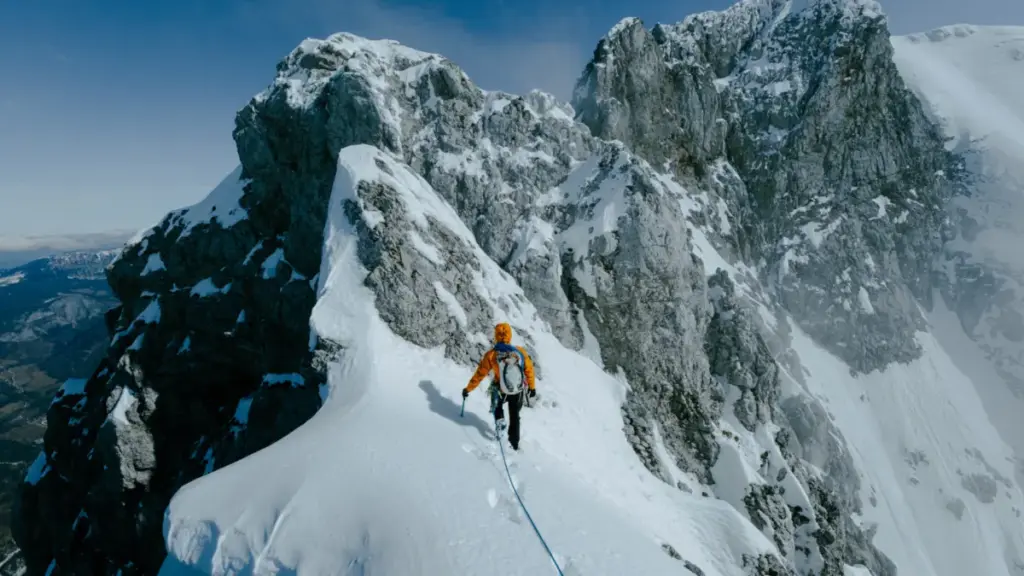
Outdoor enthusiasts and mountaineers are already intimately familiar with Arc’teryx for its highly specialized, single-purpose alpine shells like the Alpha SV. Yip describes the Alpha SV as a surgical scalpel. It is an uncompromised precision tool designed specifically for technical ice climbing. Because of its specialized design intent, it famously lacks features like hand pockets—an intentional omission, as hand pockets are entirely unnecessary and cumbersome when a climber is wearing a harness on vertical ice.
Conversely, the Sperro SV had to be designed as a versatile, multi-activity garment capable of handling a broad spectrum of environments and use cases. The design team needed to build a jacket-of-all-trades rather than a hyper-focused specialist.
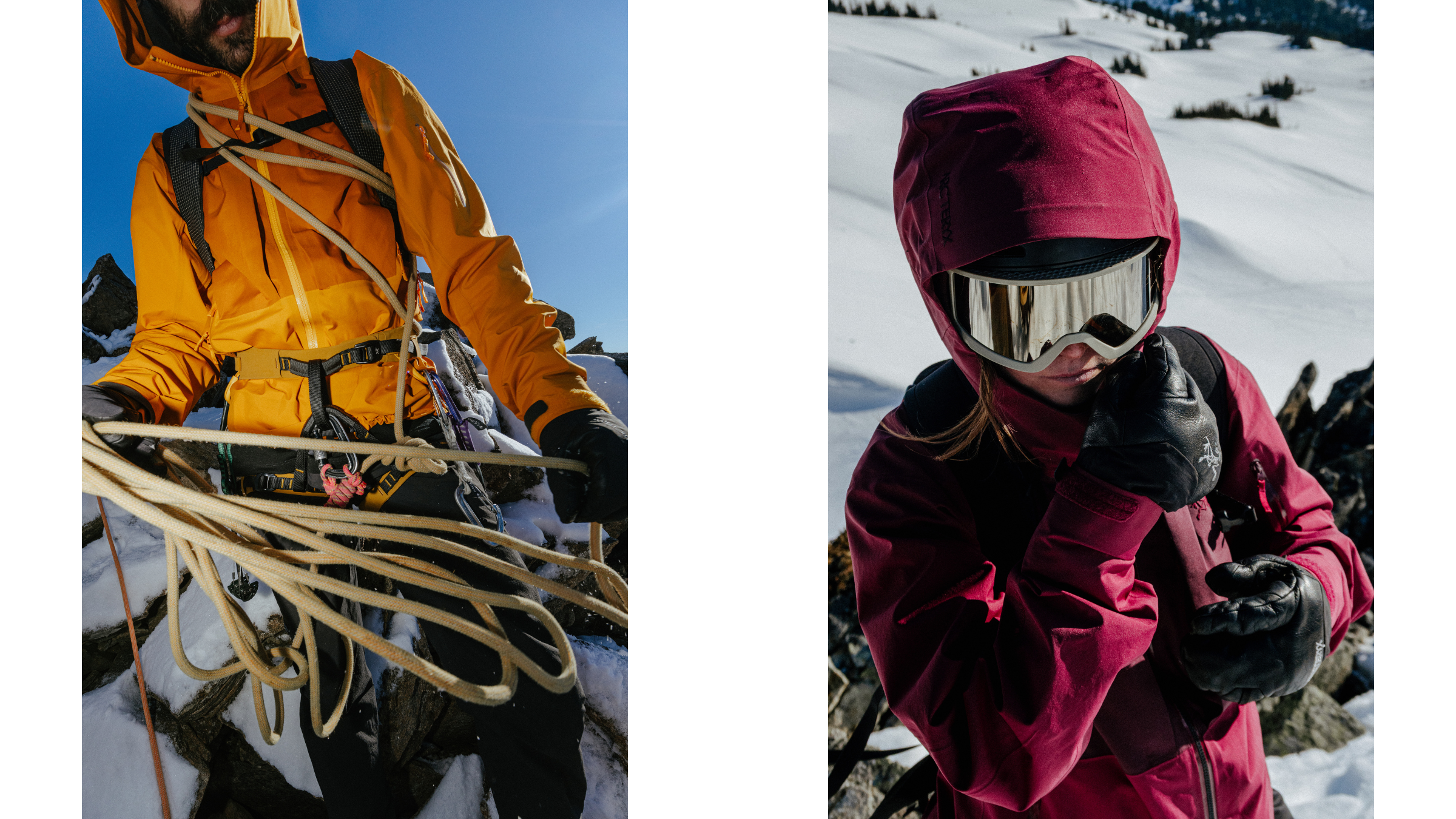
Creating a versatile piece without sacrificing durability required extensive field testing. Arc’teryx put early prototypes of the Sperro SV through rigorous real-world evaluations, testing the jackets during ski touring trips, backcountry hiking excursions, snowshoeing expeditions, and demanding ice-climbing routes. To ensure the jacket could withstand genuine high-stakes scenarios, the brand partnered with North Shore Search and Rescue, a volunteer-led organization and one of Canada’s oldest and most respected search-and-rescue teams, to gather critical professional feedback on its performance in the field.
The Last Jacket You’ll Ever Buy?
All of the advanced engineering, material sourcing, and structural testing ultimately serve a single overarching purpose: creating a garment worthy of what Yip describes as custodianship, rather than mere temporary ownership.
Yip expresses hope that the consumer purchasing the Sperro SV is someone who deeply values their gear, commits to taking proper care of the garment, utilizes the brand’s repair services when damage occurs, and actively extends its operational lifetime as much as possible. Only after many years of heavy use, countless adventures, and multiple repairs—when the jacket has truly reached a point where it is no longer repairable—should the brand take it back for final regeneration.
This philosophy explains the inclusion of the laser-etched QR code. By making it as seamless as possible for consumers to digitally track the Sperro SV’s lifespan, material composition, and repair history, Arc’teryx hopes to shift consumer psychology. The goal is for buyers to view themselves as long-term custodians holding a responsibility to maintain their gear, rather than temporary owners cycling through disposable consumer goods.
If everything goes according to the company’s strategic plan, the Sperro SV might theoretically be the last jacket an outdoor enthusiast ever needs to buy from the brand. With a retail price of $1,200, most customers would understandably hope to avoid ever purchasing a replacement hardshell. However, building a product designed to last indefinitely runs counter to traditional business models in the apparel industry, which historically rely on customers frequently replacing aging gear. Yip admits he is surprisingly comfortable with that paradox.
When developing new products and prototypes, Yip notes that the team knows they have successfully hit the mark when their professional athletes and field testers flatly refuse to return the test samples. He suggests a similar logic applies on a commercial level: if a brand creates a product that consumers can buy and genuinely never want to replace, they have succeeded in building something truly meaningful. Personally, he states he would have no issue with that outcome.
When asked to address the steep retail price, Arc’teryx representatives emphasize that the Sperro SV is priced directly in line with the brand’s most advanced, premium hardshells. They maintain that the price tag directly reflects the extensive design effort, material innovation, and manufacturing complexity required to produce a truly sustainable, high-performance jacket. Achieving circularity at this elite level of technical performance requires significant upfront investment across raw materials, manufacturing processes, certifications, and end-of-life recycling infrastructure.
The brand argues that when consumers factor in the total projected lifespan of the jacket, the underlying value calculation looks markedly different from a traditional retail purchase. This includes three years of unlimited repairs, a product backed to withstand severe alpine environments for years, and a guaranteed end-of-life offramp. Whether everyday consumers will ultimately view the price as a fair trade-off for the comprehensive package remains to be seen in the marketplace.
Sperro SV is Just the Beginning
The launch of the Sperro SV marks just the first major statement of intent for what the System 0 framework can achieve within the broader Arc’teryx product ecosystem. Armed with streamlined manufacturing processes and newly aligned internal philosophies, the design team is now positioned to explore further iterations of circular technical gear.
Because the company started its circular journey with a hardshell—representing what they know best, manufacture at the highest level, and are globally recognized for—Yip hints that other iconic product categories the brand is known for are currently in development and coming down the pipeline.
For loyal Arc’teryx customers who might worry that this new generation of sustainable hardshells will fail to meet the brand’s legendary performance standards, Yip offers absolute reassurance. If anyone were to put on the new jacket with their eyes closed, he insists it should feel indistinguishable from any elite shell the company has produced in the past. That, ultimately, is the entire point: the product performance remains uncompromising, while everything happening behind the scenes in manufacturing, lifecycle management, and circularity is what the brand is striving to change.